
 Store
Store


Tags Democratic Republic of Congo
Tag: Democratic Republic of Congo

Britain’s involvement in assassination of Congo’s Lumumba confirmed
A senior British politician has revealed Britain’s involvement in the 1961 assassination of Patrice Lumumba, the Congo’s first prime minister. The leader of the Congolese independence struggle from Belgium was brutally murdered just seven months after taking office on the direct orders of the U.S. and Belgium. Britain, whose involvement had long been suspected, also had a hand in it.
Bosco Ntaganda surrenders in Rwanda, but will global powers hold the...
Congolese people are seeking peace and justice. Trying Bosco Ntaganda at the ICC may lead to some measure of justice for the crimes perpetrated at his behest; however, it appears that his backers in Rwanda may very well be let off the hook yet again and allowed to continue their military aggression against the DRC.
India emerges as leader in 21st century ‘Scramble for Africa’
“Africa shining” is just as potent a mirage as “India shining”; the shine is restricted to the economic and political elite on both sides of the Indian Ocean. African leaders – both elected politicians and traditional chiefs share the responsibility for allowing the pillage of their continent in the name of economic growth and development.
U.S. African and Mideast policies: War as foreign aid and regime...
“Former political prisoner Dhoruba Bin Wahad recently penned an excellent essay breaking down what’s going on in Mali, Congo and the Middle East. He also challenged the type of stances many of us have taken with respect to these regions that are embroiled in conflict. To support his essay, we interviewed him so he can expand upon his analysis. In true form, Dhoruba pulled no punches. Peep what he has to say.”
Sanctions on top Rwandans, not drones over the DRC
The United States says it’s ready to send surveillance drones to the Democratic Republic of Congo to help the United Nations peacekeeping mission in the African state despite the government of Rwanda’s objections from its new rotating seat on the U.N. Security Council. The U.S. also supports the plan to use drones to increase surveillance capacity in other African countries.
Six million dead since 1996? It’s time to break the silence...
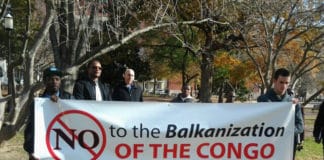
Congolese problems should have Congolese solutions. We ask that the United States of America and the United Kingdom immediately withdraw all forms of financial and military aid to Rwanda that is a state sponsor of terrorism in Africa. We must pledge to ourselves that we will never again betray our people and ourselves by staying quiet and passive.
UK Parliament: Is budget support providing Kagame cover in Congo and...
On Thursday a U.K. Parliament Select Committee held the first of two hearings to reconsider budget support to Rwanda. The committee scheduled the hearings in response to U.N. investigators’ reports that Rwanda is arming, sending soldiers and even commanding the M23 militia fighting in eastern Congo.
Victoire Ingabire’s family faces her prison sentence in Rwanda
Earlier this week, a court in Kigali, Rwanda found Rwandan opposition leader Victoire Ingabire guilty of treason and denying the 1994 genocide against the Tutsis. KPFA’s Ann Garrison spoke to Ingabire’s daughter, Raissa Ujeneza. Ujeneza is a student of international and European law in the Netherlands.
UK rethinking budget support to Kagame’s Rwanda
The International Development Committee of the British Parliament’s House of Commons has announced that it will examine the controversial decision to disburse budget support to the government of Rwanda after first withholding it in response to U.N. investigators’ reports that Rwanda is behind the M23 militia fighting and seizing territory in the eastern Democratic Republic of the Congo.
Bani Walid pays price for refusing to accept the mark of...
The images emerging from the current siege of Bani Walid are gruesome. NATO’s henchmen are attacking their own people with bombs and chemical weapons, injuring and killing scores of civilians. Women, children and old people lie maimed or dismembered on the side of the roads, many of them buried in the rubble. Ethnic cleansing of people with black skin is being carried out by Arab supremacists, but the Muslims of Bani Walid refuse to accept that people with black skin are to be hunted and killed.
Rwanda: Victoire Ingabire facing possible life sentence on Friday, Oct. 19
Just over two years ago, on Oct. 14, 2010, Rwandan police arrested and imprisoned Victoire Ingabire. Now she is facing the Rwandan prosecutor’s request that she be sentenced to life for disagreeing with Rwanda’s constitutionally codified history of the Rwanda Genocide and ensuing Congo Wars, in which millions of East and Central African people died.
Rwandans and Congolese should be allies, not enemies
It’s time for dialogue between Rwandan and Congolese people of like mind to finally end the 16-year war between our two armies and their various ancillary or surrogate militias. The vast majority of both of our people need democracy, political space, economic opportunity and a common share in their countries’ resource wealth.
Verdict pending: Victoire Ingabire and D.R. Congo
Imprisoned Rwandan opposition leader Victoire Ingabire and her supporters await a Kigali court’s verdict in her case this coming Friday, Sept. 7. Ingabire has been in prison for nearly two years, charged with giving financial support to a terrorist group, planning to cause state insecurity, and divisionism, a violation of Rwanda’s “genocide ideology” statute.
U.S. cuts aid to Rwanda for destabilizing Congo
The State Department announced today that the U.S. “has cut this year’s planned military assistance to Rwanda amid concerns that the government in Kigali is supporting rebel movements in neighboring Congo,” according to the Washington Post. A three-year campaign by advocates for peace in the Congo and an end to the plundering of its mineral riches culminates successfully in today’s announcement. They have been pressing for implementation of the only law sponsored by then Sen. Obama allowing denial of aid to Congo's neighbors that destabilize the Congo.
Obama could end Congo’s human catastrophe
The Congo conflict and human catastrophe has continued despite a 2003 peace treaty. It entered a new phase with the Rwandan backed CNDP rebellion in the Kivu Provinces in April 2012. Ugandan reporter, television producer and broadcaster Paul Ndiho told KPFA that everyone knows who is doing what in Congo, but that regional and international powers are unwilling to stop it.
Sanford Weill and Paul Kagame: Doctors of Humane Letters?
On May 12, Sonoma State University awarded honorary doctorates in humane letters to former Citigroup CEO Sanford Weill and his wife Joan, paid for with a $12 million “donation.” On the same day, William Penn University awarded an honorary doctorate in humane letters to Rwandan President Paul Kagame, despite his army’s atrocities in Rwanda and Congo.
A young man set himself on fire in Boma, Democratic Republic...
On Dec. 10, 2011, in the Democratic Republic of Congo, a young man named Cedrick Nianza self-immolated by pouring gas on himself and setting the fuel alight. He continually shouted, “Congo na nga, Congo na nga” (“My Congo, my Congo”), while the flames consumed him.
Congo: Elections, democracy and the Diaspora awakening
Congo’s Nov. 28 presidential and legislative elections were fraught with tremendous irregularities and widespread charges of fraud. The opposition categorically rejected the results as fraudulent. Nonetheless, Joseph Kabila was sworn into office on Tuesday, Dec. 20.
Should Africa be an ally of the West or China? The...
The past 12 months were very intense on the African continent. Some important elections stirred up a whole lot of interests. Shared zones of influence are being renegotiated between the old powers of the world, the Western powers, and the new power, China.
Congo: What’s Rwanda got to do with it?
Rwandan political prisoner Victoire Ingabire is spending her second Christmas in Rwanda’s maximum security prison. Her ongoing trial, on charges of terrorism and genocide ideology, has implications not only for Rwanda, but also for the entire Great Lakes Region of Africa – most of all, for the Democratic Republic of Congo.