
 Store
Store


Tags Rwandan President Paul Kagame
Tag: Rwandan President Paul Kagame
Rwanda: Evidence undermines the ruling narrative
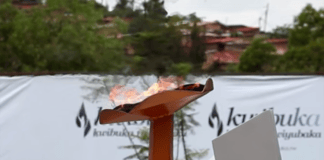
The New Times of Rwanda, one of several state sanctioned media outlets, reports that a monument has been built on the banks of the River Nyabarongo “in memory of victims of the 1994 Genocide against the Tutsis who were dumped into the waters.” KPFA’s Ann Garrison reports that the story is disputed with evidence that the victims were actually Hutus rather than Tutsis.

Do Black African lives matter to the NBA? Rwanda’s Kagame in...
Why did the NBA All Star Game Weekend celebrate Rwanda’s president, Paul Kagame, who is known to have launched invasions that cost millions of African lives, and to brutally repress his own people? His appearance inspired indignation and headlines in the Toronto press. Ann Garrison spoke with CIUT-Toronto Taylor Report host Phil Taylor to ask what he thought of this and how it happened.

Rwanda: Has Kagame exceeded the limits of his US-EU support?
Both Rwandan and Congolese Americans and other members of the Rwandan and Congolese diaspora have for years asked the United States to stop supporting the military dictatorship of Rwandan President Paul Kagame. Earlier this week U.S. Ambassador to the U.N. Samantha Power called on Kagame to step down at the end of his term in 2017. KPFA’s Ann Garrison has more.
Burundi accuses Rwanda of training rebels for cross border attacks
Burundian Foreign Minister Willy Nyamitwe has accused neighboring Rwanda of training rebels to destabilize Burundi with cross border attacks. Rwandan President Paul Kagame responded that the Burundian president was simply trying to distract people from his own problems, but Carina Tertsakian, a Human Rights Watch researcher in Burundi, confirmed the foreign minister’s accusation. KPFA’s Ann Garrison spoke to Father Thomas Nahimana.
War on Terror? US proxies Ethiopia and Rwanda terrorize their own...
Two hundred delegates from African governments and institutions met in Kigali, Rwanda, yesterday for a symposium on “democratization and development.” Hailemariam Desalegn and Rwandan President Paul Kagame both spoke of the primacy of state power and African agency in development. Washington D.C.-based Ethiopian activist Obang Metho spoke to KPFA’s Ann Garrison about what was wrong with this picture.
Africa’s problem from hell: Samantha Power
U.S. Ambassador to the U.N. Samantha Power is on a mission to save Africans from African savagery. She wants you to call 1-800-GENOCIDE so she can send in the Marines or other U.S. Special Forces. Her entire career is based on a historically inaccurate, decontextualized and grossly oversimplified account of the 1994 Rwandan massacres, during which the U.S. stood by.
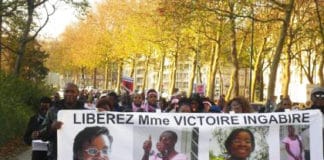
Rwandan Belgians protest inhumane incarceration of Victoire Ingabire
Earlier this week, supporters of iconic Rwandan political prisoner Victoire Ingabire, including her daughter and new granddaughter, gathered to protest her inhumane prison conditions. Members of her party in Kigali report that prison authorities have painted her only cell window black, taken away her books and put her in harsher isolation than before. Prison authorities are denying her legal right to meet with the Rwandan lawyer who’s representing her in her appeal to the African Court of Human and People’s Rights.
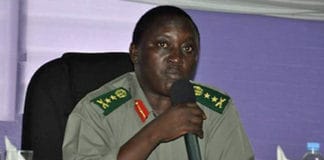
Rwanda: Kagame’s spy chief Karake arrested in UK
Rwandan intelligence chief Emmanuel Karenzi Karake was arrested last Saturday in London on a European arrest warrant. The warrant was based on a Spanish court’s 2008 indictment of Karake and 39 other top Rwandan officials for genocide – that is, the massacre of Rwandan Hutu civilians and refugees in Rwanda and the Democratic Republic of the Congo. KPFA’s Ann Garrison has the story.
Would Hillary Clinton change new US policy on Rwanda?
The new U.S. policy toward Rwanda, opposing constitutional change to allow President Paul Kagame to stay in power, has garnered wide attention. Friends of the Congo’s Maurice Carney warns that it might well change if Hillary Clinton becomes the next U.S. president.
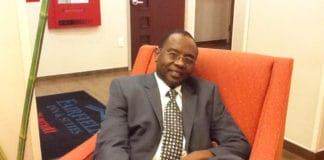
Coup plotters sheltered by Rwanda declare war on Burundi
Rwanda is the official “hideout” for the Burundian government’s armed and unarmed “rebels” and/or opposition. Some Burundians in Rwanda, under Rwanda government protection, have openly declared war against the government of Burundi. Is Kagame capable of ruining Burundi the same way he ruined DRC, especially North and South Kivu?
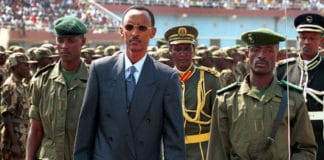
US will not support third term for Rwanda’s Kagame
Rodney F. Ford, spokesman for the U.S. State Department’s Bureau of African Affairs, has said, in no uncertain terms, that the U.S. will not be supporting a third term by sitting Rwandan President Paul Kagame: “We are committed to support a peaceful, democratic transition in 2017 to a new leader elected by the Rwandan people.”
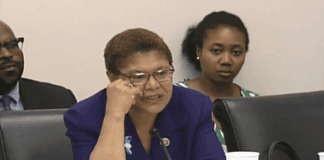
Rwanda: US Congress asks whether President Kagame hires assassins
Earlier this week, California Congresswoman Karen Bass and New Jersey Congressman Chris Smith heard testimony and queried witnesses in a House Foreign Affairs Committee hearing on U.S. relations with Rwanda. The central question under consideration was whether or not the U.S. should be supporting the Rwandan government with foreign aid and military assistance despite allegations of egregious human rights violations.
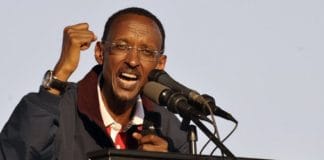
No way to escape the eye of the state in Rwanda
On May 21, 2015, David Himbara told a U.S. Foreign Relations subcommittee hearing on U.S. relations with Rwanda that “the smallest administrative unit is 10 houses, and every 10 houses is watched by one individual, and as you move on, the whole state machinery driving fear is very well established.” KPFA’s Ann Garrison spoke to David Himbara, a Rwandan exile in Canada, who addressed the House subcommittee about how this climate of fear is created.
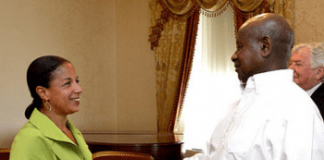
Rice and Museveni shake hands on crimes in Central Africa
During the first week of May, President Obama’s National Security Council (NSC) Advisor Susan Rice met with Ugandan President Yoweri Museveni in New York City. NSC spokesperson Bernadette Meehan then released a statement about their conversation. Ugandan American journalist Milton Allimadi, writing in the New York City-based Black Star News, called the NSC release “newspeak on steroids.” This is a conversation with Milton Allimadi.
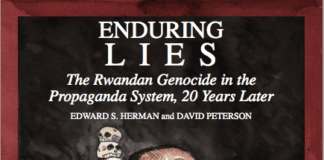
Kibeho and Srebrenica: Ed Herman on the politics of genocide
This week marked the 20th anniversary of the 1995 Kibeho Massacre in Southwestern Rwanda, where an estimated 8,000 Rwandan Hutu people were killed by Rwandan President Paul Kagame’s Rwandan Patriotic Army. The same number of people were killed in Bosnia, also in 1995. Professor Ed Herman explains the politics of genocide manifest in media coverage of the 1995 massacres in Kibeho and Srebrenica.
Rwanda: No justice for Kibeho Massacre victims 20 years later
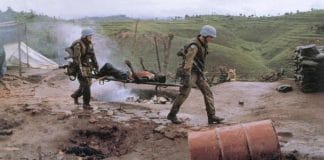
On April 22, 1995, 4,000 to 8,000 Rwandan Hutu people, maybe more, were massacred at the Kibeho Camp for Internally Displaced Persons in Southwestern Rwanda. The Kibeho massacre is one of many committed by the Rwandan Patriotic Army in Rwanda and DR Congo, but it is one of the most shocking because it was witnessed by U.N. Peacekeepers and well documented by at least two photographers, but no one was ever prosecuted for the crime.
Uganda’s Museveni to seek re-election in his 30th year in office
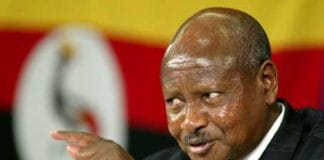
Three presidents in the Great Lakes Region of Africa, Burundi’s Nkurunziza, DR Congo’s Kabila and Rwanda’s Kagame, are all doing their best to stay in office beyond constitutional term limits. Ugandan President Yoweri Museveni, however, doesn’t have to overcome term limits because Uganda’s Parliament abolished them in 2005. He has already announced that he will run again in 2016, his 30th year in office.
Rwanda: Critics ask Canada to protect them from Kagame’s assassins
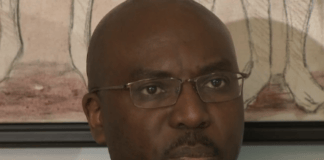
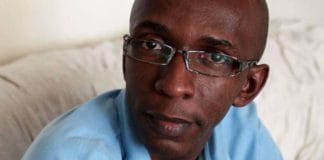
Rwandan exiles in Canada and their Canadian allies, all of whom are well-known critics of Rwandan President Paul Kagame, held a press conference earlier this week in Montreal to call on Canadian authorities to protect them from attacks by Rwandan government agents. The dissidents said they’d been warned by allies within the Rwandan government that so-called diplomats assigned to Rwanda’s embassy in Canada were actually there to intimidate or assassinate dissidents.
UK Foreign Office calls on Rwanda to restore BBC Gahuza
The U.K. Foreign Office called on the Rwandan government to lift the ban on its BBC broadcast in Rwandans' native language. The government banned the native language broadcast after the BBC broadcast “Rwanda’s Untold Story,” a documentary which upends conventional belief about the Rwandan massacres of 1994.
Rwanda: Free Victoire! international webcast
Over the weekend the organization Friends of Victoire hosted an international webcast to strategize about how to free Rwandan political prisoner Victoire Ingabire Umuhoza. Ingabire has become an icon of freedom, democracy and peace since returning to Rwanda in 2010 to attempt to stand for the presidency against incumbent Rwandan President Paul Kagame.