
 Store
Store


Tags SHU
Tag: SHU

Indiana prisoners call for families and supporters to fight back against...
“Prison Lives Matter” and “Amend the 13th: Abolish Legal Slavery in Amerika Movement” are seeking to get the people, i.e., family, friends, inmates and the outside movement, involved in the struggle to raise awareness and fight the cruel and inhuman treatment of prisoners, the daily violations of our human and civil rights, and the economic exploitation of our families. Rally Friday, Aug. 11, 11 a.m., outside the Indiana Department of Corrections headquarters.

The power of economics: One message, one mind, one movement
First and foremost, we must stay on message. And what is that message? We are uniting to End Mass Incarceration and Prison Slavery. In doing so, we have to keep at the forefront of our heart, mind and spirit that slavery – which predominates over mass incarceration – is an economic enterprise system that is mathematically put together and thus capable of being scientifically taken apart.

David Johnson of the San Quentin Six salutes political prisoner and...
Ruchell Magee’s legal knowledge was instrumental in stopping the legal lynching of the San Quentin Six. We owe him a debt of gratitude for his efforts and for the legal documents he prepared for us. I first met Ruchell in January 1970 upon my release from San Quentin’s B Section. I was housed in A Section and there is where I met James McClain and Ruchell. Ru was recognized on the yard as a sharp legal mind and helped many brothers get their cases overturned.

Get ready! The Millions for Prisoners Human Rights March on Washington...
Good morning and welcome to Wanda’s Picks, a Black arts and culture program with the African Sister’s Media Network. We are joined in the studio by Robert King, Albert Woodfox and Malik Rahim. Welcome to the show. Today we are going to be talking about the Millions for Prisoners Human Rights March on Washington. We can talk about solitary confinement, political prisoners, the 13th Amendment. We can talk about what the need is for having such an event.

Losing direction: The abysmal history of mental health care at Pelican...
I left CDCr wondering how PBSP could remain in shambles after 22 years of court oversight. As I started educating myself about prison reform, I stumbled upon Keramet Reiter’s 2016 book, “23/7: Pelican Bay Prison and the Rise of Long-Term Solitary Confinement.” Within those pages, I found validation and some disturbing answers. I wish this book had been available to me before I started working in CDCr.
Folsom hunger strike begins today, May 25 – your support is...
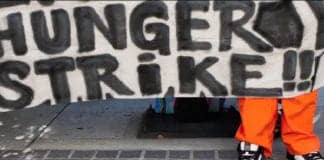
On May 16, inmates at Old Folsom State Prison made contact with the outside world to announce that they will begin a hunger strike on May 25 in response to ongoing mistreatment, dehumanization and unbearable living conditions at Old Folsom. When incarcerated people take action to fight for their dignity, their rights and their lives, those of us on the outside must answer with solidarity. Our support is crucial in getting their demands met and minimizing retaliation against them. We must let these brave individuals know that we have their backs, and that they will not be forgotten.
Advice for prisoners and their supporters regarding Board of Parole Hearings...
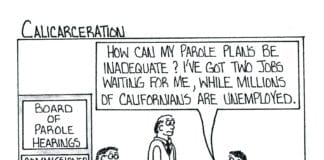
The California Board of Parole Hearings has established the Forensic Assessment Division, a staff of psychologists who conduct psychological evaluations of prisoners for Board hearings. This paper is provided to help California prisoners applying for parole understand the psychological evaluations conducted for the Board of Parole Hearings and to provide advice to them and their supporters on how to counter the psychological evaluation with letters and other materials submitted to the Board.

CDCr must effect genuine changes in its old policies, culture and...
As always, allow us to begin by paying our respects to the families who lost their loved ones during the historic California hunger strikes. Prior to the solidarity hunger strikes, the four principal negotiators, Sitawa Nantambu Jamaa, Arturo Castellanos, George Franco and Todd Ashker, found ourselves locked inside Pelican Bay SHU Short Corridor. There we would discuss the vision of effecting genuine change in CDCr’s long term solitary confinement combined policies, practices and conditions.

What happened at Vaughn prison?
On Feb. 1, scores of men in Delaware’s largest prison, the Vaughn Correctional Center, took over one of the buildings in their facility. The prison, built in 1971 and known for its serious overuse of solitary confinement, is one of the state’s most severely overcrowded and punitive facilities. Hoping to push the state to improve living conditions at Vaughn, the prisoners didn’t just take control of Building C – they also took guards hostage. And to make the public aware of why they were protesting, they called the media.

Sitawa: Exiting solitary confinement – and the games CDCr plays
It is very important that you all clearly understand the depth of human torture to which I was subjected for 30-plus years by CDCr and CCPOA.* The torture was directed at me and similarly situated women and men prisoners held in California’s solitary confinement locations throughout CDCr, with the approval and sanctioning of California governors, CDCr secretaries and directors, attorneys general, along with the California Legislature for the past 40 years.

Baridi X Williamson: I went inside my heart to survive the...
Leaving out of Pelican Bay solitary confinement torture prison facilities/units/cages for the first time on Jan. 23, 2015 – after arriving there Nov. 29, 1990 – I remember witnessing my first sunrise. It would be the first of many first time experiences of using my natural senses again after being buried alive in that concrete box deprived of the natural use of those senses for the last 25 years – a quarter century.

To all those still locked inside
My journey began in the mid-1980s, when folks in my community began to hear about a “supermax” prison that would be built in nearby Crescent City, California. At that time, my colleague Tom Cairns and Mike Da Bronx, my husband, and me were busy at KHSU producing a weekly radio show called Alternative Review. In 1990, I would get one of the first letters from that place, Pelican Bay State Prison. It came from a young man named Troy Williams. He liked my radio show.

My life in solitary confinement
I wake up every morning and stretch, then say a prayer thanking the Lord for allowing me to make it through another day and night. My mattress is in real poor condition, as it’s old and the cotton is coming out, so I’ve had to re-sew it in order not to further damage my back. I spend at least 20 minutes every morning stretching, then brush my teeth and wash my face. This starts at 5 a.m.

Hugo Pinell, aka Dahariki Kambon: Decades of assassination attempts against the...
The recent victory won by the prisoner hunger strikers, the “solitary settlement” in Ashker v. Brown, is indicative of the solidarity among prisoners today, and it is for this reason I am sharing my story and history of Dahariki Kambon. We must carry on the spirit of what he stood for; his fight was against the racist oppressors and their cruel laws and policies of injustice and inequality.
Suicide crisis in California women’s prison: Advocates demand justice for Erika...
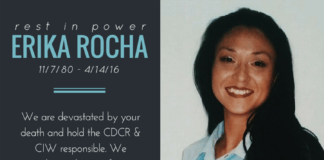
Erika Rocha was 35 years old and one day away from her Youth Parole Hearing on April 15, 2016, when she committed suicide at the California Institution for Women (CIW) in Corona. Since her death, the suicide crisis at CIW has only worsened. On June 1, yet another young woman of color died at CIW. Her name is Shaylene Graves and she was 27 years old and six weeks away from returning home to her loving son, family and friends.

SF Bay View banned inside Indiana prisons: Do Black Lives Matter...
In the December 2015 issue of the San Francisco Bay View, I wrote an article entitled “Do Black Lives Matter Behind the Walls” and introduced to the Bay View audience the newly formed New African Liberation Collective (NALC). While this particular issue was allowed into prisons throughout the state, it was seized at the Pendleton Correctional Facility, where I was being housed, based upon the orders of the Internal Affairs Department as a security risk.

Chican@ Prisoners Day
If we look to any uprising in world history we will see that such rebellions, although they may have included various nationalities, are usually attributed to the dominant force in that rebellion. Rebellions take on the oppression, and those who arise lend their voice in the struggle. The dominant force in an event shapes the event and shapes the character of the struggle. The same can be said of prison struggles.

Yog been through hell and was not burnt
The SHU, the wars, the times and obviously the love and hate he experienced made Yog who he was. When I met him in 2001, I of course had read about him and heard the stories, but I was definitely not prepared to meet anyone like that.
One of the letters in the Bay View said Yog taught him how to “time travel”; that sounds about right. Yog was a hot mess in that regard; his mind was not always grounded but that also was one of his strengths. He had his own world in there.
Prisoner Human Rights Movement Blue Print
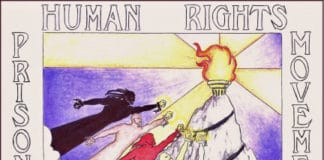
CDCr has systemic and dysfunctional problems that run rampant statewide within California’s prisons for both women and men which demand this California government to take immediate action and institute measures to effect genuine tangible changes throughout CDCr on all levels. The Prisoner Human Rights Movement Blue Print is essentially designed to deal with identifying and resolving primary contradictions by focusing on the various problems of CDCr’s dysfunction.

Coordinated offensive on STG kickouts
Having been one of the many who have been let out of the control units (SHU), I can say that there is some victory in this development, but there is much work to be done outside the SHU and still a ways to go before victory is complete. This accomplishment of opening the gates of SHU for many simply means we face new forms of oppression; it changes in form but not in essence.