
 Store
Store


Tags Solitary confinement
Tag: solitary confinement

Kinetic Justice: Terror on the plantation
He asked, “Are some above the law? Or is it that some are designated as less by the law?”

Prisoner advocates across the country call on DOJ nominee Kristen Clarke...
Feb. 1, National Freedom Day, commemorates both the passage of the 13th Amendment and the signing of the Universal Declaration of Human Rights, which declares that “recognition of the inherent dignity and of the equal and inalienable rights of all members of the human family is the foundation of freedom, justice and peace in the world,” including incarcerated human beings.

Call to action: Stop illegal, inhumane restrictions on Secure Housing Unit...
From behind the walls of the Wabash Valley Correctional Facility, prisoners’ voices are calling supporters to action to make demands and expose mental torture, deliberate indifference, dehumanization and inhumane abuse by their corrupt captors – amid, compounded and weaponized by the COVID-19 pandemic.

States say they’re decarcerating, yet 1 in 5 prisoners has had...
Trapped behind the walls she said, “In the beginning, I used to flippantly say that when the COVID finally comes here, the prison will just let us all get sick and die. I thought that I was just being dramatic, but it might have been more prescient than I know.”

Herman Wallace: Friend, artist and member of the Angola 3
What is it like to correspond with an incarcerated person? End Solitary Confinement advocate Willow Katz’s interview with Sharon Willis reveals an unintended, deeply human 26-year relationship created between Sharon and revered ancestor Herman Wallace of the Angola 3.

Keith LaMar: A Love Supreme
The power of Keith LaMar’s authenticity expands to pure joy as he shares his journey on death row in Ohio with his exploration of love, solidarity and hope through jazz music, relentless push to prevail in his innocence, honoring the fundamental power of the people and the power in walking a journey together.

No warning shot
Not in our most creative nightmare could we imagine being snatched off the street or out of our home thrown into another reality of waking into the horror of hand shackles, waist chains and leg irons, the “Devil’s Playground” of gladiator fights and corrupt and sadistic prison guards, unless we are Black, Brown or other targeted persons.

Free David Gilbert: It’s that time of year again, Clemency 2020
New York Gov. Andrew Cuomo has the power to grant clemency to 76-year-old David Gilbert having served 40 years of a life sentence. Jerome Wright, now 12 years paroled, supports and promotes clemency for David Gilbert, whose mentorship inspired Wright towards a path of purpose in promoting something other than his own delinquent self.

Prisoners who continue to be held in solitary ask full Ninth...
Litigators request the full Ninth Circuit Court of Appeals review the reversal made by the three-judge appellate panel of the decision of the district court against California Department of Corrections and Rehabilitation. CDCR continues its epoch refusal to adhere to not only the letter of the Ashker v. Governor of California settlement agreement, but neither any modicum of the spirit of the agreement, thereby knowingly and intentionally perpetuating the torture of solitary confinement.

Coronavirus quarantine means solitary confinement for prisoners
A costly mistake at age 15 holds 26-year-old Eric Allen Jr. in prison serving a 50-year-to-life plus life sentence, plus COVID-19. Eric intimately shares his fear of dying in prison alone, about his being stripped of all human rights and dignity, dehumanized and treated as an animal in a 24-hour cage who can’t fend for himself, with no voice or caretaker and at the mercy of guards who lie and falsify documents to hide inhumane wrongdoing.

Liberate our tortured elders
Liberate the Caged Voices, a program of California Prison Focus, provides a platform to hear directly from our caged community members, their families and loved ones to foster engagement with the local community, while exposing the truth of the toxic conditions experienced by California’s incarcerated people and the impact on their families. Adding art and culture, the idea is to build awareness, solidarity and human relationship amongst community members on both sides of the wall and take collective action.

Failed response to coronavirus in Indiana’s Pendleton Correctional Facility
Since the first case of COVID-19 was confirmed in the U.S., officials have demonstrated incompetence and indifference in response to the growing pandemic.

Strategic starvation in the Secure Housing Unit (SHU) at Wabash Valley:...
Call Daniel Bedwell, Aramark director at Wabash Valley Correctional Facility at 812-398-5050, ext. 4801. Tell him that you are concerned that the prisoners on the SHU are being starved because they are not receiving a diet that meets the guidelines of IDOC Policy and Procedures.

Delbert Africa: FREE!
MOVE member Delbert Africa, held in prison since the confrontation of Aug. 8, 1978, has walked out of a Pennsylvania prison after 42 years.
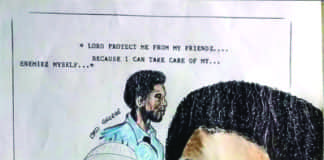
Artivists in Action and Solidarity: Rattle the KAGE Dec. 7, 4-7pm
Artivists in Action and Solidarity: Rattle the KAGE Dec. 7, 4-7pm! Busting down walls and opening doors through art, culture and education at the first annual Ratcliff Award celebration benefiting SF Bay View and Prison Focus. Y'all come!

Black August, from 1971 to 2011-13
“Settle your quarrels, come together, understand the reality of our situation, understand that fascism is already here, that people are dying who could be saved ... Do what must be done, discover your humanity and your love in revolution.”
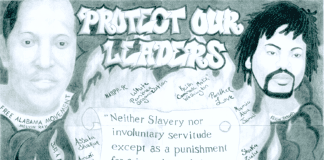
Knockin’ doors down to end solitary confinement
In adherence with the beloved Komrade Keith “Malik” Washington, deputy chairman of the New Afrikan Black Panther Party-Prison Chapter, this is the year of “knockin doors down.” We must start with the doors of solitary confinement. It was estimated in 2017 that over 87,000 prisoners across Amerika are being held in solitary – despite the many studies done by neuroscientists around the world proving that solitary confinement is a neglected social, ecological and environmental risk that also causes and worsens mental illness.
Alabama leader Kinetik Justice in fifth day of hunger strike, refusing...
As a last resort to protest the Alabama Department of Corrections’ unlawful use of solitary confinement, Robert Earl Council, known nationally as Kinetik Justice, that he is on an official hunger strike, refusing all food and liquids. Join the phone zap demanding release for him and 30 other prisoners unjustifiably in solitary.

Support Comrade Malik: Prisoner rights activist left in solitary far too...
Supporters of Keith “Malik” Washington ... are urged to sign and send this letter to: Ombudsman Office, P.O. Box 99, Huntsville, TX 77342-0099, 936-437-4927, fax 936-437-4930, ombudsman@tdcj.texas.gov and as many other intended recipients as possible. Send encouragement to Malik as well.

First Step Act as seen from within the shadows of Florence...
Coco Das’ article, “Should we celebrate when a fascist regime endorses prison reform?” reached me at a particularly ripe time. None of the ironies observed about Trump’s endorsement of the First Step Act, a bipartisan criminal justice reform bill, were misconstrued, nor did I take them for granted.