
 Store
Store


Tags Solitary confinement
Tag: solitary confinement

Rally to end Santa Clara County Jail hunger strike
Over 200 prisoners in Santa Clara County have been on a hunger strike since April 15, 2018, to end meaningless classification reviews and the torturous practice of indefinite solitary confinement etc.. Concerned families and community countywide rallied in support of their incarcerated loved ones on Monday, April 23, at 6 p.m. in front of the Main Jail in hopes that the jail administration and/or Sheriff Laurie Smith will engage with participating hunger strikers to end the hunger strike.
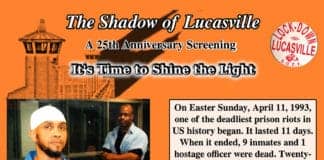
Lucasville Rebellion, longest prison ‘riot’ in history, began 25 years ago,...
Central Ohio IWOC, the Free Ohio Movement and Lucasville Amnesty call for actions and raising awareness around the 25th anniversary of the Lucasville Uprising on April 11-21. Drawing attention to this pivotal event in the history of prisons in Ohio and the U.S., protesters will hold a 3 p.m. noise demo on the 21st outside the Southern Ohio Correctional Facility (SOCF) in Lucasville where prisoners held a cell block for 11 days in April of 1993. Prisoner survivors of this rebellion have spent these 25 years acting as beacons of resistance despite suffering in solitary confinement and on death row.

We know a benefactor will save the Bay View the way...
I’m writing this editorial because I want to brag on my husband, Bay View publisher Dr. Willie Ratcliff, and tell you why he and I have faith that a benefactor, someone with deep pockets who cares, will step forward in time to save the Bay View and keep it in print – an angel who understands how much the Bay View means to a prisoner being tortured and a youngster in the hood being framed. Dr. Ratcliff was that angel, that benefactor, to Gladys Knight in 1975, when she ran out of money in the midst of producing a major film in Valdez, Alaska called “Pipe Dreams.”
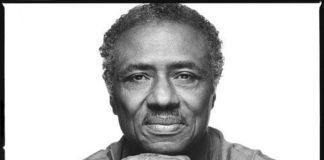
Herman Bell granted parole – but cops, politicians try to nix...
Supporters of Black liberation fighter and political prisoner Herman Bell held a packed news conference at the Center for Constitutional Rights March 23. They came out to show support for a recent New York State Parole Board decision to free Bell after more than 40 years – much of it spent in torturous solitary confinement. The board’s decision has come under attack from police groups, the corporate media and elected officials, including “liberal” Democrats Gov. Andrew Cuomo and Mayor Bill de Blasio.

The Agreement to End Hostilities: Use it or lose all we’ve...
As a Black Nation and prisoner class, we have come too far since the Agreement to End Hostilities and the last hunger strike of July 8, 2013, which 30,000 prisoners partook in to break the chains of our inhumane solitary confinement to allow ourselves to lose focus on the AEH and what it has done to enlighten society that we still have our humanity. But we will never change this miserable, decaying prison system or our neighborhoods if the oppressor state sees and can utilize our violent, hostile actions toward one another to show just cause to retaliate.

Brutha Sitawa: CDCr and Soledad Prison retaliate with false reports to...
For years now, I have endured threats, both overt and covert, from the mouths and hands of CDCr’s (California Department of Corrections and rehabilitation’s) OCS (Office of Correctional Safety), ISU (Investigations Services Unit) and IGI (Institutional Gang Investigations), all of them paramilitary services that boast they are a gang and call themselves the Green Wall. (See my article “Sitawa: Exiting solitary confinement – and the games CDCr plays.”)
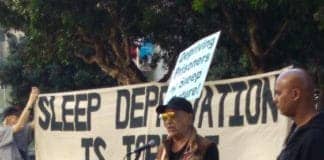
Rally, press conference and court solidarity to end sleep deprivation
On Feb 8, 2018, Northern District Judge Vince Chhabria held a hearing on a motion by the California Department of Corrections and Rehabilitation (CDCR) to dismiss civil rights lawsuits brought by two prisoners, Christopher Lipsey and Maher Suarez, who are suing CDCR for violation of their Eighth Amendment rights against cruel and unusual punishment. Specifically, they have brought their lawsuits to put an end to the sleep deprivation of prisoners caused by “security/welfare checks.”
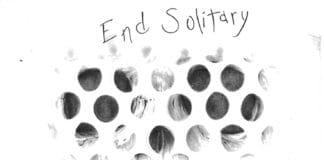
PTSD SC: Post-Traumatic Stress Disorder Solitary Confinement
California Department of Corrections and rehabilitation (CDCr) had been locking classes of prisoners up in solitary confinement since the ‘60s as part of CDCr’s para-military low-intensity warfare, to break the minds and spirits of its subjects, California’s prisoner class. CDCr’s solitary confinement has two operating components: 1) punishing you and 2) physically and mentally destroying you.
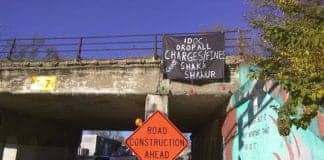
Shaka Shakur: Help resuscitate justice in Sullivan County
Usually Feb. 21 is a day of remembrance and reflection for me as it represents the anniversary of the day Brother El-Hajj Malik El-Shabazz aka Malcolm X was assassinated by agents of the U.S. government and its counter-intelligence program, COINTELPRO. Well, this Feb. 21, 2018, I’m having to focus on and prepare for a different type of assassination, a different type of murder, but still a lynching nevertheless. The only difference is it’s in a U.S. kourt* of law.
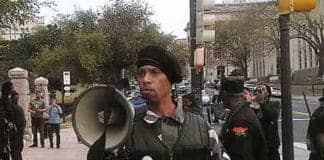
General TACO, embrace accountability for the good of the Black Riders
Comrade TACO, I have been one of your most avid supporters within my organization. But I can no longer associate with you or remain silent. I am asking that you embrace accountability for the good of the Black Riders. To me, accountability means being responsible to myself for my choices and for the consequences of my choices. For me, accountability is an internal skill, not an external process. TACO, nobody can force you to be accountable. And lastly, I will tell you that accountability is a rigorous and difficult process.
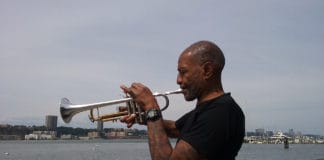
Benefits for the Bay View: Performances of ‘Solitary Man’ Feb. 10...
Don’t miss the highly acclaimed play, ‘Solitary Man: My Visit to Pelican Bay State Prison,’ performed by Charlie Hinton and Fred Johnson. Fred and Charlie launched the new two-person version in September 2017 and return now, on Feb. 10 and 14, for two performances as benefits for the SF Bay View newspaper: Saturday, Feb. 10, 7:30 p.m., at ANSWER, 2969 Mission St., San Francisco and Wednesday, Feb. 14, 7 p.m., at Freedom Archives, 518 Valencia, San Francisco – Show the Bay View some love on Valentine’s Day!
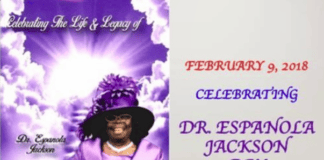
Wanda’s Picks for February 2018
Celebrate Dr. Espanola Jackson Day on her birthday, Feb. 9, with the San Francisco Bayview Hunters Point community. We take this opportunity to honor the memory of Espanola as a community leader during Black History Month. For details of the event, which will be held in the Alex Pitcher Room at the Southeast Community Center, go to the Facebook and register your RSVP online with Eventbrite. All are welcome. Spread the word.
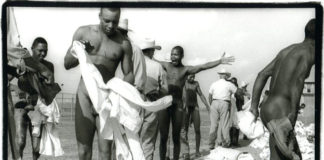
Confessed killer strangles cellmate to death – Texas prison staff tries...
Odd as it seems, seeing prisoners left for dead or killed by guards is nothing new to me. The reason this may seem odd is that each death was during my seven-year stint in solitary confinement, and I was a prime witness or in earshot of a direct witness. It seems that the Ad-Seg Transitional Program (ASTP), where I am now, is no exception where the killing of prisoners is concerned, as I was recently in the proximity of another. And, of course, another cover-up.

TDCJ’s ad-seg program is for profit not for rehabilitation: From sensory...
After randomly being awakened in the early morning, boarded onto the TDCJ transportation bus, then shipped to the Ramsey Unit, a prisoner told me that the experience was like “being snatched from a dungeon and sent to a new wave slave plantation.” The statement he made is a reality that many prisoners housed in close custody units and solitary confinement cells throughout the state of Texas are experiencing, on a whim.
Florida prisoners are laying it down
During early 2018 prisoners across Florida are gonna “laydown” in nonviolent protest of the intolerable conditions in Florida’s prisons. The objectionable conditions being protested include unpaid slave labor, compounded by outright price-gouging in the system’s commissary and package services, and the gain-time scam that replaced parole, which, coupled with extreme sentencing, has created overcrowding and inhumane conditions.
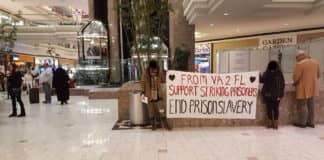
Operation PUSH prisoners’ strike sparks ‘war’ between slavery supporters and abolitionists
It’s been a hard silence for the past five days since Operation PUSH launched a statewide prisoner strike in the Florida Department of Corrections prison system (FDOC or FDC) coinciding with Martin Luther King Day. Information from prisoners is coming in at a much slower pace than people on the outside had anticipated, but reports are slowly and steadily making their way through the walls, despite many obstacles.
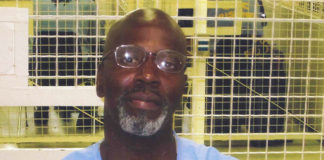
The Death Penalty makes redemption impossible
The public, with its hunger for revenge, does not want to hear about personal acts of atonement by people who have been sentenced for a crime. Acts of atonement by the condemned are usually viewed as a ploy to save his or her own life – not as a genuine act of redemption. People on death row are deemed the lowest of the low. Many people believe death-row prisoners cannot be “reformed” because they are “unformed” as human beings.
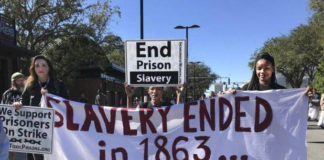
Florida prisoners launch strike against slave labor
There is one place in the U.S. where slavery is still constitutionally legal: in prisons. The 13th Amendment to the U.S. Constitution, passed in 1864, abolished slavery and involuntary servitude, except as punishment for a crime. But prisoners held in this enslavement are organizing resistance. Brave prisoners within the Florida state prison system have organized themselves into a month-long work strike called Operation Push. It began on Jan. 15, Martin Luther King Day. In a phone interview, an anonymous prisoner-activist specifically linked the strike to King’s legacy of protest against racism and economic injustice.
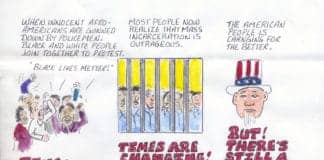
Make history in 2018, not excuses: Whose side are you on?
As we continue to raise awareness and lift up our voices so that we may be heard on the issues of systemic racism and economic exploitation in the criminal justice system, as well as prison slavery and police killings and brutality, we continue to see an evil and determined enemy dig in its heels in the name of White Supremacy. In October 2017, it was reported that the Trump administration is seeking more immigration jails and detention facilities to house more immigrants that they plan to arrest.
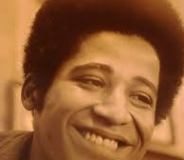
How I survived 22 years of solitary confinement
“I” is “We” in Afrikan science. In terms of surviving 22 years of solitary confinement, “I/We survived” primarily because the indomitable spirit of our Afrikan ancestors lives on in each of our spirits. “We survived” but we were not unaffected. “We survived” but we did not leave solitary normal. “We survived” because we refused to be counted among the broken men. “We survived” because the repressive tactics and measures inflicted upon us by our captors bred a fierce resistance within us.