


by Aïda Jones
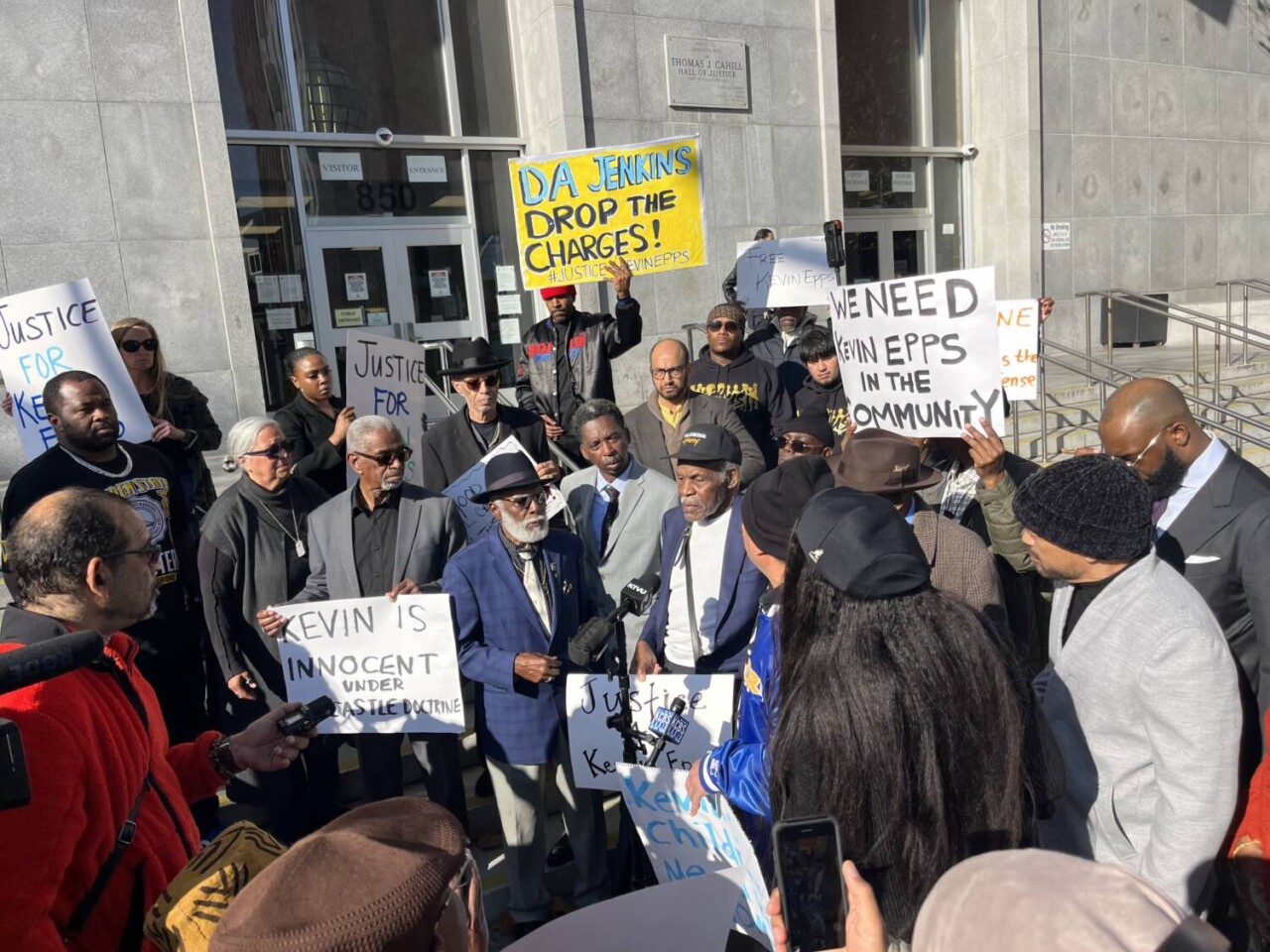
On April 8, in Department 26 of San Francisco Superior Court, Kevin Epps, Executive Editor of the San Francisco Bay View newspaper, was sentenced to six years and eight months in state prison.
You can read that in KQED or Mission Local. Or in the SF Chronicle’s article that was filed by a climate reporter and cited KQED as its source — where you’ll also learn that two district attorneys refused to file charges against Mr. Epps before a third did, nine years after the killing.
What you cannot read there is how that sentence was arrived at.
Judge Brian Ferrall claimed he was bound by the penal code to sentence Mr. Epps to three, six or 11 years. He acknowledged Epps’s trauma, his community contributions, the mitigating weight of a nonviolent criminal history and the fact the single prior felony offense was nearly two decades earlier. He dismissed the three-strikes enhancement, the prior prison term enhancement, and the prosecution’s most aggressive arguments.
The record suggests a balanced proceeding.
It was not.
What the transcript cannot convey is the quality of the judge’s skepticism — applied exclusively in one direction. Every mitigating factor offered on behalf of Epps was diminished, including the defense’s trauma expert whose assessment the judge dismissed as “cursory.”
Meanwhile, the prosecution’s portrait of Marcus Polk went unchallenged from the bench: a canonization of a man who, by the court’s own record, was high on methamphetamine, had been sent away earlier in the day after being in an altercation, and returned — uninvited — to a home full of children, the home of a man he knew didn’t like him.
Judge Ferrall remarked that Polk was “probably the least empowered” person in the room that day in 2016. That may be true in a narrow material sense. But the burden of moral clarity — of making the right decision in a moment of mortal threat — was placed entirely on Kevin Epps, not on the man who chose to trespass his way into someone else’s home while high on meth.
The judge asked why Epps had an illegal gun. He did not ask why Polk was there at all.
That asymmetry is the story. And the only way to know it is to have been in that courtroom, to have heard the timbre of the rulings, and to have watched the prosecutor theatrically mourn a man he spent the trial flattening into a symbol.
The reporters who filed their dispatches by calling the attorneys after the fact or from prior coverage missed it entirely — though credit goes to SF Bay View, California Black Media and Mission Local reporters for attending and covering almost every proceeding.
They missed the judge twice referring to Epps as “Mr. Polk” in the last moments of the trial, and after condemning Epps to six years and eight months, lecturing how he knows Epps “will do good for the community when you come out.”
The system failed Kevin Epps. The media, the institution designed to hold our systems accountable, failed one of its own. Not by covering the verdict incorrectly, but by treating presence as optional when presence is everything.
San Francisco writer Aïda Jones can be reached at info@thejonesinstitute.com.