



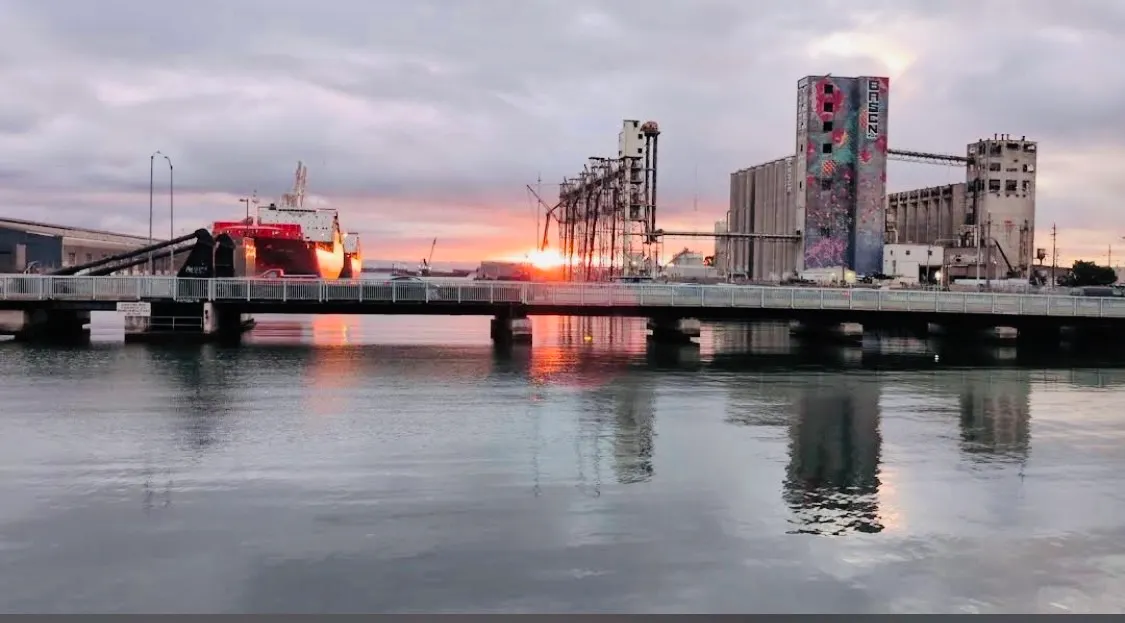
The simultaneous demolition of radiation contaminated buildings at the Hunters Point Superfund Site and the Islais Creek Bridge threatens to transform Bayview Hunters Point into ‘LITTLE GAZA!’
by Ahimsa Porter Sumchai MD, aka Politico MD
The Islais Creek Bridge Project proposes to demolish and replace the historic Levon Hagop Nishkian Bridge (locally known as the “silver bridge”) that carries Third Street across the Islais Creek channel in San Francisco’s Bayview Hunters Point. The existing bridge was designed in 1945 by structural engineer Leon Hagop Nishkian and named after his grandson, Levon. Described as a side double leaf bascule with three girder lines, two on the edges and one in the center, the Islais Creek Bridge features futuristic metal covers that provide both protection and decoration. [See https://historicbridges.org/bridges/browser/?bridgebrowser=california/3rd south/]
The replacement bridge would meet structural and seismic standards and be resilient to projected sea level rise to the year 2100. Project construction is expected to take up to two years. There would be no public access for vehicles, light rail or pedestrian traffic once the bridge is closed to the public. Light rail operations will shut down up to 19 months after the bridge closes.
Many Bayview Hunters Point neighbors accept the need to replace the structurally deteriorating and eroding drawbridge. However, most residents have no idea the City is planning to demolish the seismically unstable bridge this year and that the total duration of the project is estimated to be 30 months.
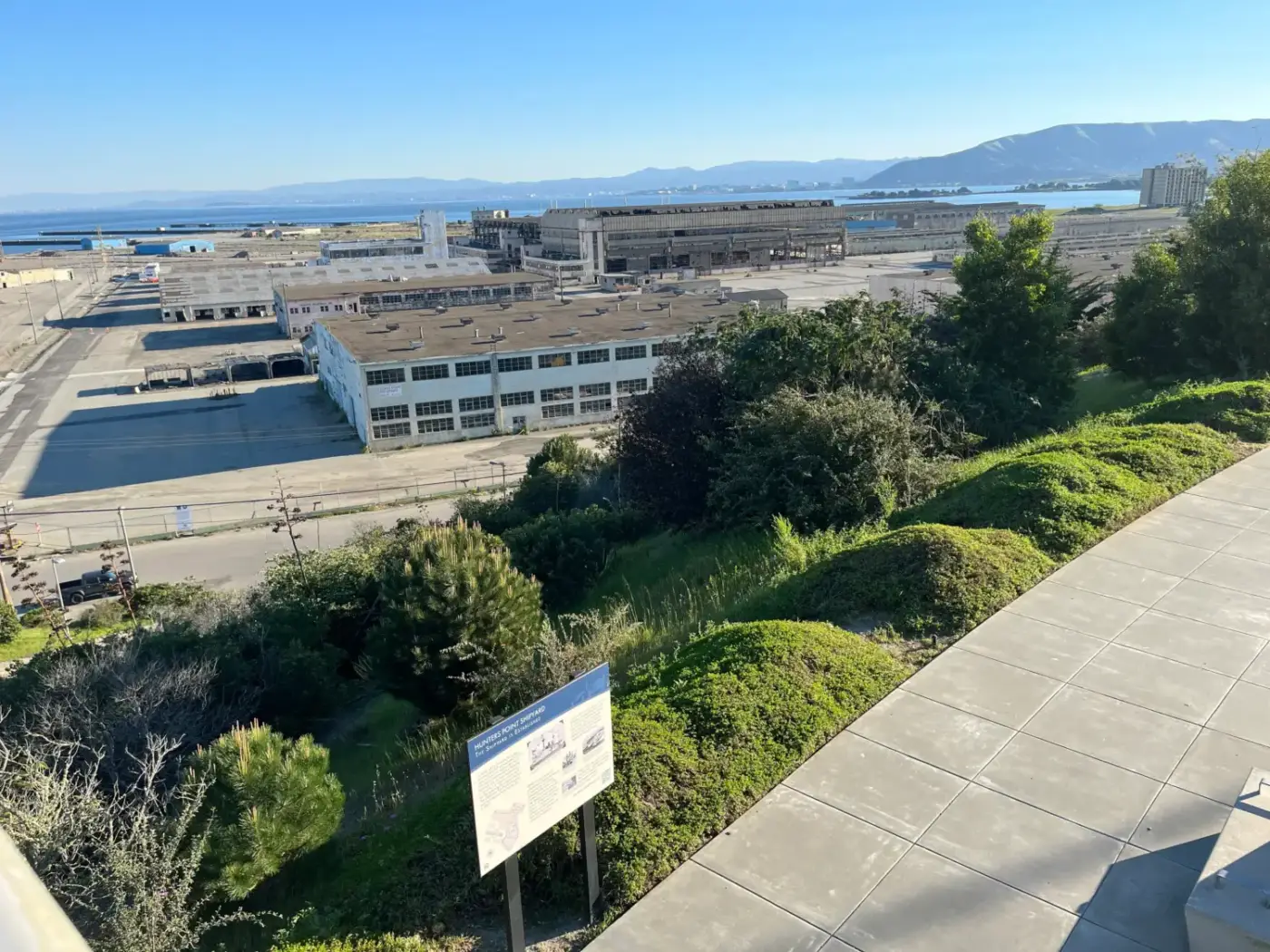
At a Town Hall meeting hosted by congressional candidate Saikat Chakrabarti in January, the cumulative impacts of the proposed demolition of the Islais Creek Bridge on a timeline simultaneous with the proposed demolition of six radiologically impacted buildings at nearby Hunters Point was discussed. Saikat visited the Parcel G Demolition Zone in September of 2025 and later filmed a sternly worded video at Parcel G affirming as a policy statement he will not build houses on property “with radiation signs on it!”
The San Francisco Metropolitan Transportation Agency has proposed mitigation measures to address traffic impacts and to develop a community engagement and mobility strategy for residents and businesses impacted by the demolition and closure of the Islais Creek bridge. The Department of Public Works will construct the new bridge with new T-Third light rail tracks that SFMTA believes will ensure a more reliable and efficient transit line.
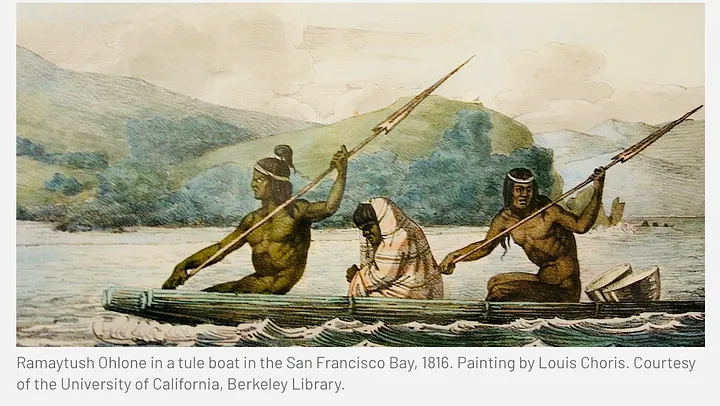
The ancient history of Islais Creek
The Ramaytush Ohlone cultivated the rich tidal wetlands of what became San Francisco’s largest watershed draining from Mount Davidson and Twin Peaks. The Yelamu tribe gave name to the Islais Creek wetlands that sustained them with an abundance of salmon, trout and edible fruit. The creek’s name, Islais, is derived from the native word for the hollyleaf wild cherry: Islay.
The Indigenous American gathering site became a heavily polluted industrial channel by the early 20th century – filled with rubble and debris from the 1906 earthquake. It was called the “sewer-choked channel” when Islais Creek was encircled by meatpacking plants and slaughterhouses and came to be known as Butchertown during the 1860s.
Islais Creek Channel remains a tidal waterway emptying into San Francisco Bay. While Islais Creek is not listed on the National Priorities List as a Federal Superfund site, it has a long history of industrial contamination and federal enforcement actions. State regulators designated Islais Creek a “toxic hot spot” due to elevated levels of PCBs, heavy metals and bacteria.
Islais Creek sediment contains elevated concentrations of persistent pollutants like mercury, polycyclic aromatic hydrocarbons and organochlorines. The proximity of Islais Creek to the northern piers of the Hunters Point Naval Shipyard federal Superfund site increases the likelihood of radiation contamination of the contiguous shoreline sediments.
Islais Creek acts as a culvert for sewage and storm water management causing heavy rain overflows that release and disperse chemicals hazardous to public health. In 2005, 40,000 gallons of diesel fuel leaked from a SFMTA facility into Islais Creek, leading to a Clean Water Act violation settlement.
In May 2024, EPA filed a complaint against the City and County of San Francisco for unauthorized discharges of billions of gallons of sewage into tributaries of the Bay. While not a Superfund site, the Islais Creek Bridge Rehabilitation Project received $90.8 million in federal grant funds.
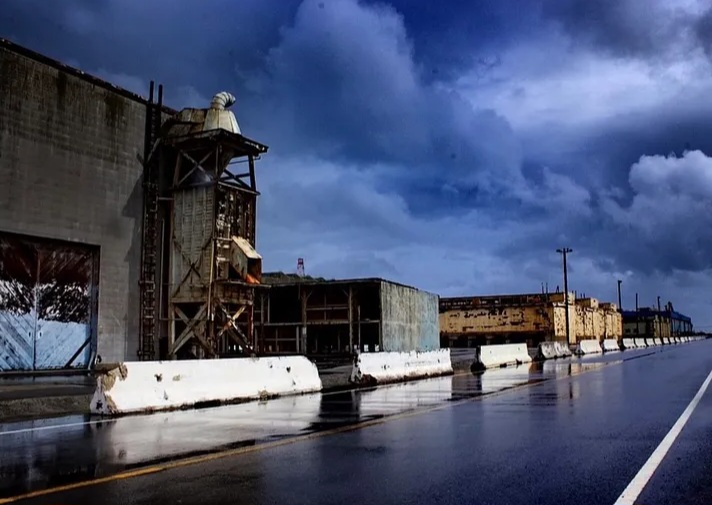
Hunters Point Biomonitoring Foundation Board of Directors unanimously adopts four-point platform resident protection measures on March 18, 2026
1.Measure 1 in HP Biomonitoring’s Four Point Platform for Resident and Worker Safety and Resident Protective Measures is the build out of the SF Shipyard Neighborhood Watch to include photo and video documentation of demolition activities that endanger community safety. HP Biomonitoring proposes NAVFAC install one or more 24/7 live cams overlooking the Demolition Zone for Phase I and Phase II Building Demolitions. HP Biomonitoring invites neighboring businesses and residents to install live cams on properties facing the eastern shoreline of HPNS. Historical precedent for construction site monitoring in Bayview Hunters Point is memorialized in the naming of Youngblood Coleman Playground. Rubin Youngblood and Wardell Coleman were 10 years old who died when a dirt wall collapsed on them while playing at a negligently maintained housing construction site in 1974.

2. Fence line fortifications as required by the Draft Final Remedial Action Work Plan for the Parcel G Building Demolition are called for in Measure 2. The Federal Superfund site has historically lacked basic fence line fortifications, signage and public notifications of exposure to chemicals proven to cause cancer and reproductive harm — as required by State of California Proposition 65.
3. Measure 3 requires the community-led creation of a Community Notification Plan (CNP) modeled after the CNP developed by the Hunters Point Shipyard Restoration Advisory Board in the aftermath of the August 2000 Parcel E-2 landfill fire. The CNP was demanded by community leaders following attempts by the Navy to conceal a chemical fire that erupted in clear view of Hunters Point hilltop residents and shipyard workers. On June 7, 2001, EPA announced a $25,000 penalty against the Navy for the two week delay in notifying the community and lead regulators of the landfill fire that erupted on the southern border of the base. The failure in notification violated the Federal Facilities Agreement (FFA). The Navy violated the FFA in October 2024 when it failed to notify regulators and the public that airborne Pu-239 was detected by air monitors downstream from a Radiation Staging Yard operated by the Navy on Parcel C — next door to the Parcel G Demolition Zone.
4. Measure 4 is a Temporary Emergency Relocation Plan — TERP — created to offer provisions for urgent relocation to residents with documented injuries, associated illness and/or property damage due to demolition activities. The TERP includes community education about the right to file a Federal Tort Claim within a year of injury, illness or property damage using SF95.

SF Bay View Health and Environmental Science Editor Ahimsa Porter Sumchai, MD, PD, founder and principal investigator for the Hunters Point Community Biomonitoring Program, founding chair of the Hunters Point Naval Shipyard Restoration Advisory Board’s Radiological Subcommittee and contributor to the 2005 Draft Historical Radiological Assessment, can be reached at AhimsaPorterSumchaiMD@Comcast.net. Dr. Sumchai is medical director of Golden State MD Health & Wellness, a UCSF and Stanford trained author and researcher, and a member of the UCSF Medical Alumni Association Board of Directors.