

A culturally relevant space for children ages 0–5 in Oakland
by JR Valrey, The People’s Minister of Information
The late, great, legendary songstress Whitney Houston once sang, “The children are our future[ teach them well, and let them lead the way…” The words were sung majestically, but more importantly they are chillingly true. I’ve shortened what I took from the message of the song, which is that you only get out of a child what has been put into them.
Afro-Play is an organized play space dedicated to the development of Black children from ages 0–5 years old that occurs in East and West Oakland on a regular basis. I grew up with the co-founding director Ellen Hamilton, who was always artistically inclined and driven, and years later I found out about her work from a younger cousin with a daughter, who raved to me that her daughter was attending a phenomenal youth program. It just so happened that it was Afro-Play, and I later found out, upon further research, it was founded by Ellen Hamilton and her partner Ajhana DeRamous.

As a single father, who didn’t grow up with a father, had limited family support, and who helped to raise my children, I had a lot of unanswered questions about rearing them. Afro-Play is the kind of community of Black parents and children that I wish I’d had. Hopefully the parents of today can take advantage of the services of Afro-Play, as well as the knowledge of its co-founders, for the benefit of the children and community as a whole.
JR Valrey: What is Afro-Play? When did it start? Why?
Ellen Hamilton: Afro-Play is an affinity family playgroup for families with Black children ages birth to 5 years old. The best way to describe the setting of a “playgroup” is a space set up similarly to a preschool, with a short structured play-based schedule and where parents and caregivers are present to engage in activities alongside their child(ren). Next we have to further describe what a playgroup is, as some people are unfamiliar with the concept. Often people hear the term and assume it’s something that’s just for moms or just a “thing” for women to “sit around” while their children play. No, Afro-Play’s playgroups are not that at all.
First, Afro-Play is not just for women. Parents, grandparents, caregivers and other family members of all genders are welcome. We are an intergenerational program. Second, Afro-Play’s playgroups are far more intentionally involved, designed to foster meaningful parent-child and community engagement. The experience goes far beyond simply supervising children at play. It’s a place where parents can build their village, find community and access essential community resources that support them in navigating parenthood. For example, various workshops, free diapers and wipes, or free produce and pantry items.
Afro-Play began in 2018 as a response to a community call. But before we get into that, it’s important to understand how we met and grew into our current roles as Afro-Play Oakland’s co-founding directors.
In 2016, we (Ellen Hamilton and Ajhana DeRamous) were participating in a multicultural playgroup at Allendale Elementary through Lotus Bloom in Oakland. I (Ellen) was attending with my third child and had been involved in multicultural playgroups within Lotus Bloom’s network for many years. Ajhana was attending with her first child, newly postpartum and new to both parenthood and playgroups. We each consistently attended the twice-weekly Allendale playgroup with our infants and toddlers, Aziyah and Ezra.
We were two of only a few Black families who regularly participated. Our children brought us together first. As two of the few consistent Black children in the group, they naturally gravitated toward one another and became friends. Their friendship organically introduced us as mothers and moved us beyond the familiar cultural head nod we’d exchanged as the only other Black (and “Oakland-Bay Area” Black) person in the room.
About a year later, we were both invited by staff to become “Parent Leaders,” assisting with tasks such as preparing snacks, welcoming new families, and helping families feel connected. Those responsibilities gradually expanded to leading art activities, reading stories, facilitating songs during circle time, and eventually serving as lead support for Black History Month programming, which was something new for that program to implement. That became one of our proudest accomplishments and made a lasting impact.
That’s where the magic between us as co-leaders began. What started as volunteer leadership evolved into something much more impactful. Although we were in a multicultural setting, Afro-culture often had little to no representation. Too often, Black culture gets lost in the multicultural mix. For example, Lunar New Year might be acknowledged in February while Black History Month gets overlooked, or Christmas and Hanukkah are celebrated in December while Kwanzaa went unrecognized.
In our experience, Black people need to be present in these spaces to authentically implement and share our culture. Otherwise, there is often no representation at all, or a version that lacks depth and impact. At the time (2016–2017), and historically, across many community play spaces, there was very little consistent Black family participation. Playgroups were not a familiar concept within Black culture, so Black cultural presence was often absent. As a result, Black parents who did attend frequently could feel isolated and disconnected from the play experience with their children.
From Parent Leaders, we became Substitute Playgroup Teachers, filling in at Lotus Bloom sites throughout Oakland, including Garfield Elementary, their main site in downtown, Allendale Elementary, and Room to Bloom. That brings us back to the community call mentioned earlier.
Staff at the Room to Bloom site approached us with an opportunity to lead a parent-driven project: creating an affinity group specifically for African American families. They had struggled to maintain consistent participation and wanted to increase awareness of playgroup services in the Castlemont neighborhood, a historically Black community in Deep East Oakland. The opportunity was to launch a nine-week pilot playgroup for Black families, funded by First 5 Alameda County, through Lotus Bloom. This opportunity also came as Ellen was beginning her fourth pregnancy.
On March 20, 2018, Afro-Play debuted and the community showed up and kept coming! Every week we reached capacity. Our success came from simply providing what had been missing: Black culture and a space where parents of Black children felt welcomed, connected, celebrated and supported with resources for their families, and led by Black parents.
Because of the pilot’s success, Lotus Bloom adopted the program “Afro-Play” under its fiscal sponsorship and added it to its regular rotation of weekly playgroups for the 2019–2020 year. Then the pandemic hit … and we had to figure out how to continue without gathering in person. We paused for about a month.
By then, we had already built a strong community of participating families. These were parents with young children who suddenly lost an important part of their routine. Families reached out just to say hello and let their children hear familiar voices. Others asked for ideas to help fill the long days at home. One parent texted, “I’m at home with a toddler and I don’t know what to do!” Another asked, “Can y’all just read an Afrocentric book online or something?”
That request sparked an idea. We realized we could stay connected through YouTube. We launched a channel and created Afro-Play Virtual Circles: weekly prerecorded videos featuring circle time songs, story reading, and art activities. We paired those videos with monthly art supply bags that families could pick up through drive-by distribution at Room to Bloom or at our booth during Black Cultural Zone’s Akoma Market. Each bag contained supplies for the month’s themed projects, helping families stay engaged and connected during a time when isolation was deeply felt.
During that same period, we formed Afro-Play Family Consulting as a General Partnership to support our growing work as other organizations and businesses began contracting our services. We sold Afro-Play Kwanzaa craft bags during the holiday season and Afro-Play Black Legacy Month craft bags, both equipped with a personalized link to demos for the curated bag of supplies. We continued adapting while navigating the uncertainty of statewide shelter-in-place and shutdown orders.
After a period of small outdoor gatherings, we fully returned to in-person programming for the 2021–2022 school year with our weekly East Oakland playgroups. Participation was vibrant. Families were excited to be together again. Some returned with new “pandemic babies,” including Ajhana, who was pregnant with her second child. Others joined us for the first time after only knowing Afro-Play through YouTube and social media. Our community continued to grow and thrive.
We maintained consistent programming in East Oakland and, in Fall 2023, expanded to West Oakland through a monthly Afro-Play pop-up at Mandela Family Resource Center through Lincoln Families. In 2024, Afro-Play Oakland officially became a 501(c)(3) charitable nonprofit organization.
JR Valrey: When and where exactly is Afro-Play?
Ellen Hamilton: Currently, Afro-Play operates out of two locations through community partnerships. Weekly on Tuesdays in East Oakland at Room to Bloom Family Resource Center and once a month in West Oakland at Mandela Family Resource Center. It is a value of ours to remain deeply rooted in East Oakland, where we began, and to one day be able to afford to operate out of our own storefront space as a community hub for Black families.
JR Valrey: What is the importance of playing?
Ellen Hamilton: Play is everything! What is life without play? What kind of life can someone have without a little imagination? Play is joy, and joy is a necessity in life.
We firmly believe that all children, especially Black children, deserve joyful play experiences. We can’t be serious all the time. Black people need more opportunities to play, exercise creativity, and simply enjoy being present in the moment. There is power in embracing the freedom of play, something many of our ancestors were not afforded. Black Joy is Revolutionary!
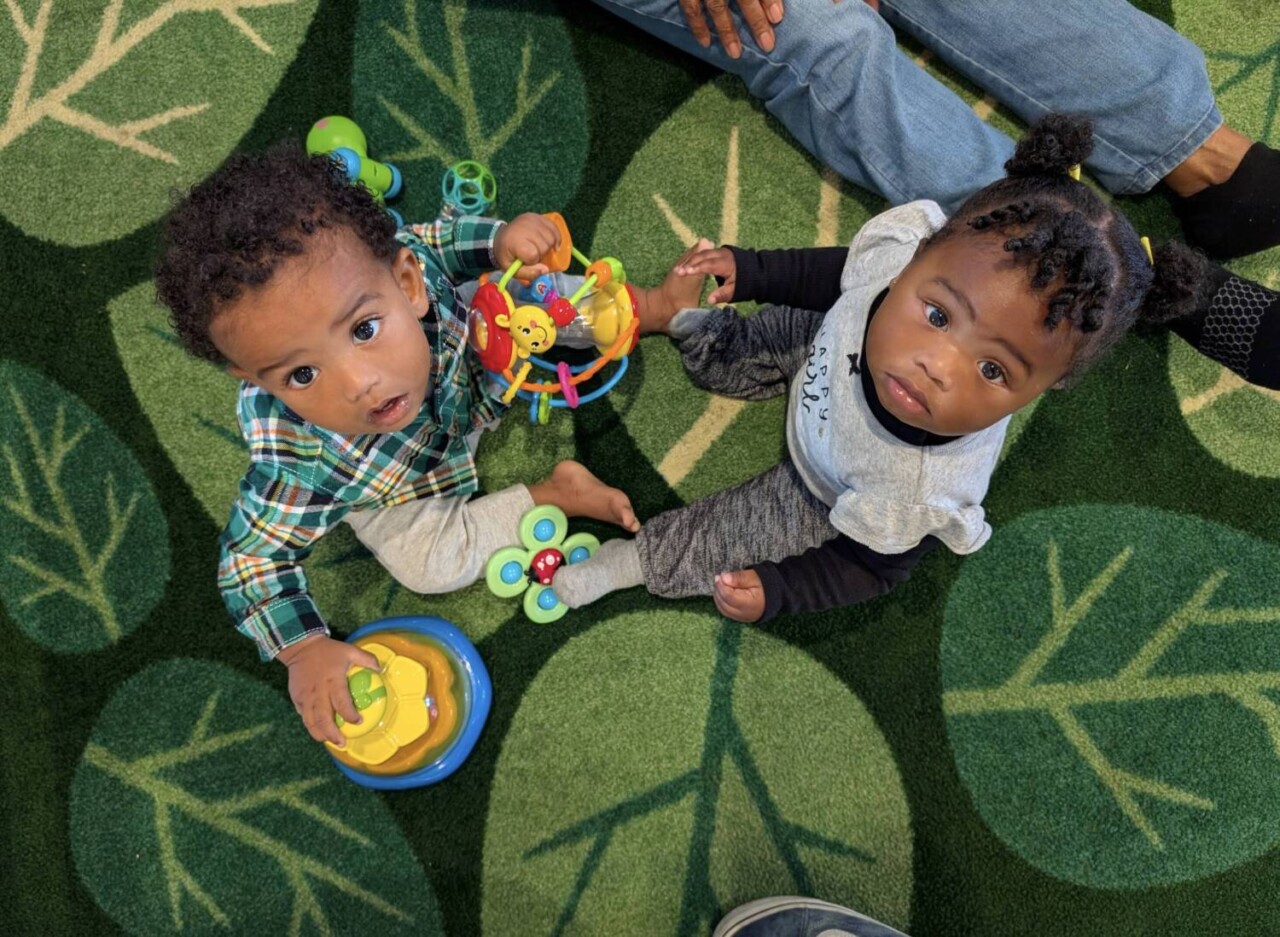
At Afro-Play, we encourage parents and caregivers to leave their Sunday best at home, get a little messy, be present, and fully engage in play alongside their children. It’s okay! In fact, many of our parent participants tell us they enjoy the program just as much as their children. Through sensory activities, dramatic make-believe play, hands-on art, interactive music, and movement, they often reconnect with parts of their own childhood that were limited by cultural expectations.
We frequently hear familiar childhood stories about being told not to get dirty, mess up their clothes, or take up too much space. While often well-intentioned, those messages can create fear and anxiety where courage and confidence should be growing. Play encourages exploration, curiosity and discovery. The early years of childhood are often considered the “explorer years,” when children learn most by following their curiosity, whether that’s climbing a slide, mixing paint colors, building with blocks, or playing with someone new. Afro-Play creates an environment where families can play freely and without judgment. Get silly, get a little dirty, and keep exploring.
From a developmental perspective, play is essential in early childhood. It supports physical development by strengthening growing muscles, fine motor skills, and gross motor skills, while parent-engaged play helps build language/vocabulary, communication, and social-emotional skills.
A large part of our playgroup schedule is dedicated to “Free Play,” and it is exactly what it sounds like. We provide developmentally appropriate play stations for children and their parents or caregivers to explore at their own pace within a supportive community setting. During free play, children practice sharing, problem-solving, negotiation, communication, and emotional regulation. These are all foundational skills that infants and toddlers develop through social play experiences. Play is how children learn, how families connect, and how play-based communities like Afro-Play thrive.
JR Valrey: Who exactly is your target audience?
Ellen Hamilton: Our primary service population is Black children ages birth to 5 years old and their Black parents/caregivers. We also welcome parents and caregivers of Black children who may not identify as Black themselves; these can be biological, foster, and adoptive parents.
Afro-Play is centered on the experiences and needs of Black children and families, so we ask all participants to be mindful of and respect the purpose of this sacred affinity space that we built with a lot of caution and care. While those parents are welcome to participate, some resources and discussions may be specifically intended for Black parents and caregivers.
JR Valrey: What is your biggest achievement with Afro-Play? Why?
Ellen Hamilton: Afro-Play Oakland is a two-time award-winning program.
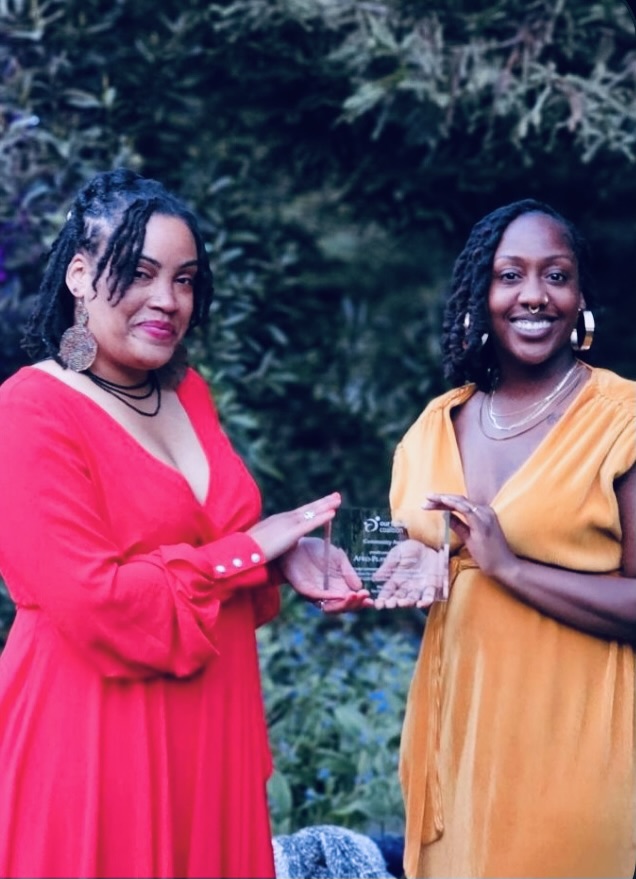
Honorable Judge Benjamin Travis Community Service Award: Awarded by the Charles Houston Bar Association in December 2025.
“Congratulations! On behalf of the Charles Houston Bar Association (CHBA), the oldest association of Black judges, attorneys and law students in California, I am proud to inform you that after careful consideration of the meaningful and measurable difference Afro-Play Oakland has made in the lives of Oakland’s Black community by providing an affirming and supportive space for Black children and families, we have selected Afro-Play Oakland to receive CHBA’s most prestigious honor that we bestow on a community organization that has demonstrated a commitment to advocating for Black children and families, the Benjamin Travis Community Service Award, at CHBA’s 70th Annual Scholarship Awards Gala.” – Vincent L. Brown, (former) President
Community Award: Awarded by Our Family Coalition in May 2023.
“The work you did to identify a large gap for Black families in the Bay Area is remarkable. Your commitment to supporting the healthy social and emotional development of our Black youth is incredible and commendable. When others would shy away, feeling discouraged from the current state of anti-Blackness and the continued systematic oppression and dismantling of Black families, you two stood up to create an oasis of hope and transformation for our community. What’s more, your programming has also lifted and affirmed Black Queer families. Thank you for your partnership and tenacity. Your work truly raises awareness in bringing our families into greater public view and provides a role model of courage and commitment on what we can accomplish when we come together.” – Mimi Demissew, Our Family Coalition Executive Director
Receiving this level of recognition from two distinct organizations is especially meaningful because it affirms that Afro-Play’s impact is being felt far beyond our immediate community. While the gratitude and trust of the families we serve each week remains our greatest source of motivation, these honors validate the importance of creating spaces where Black children and families can thrive. They also reflect the growing reach of our work and the universal need for the affirming, community-centered programming that Afro-Play provides. Afro-Play is simply our heartwork, and that will forever be our greatest accomplishment.
JR Valrey: What has been your biggest struggle?
Ellen Hamilton: Our biggest challenge has been securing consistent, multi-year funding that would allow Afro-Play Oakland to expand our capacity and establish a permanent community space. While we’ve been fortunate to receive some grants and build strong partnerships with organizations and community members who believe in our work, the value of affinity spaces can sometimes be misunderstood. Some people view affinity groups as exclusionary or even racist, when in reality they exist to create belonging, healing and connection for communities that have historically been marginalized. Afro-Play is rooted in teaching self-love, cultural pride, and Harambee! A community that pulls together for Black children and families in a society that too often sends the opposite message. It’s difficult to fully capture that impact on paper. Afro-Play is something you have to experience. IYKYK! We remain confident that the right opportunities and resources will continue to find us as more people witness the transformative power of this work.
In that same spirit, we are encouraged by the growing support for Afro-Play. In March 2027, we will host our 3rd Annual Game Night in Red, Black, and Green fundraiser, bringing together public officials, community leaders and supporters who believe in our mission. This year’s event was a success and reinforced that people recognize the value of Afro-Play and want to help ensure it thrives for generations to come. We are excited to build on that momentum and believe next year’s fundraiser will be even more impactful.
JR Valrey: How can people keep up with Afro-Play? How can they contact you?
Ellen Hamilton: Afro-Play is reachable through our website: www.AfroPlayOakland.org. That’s where we encourage people to sign up to receive our weekly newsletters if they want to keep up with Afro-Play’s programming or contact us for general inquiries or community partnership requests.
@AfroPlayOakland on Instagram, Facebook and LinkedIn. Upcoming Afro-Play programming:
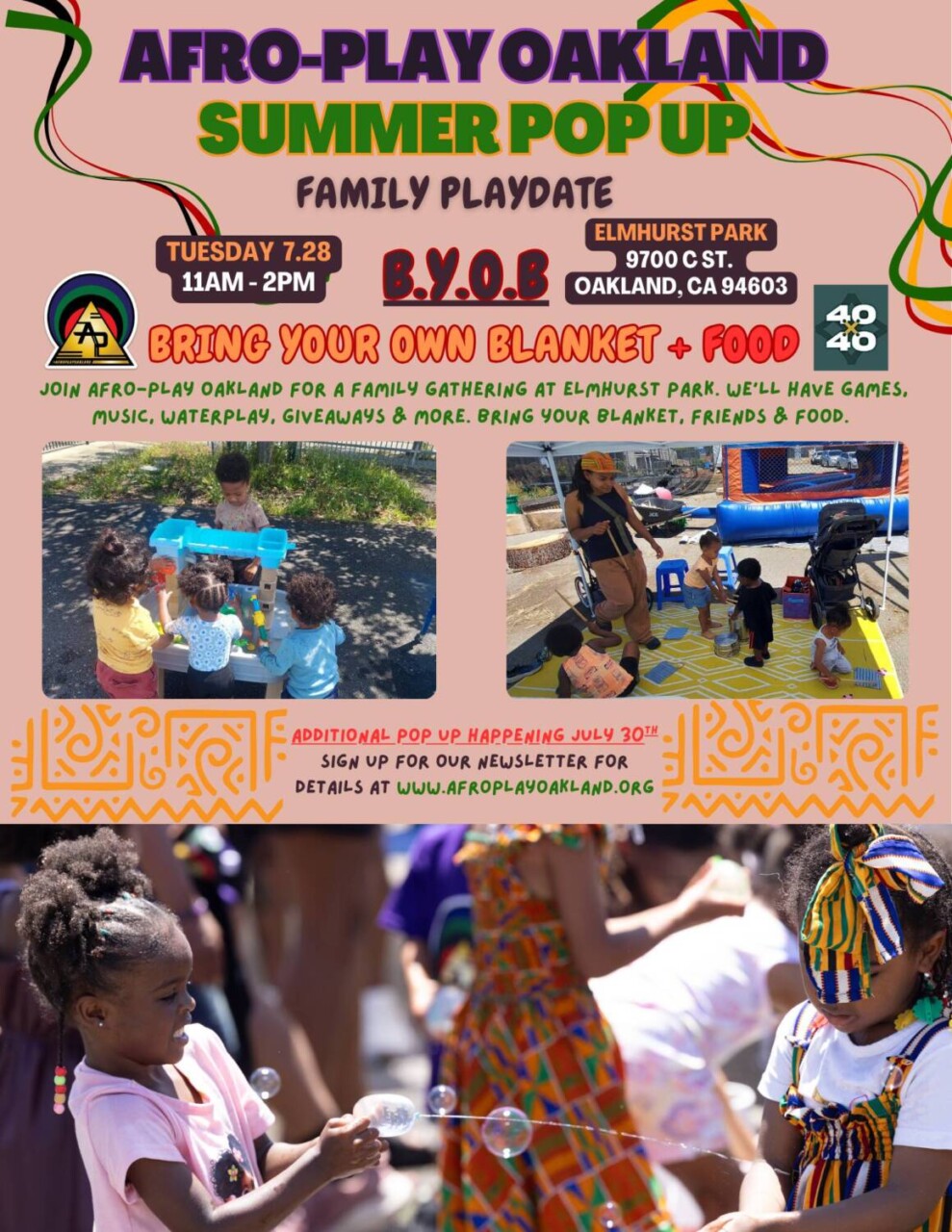
*End of July we will have Outdoor Summer Pop-Ups *Aug. 11 back to regular weekly playgroups in Oakland. Sign up to keep up and tell a friend to tell a friend