


by JR Valrey, the People’s Minister of Information
When many people think of resistance, they think of guns. Some think of organizing. But outside of the organizing community, very few would consider using culture as a weapon, in the spirit of artists like Gil Scott-Heron, The Watts Prophets, The Last Poets, Miriam Makeba, Bob Marley, Fela Kuti, 2Pac, the Coup, Dead Prez and Lauryn Hill. The great Guinea-Bissau revolutionary Amilcar Cabral once said that you can see how ripe a people are for revolution by comparing how similar their culture is to that of the oppressor.
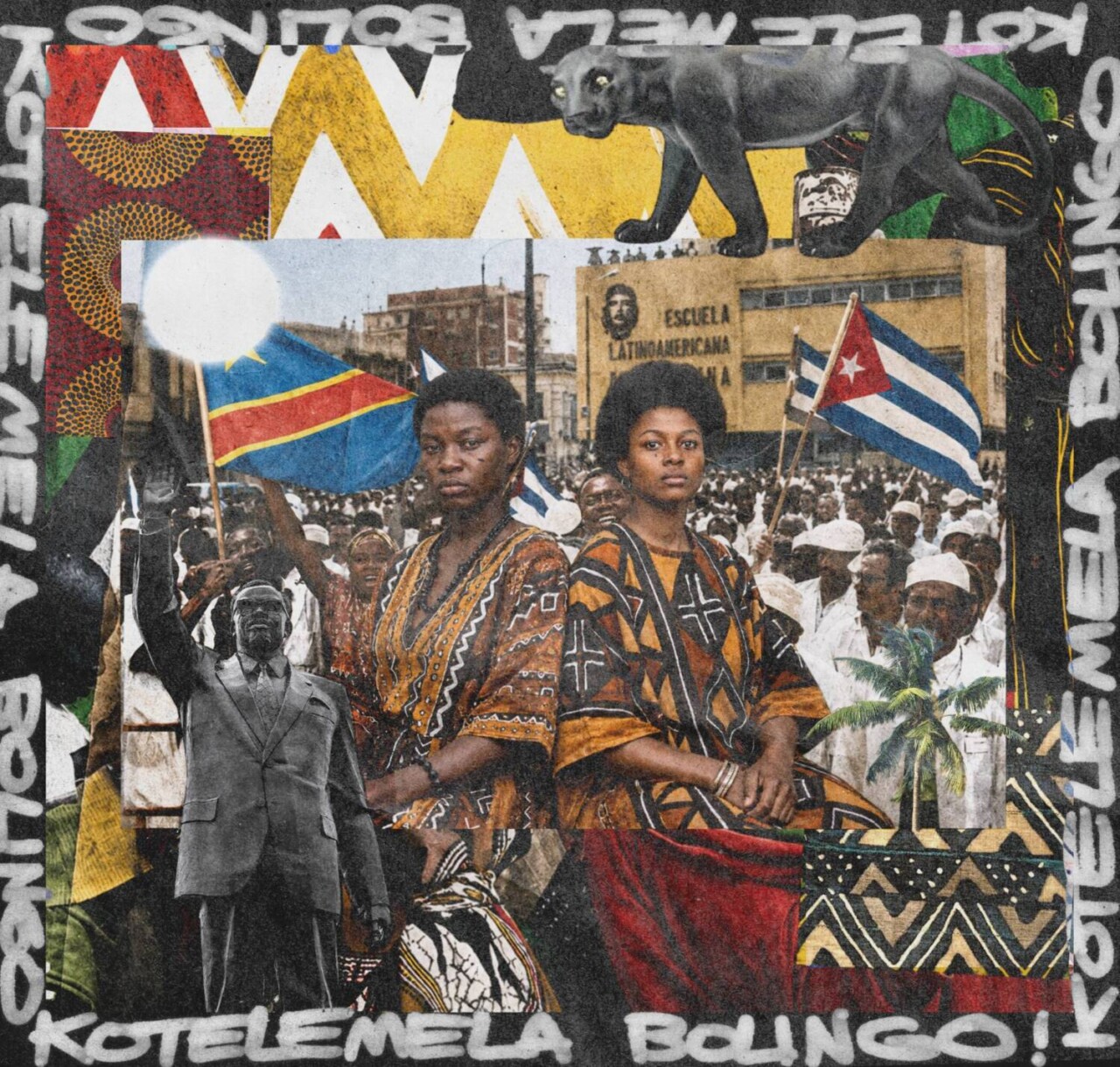
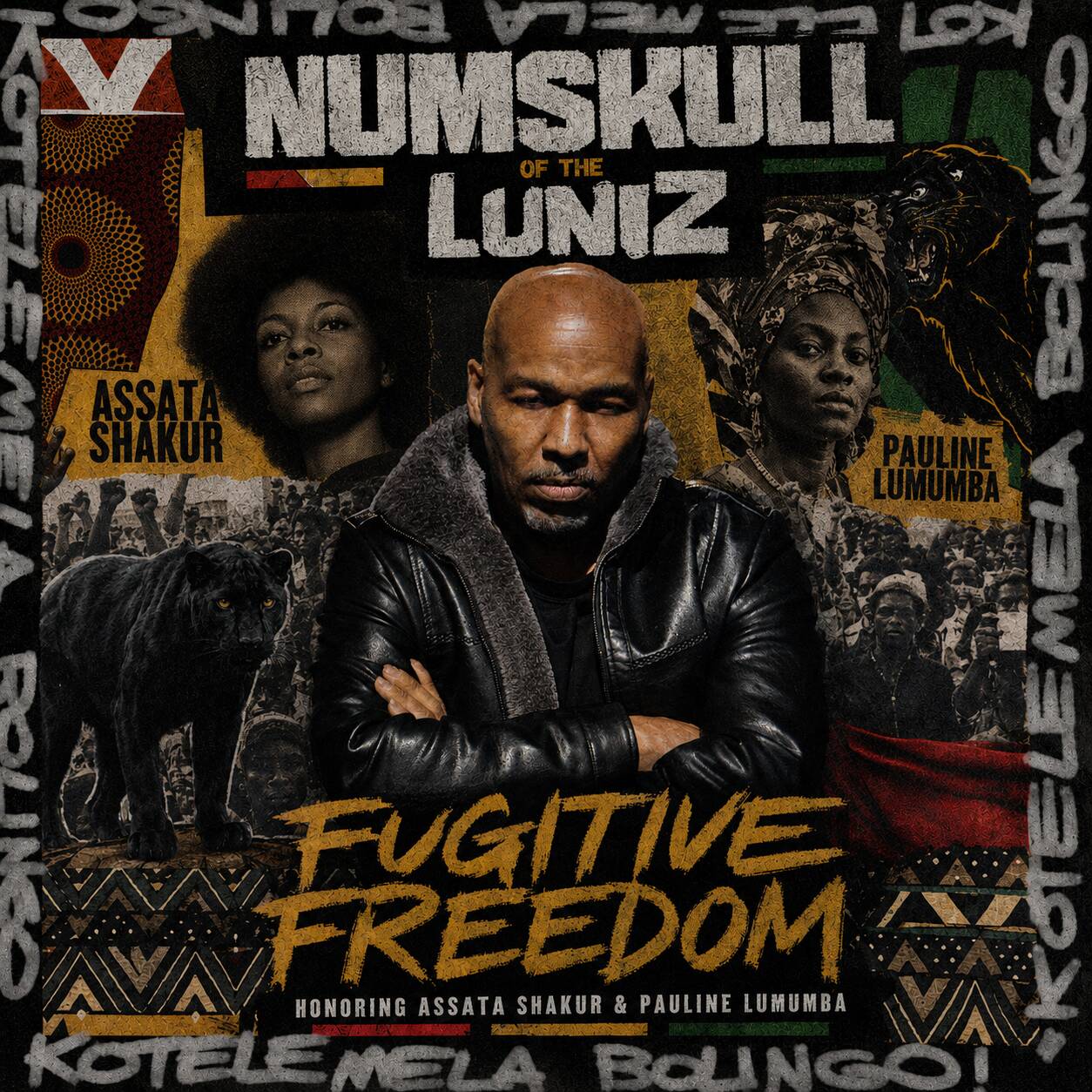
Obi Egbuna Jr. of the Zimbabwe-Cuban Friendship Association has been organizing internationally in support of resistance movements and revolutionary governments for decades. The most recent project that he organized is called “Kotelemela Bolingo,” which means “Resistance and Love” in the Lingala Congolese language. It is a music project — given away for free — dedicated to the late freedom fighter and political exile Assata Shakur of the Black Liberation Army and Black Panther Party, and Pauline Lumumba, the wife of the assassinated first prime minister of the Democratic Republic of the Congo, the late great Patrice Lumumba. The album features legendary artists like Oakland’s Numskull of the Luniz, L.A.’s Ras Kass, and the DMV’s Mumu Fresh, as well as many talented up-and-coming artists from around the world.
You can hear part of the compilation here: Kotelemela Bolingo (Full Album; Vol. 1)
JR Valrey: Who is the Zimbabwe-Cuban Friendship Association? What is its history? What is your relationship with the organization?
Obi Egbuna Jr.: ZICUFA is an organizational vehicle whose aim is to maintain the solidarity and camaraderie between Zimbabweans and Cubans on a people-to-people level.
Traditionally speaking, revolutions start from the bottom to the top. Therefore, while the ruling parties and leadership of both nations have a strong and unbreakable bond, these friendship associations are the reason Cuba’s people and revolution are truly revered throughout Mother Africa. This dynamic is on full display, especially in Mother Africa’s southern region.
In 1985, Cuba bestowed the late Zimbabwean president and Pan-African revolutionary icon Robert Gabriel Mugabe with the Jose Marti Award, Cuba’s highest honor, one year after the youthful, dynamic Pan-African phenom and president of Burkina Faso, Thomas Sankara, was a recipient. When I learned this, it became abundantly clear that certain elements who have written about Cuba’s ties to Africa have allowed subjectivity to affect their better judgment. Too often, they reduce Cuba-African relations to Madiba Nelson Mandela receiving the Marti Award and Cuba’s heroic guerilla mission in Angola. Those who choose to peddle this narrative, historically speaking, leave a lot of meat on the bone.
In 1986, Comandante Fidel Castro visited Zimbabwe for the Non-Aligned Movement conference. I remember the twinkle in the eyes of the late Dr. Nathan Shamuyarira, Zimbabwe’s first foreign minister and national hero, fondly reflecting on this moment in history. Dr. Shamuyarira said Comandante Fidel Castro was going back and forth from the NAM conference to the Cuban Embassy because he was sending instructions to Cuba’s fighting forces in Angola. Somehow, between this rigorous schedule, the Comandante took the opportunity to visit schools in Zimbabwe, which resulted in an agreement with President Mugabe that Zimbabwean teachers could come to Cuba for training. From 1986 to 1996, 3,000 Zimbabwean teachers went to Cuba and became the backbone of their nation’s educational system, which today has a 97% literacy rate.
As this year marks the 40th anniversary of the death of Mozambique’s president, the revolutionary giant Samora Machel, his two personal physicians were Cuban doctors whose lives were claimed in that awful plane crash. When the civil and human rights icon Bayard Rustin broke our hearts and supported the CIA-trained mercenaries UNITA in Angola, whose sole purpose for existence was to overthrow the socialist revolutionary party MPLA, his justification was to prevent the rise of Cuban influence in southern Africa. During Cuba’s guerilla operation in Angola in Cuito Cuanavale, we often forget that the revolutionary party of Namibia, SWAPO, was part of that fight, which represented, at the time, the largest military conflict on African soil since World War II. Our role in this process is a raindrop in a full-fledged thunderstorm.
In 2003, Cuba’s deputy ambassador to their interests section in Washington, D.C., Ambassador Cosme Torres Espinoza, was deported under false charges of espionage. Not too long after this, the U.S. State Department denied Cuban diplomats the opportunity to travel outside the D.C.-Maryland-Virginia beltway. The goal was to curtail the outpouring of invitations Cuban diplomats always receive from educators, clergy, local elected officials, business people, artists, and, of course, grassroots organizers who feel the cowardly and racist blockade is outdated. His next detail was to serve as Cuba’s ambassador to the Republic of Zimbabwe. I met with him in Zimbabwe 20 years ago, and he asked me to join the organization. At the time, I was growing increasingly frustrated with Cuban solidarity efforts in North America, in particular with paternalism and racism. I am eternally grateful to Ambassador Torres for that lifeline.
About 10 years ago, ZICUFA’s secretary general, Comrade Pesanai, who was the first teacher to complete the training in Cuba, asked me to become the organization’s first external relations officer in ZICUFA’s history. This was on par with serving as the U.S. correspondent to The Herald, Zimbabwe’s national newspaper, or perhaps an even greater responsibility and honor.
JR Valrey: Why did the organization organize its fourth musical compilation in honor of Assata Shakur and Pauline Lumumba? What is the importance of these women?
Obi Egbuna Jr.: This is our first compilation honoring Assata Shakur and Pauline Lumumba. However, 12 years ago, we had the honor of collaborating with Mutulu Olugbala, affectionately known as M1 of the internationally acclaimed hip-hop group Dead Prez, for a project entitled BattleCry for Cuba and Zimbabwe. It ended up being a three-album set, with artists the world over lending their voices to the fight to have the U.S. blockade on Cuba and U.S.-E.U. sanctions on Zimbabwe lifted. It was an honor and privilege to collaborate with an artist of M1’s caliber, especially during this time period, when he had many organizers pulling him in a multitude of directions. The first album took two and a half years to complete, but after that, we were running downhill.
The highlight of that time period was when the Cuban diplomat Alexander Rodriguez contacted us and said that the International Committee to Free the Cuban Five wanted us to perform for a concert they were organizing in Washington, D.C. The venue ended up being my old junior high school, Abraham Lincoln. That entire process prepared us for the current effort. The Assata Shakur-Pauline Lumumba Project emanated from the Assata Shakur Cuba Defense Campaign, which was launched two and a half years ago. The campaign had three goals: 1. To get Sister Assata off the terrorist list. 2. To get the $2 million bounty on Sister Assata’s head lifted. 3. To have Cuba removed from the U.S. State Department’s list of nations they accuse of being involved with state-sponsored terrorism.
We had the late Black Panther pioneer Bilal Sunni-Ali as our strategic and tactical advisor on that project. We had an unbelievable press conference that had elected officials like Charles Barron, the councilman and assemblyman in New York; Calvin Hawkins, who was the councilmember at large in PG County; and Hank Sanders, the longest-serving state senator in Alabama’s history, who represented the 23rd District, an area plagued with abject poverty. Senator Sanders was also involved in the negotiations that led to the Port of Mobile being opened to Havana. We had the Grammy-nominated artist Mumu Fresh as well. To top everything off, we had the children in the Thomas Sankara Center in Burkina Faso weigh in on the situation, carrying Hands Off Assata signs through the streets of Ouagadougou.
Last year, we held another press conference turning attention to the medical dimension of Cuban revolutionary expression. We had the former president of the National Medical Association, Dr. Lucy Norville Perez, who was the first NMA president to visit Cuba back in 2002. Dr. Abeeku Dada, who graduated from the Latin American School of Medicine in Cuba and co-founded the International Medical Society of ELAM Graduates, organizes brigades of graduates from ELAM to go and assist Cuba’s Henry Reeve Medical Brigade in nations where they have a physical presence. We had Dr. Mabel Montego, who heads the brigade in Burkina Faso, also weigh in. We had Dr. Mardia Stone, a Liberian physician who was working in Liberia when the Cuban doctors were there a few years back to eradicate Ebola. We worked in partnership with the Friends of the Congo to pull off that press conference. The Cuban embassies in Burkina Faso and Congo-Brazzaville were in attendance. This album is a follow-up to those events. It is a double album with 30 songs featuring reggae, spoken word, R&B, hip-hop, blues poetry, jazz and opera. Through this, we can identify practical ways to support the 4,000 Cuban doctors in Mother Africa.
JR Valrey: Who are the artists that contributed?
Obi Egbuna Jr.: You have Numskull of the Luniz, thanks to you. You have Ras Kass, thanks to Minister Pyeface X, who also brought in the brother Timmy Staxx, whose producing and engineering elevated the project. You have Mumu Fresh, who closed Assata’s tribute with Common and was recently on The Tonight Show with Nas and AZ. You have Grammy Award-winner MediSun, a reggae singer whose voice reminds people of David Hinds from the legendary group Steel Pulse. The genres represented are the highlight. We gave the usual suspects — Dead Prez, Immortal Technique, Yasiin Bey and Talib Kweli, KRS-One, Chuck D — the day off. The production by Timmy Staxx, whose mixes, mastering and engineering are absolutely breathtaking.
I also have to point out that JPhin and Tongo are willing to assist with the logistics of the project, which echoes the sentiment of the Pan-African giant Ahmed Sekou Toure when he said, “To be part of the African revolution, it is not enough to write a revolutionary song. You must fashion the song with the people, and the songs will come of themselves and by themselves.”
JR Valrey: What does the compilation sound like?
Obi Egbuna Jr.: I don’t think I can be objective, so we will let the people be the judge. I’ll say this, my brother: We studied the George Harrison Bangladesh album, the Live Aid concert, and the documentary that showed how the We Are the World project came together. When it comes to African protest music, we have an endless library, but too often there is a vast disparity between the content and musicianship. The quality was an utmost priority, and we can’t wait to see how our people worldwide receive the project. You have material in five languages, reaffirming the sentiment that music is the universal language of the planet. We creatively tested the waters.
JR Valrey: Politically, how do these compilations help the cause of ending the blockades against Cuba and the genocide against the Congo currently going on?
Obi Egbuna Jr.: When done organically, these projects represent cultural warfare. If U.S. imperialism can use films like “Scarface” and “The Godfather” to demonize the Cuban revolution, then double down by using athletes like Alexis Arguello, who turned his back on the Sandinistas and had the Gusanos in Miami reward him by organizing his fight against Aaron Pryor in the Orange Bowl, then we have to counter with projects like this.
I remember speaking with Kwame Ture immediately after he left the Honorable Minister Louis Farrakhan’s residence after The Notorious B.I.G. was gunned down in Los Angeles. He asked me how long I thought it would take before hip-hop artists, in particular, would make protest music. My answer was between 1988 and 1990, we were doing it. That’s how he ended up on the BDP Edutainment album. He meant protest issues that represented our political efforts. I stated that the artists were a microcosm of our community, and they had, using Malcolm’s terminology, chosen the ballot over the bullet.
Around that same period, Sister Assata and Comrade Nehanda Abiodun had charged the Malcolm X Grassroots Movement with educating artists about political prisoner work. The Cuban expert James Early stated that he and Harry Belafonte had held talks with Comandante Fidel Castro about hip-hop. The Malcolm X Grassroots Movement spearheaded the Black August effort. Common’s Assata song, in the opinion of many, is the highlight.
A few years later, Omowale Adewale of the Grassroots Artists Movement introduced us to M1 from Dead Prez, and we had a press conference calling for Cuban doctors to address the public health crisis in New York City, which ended up being in conjunction with our efforts to keep the doors of D.C. General Hospital open. We had 100 clergy pray for Cuban doctors to come save D.C. General Hospital because the poorest part of D.C. was left without a Level 1 trauma center or prenatal care unit. You also had the head of the Nursing Department at Bowie State University, Dr. Eleanor Walker, appeal to Cuba to start offering nursing scholarships because, in North America, Africans had an all-time shortage of nurses. Unbeknownst to many, this predates Cuba’s offer to send 1,500 environmental disaster specialists to the Gulf region after Hurricane Katrina.
With George W. Bush reinventing himself as a born-again humanitarian in Africa, the collapse of the imperialist masking agent USAID, along with not one African head of state yielding to U.S. imperialist pressure by terminating their agreement with Cuba to have the Henry Reeve Medical Brigade function in their respective nations. Unlike the seven nations in this hemisphere who showed the Cuban doctors the door, Africa stood firm, thanks to the people. This is the political advantage and a reminder that our liberation struggle is also for our human dignity.
I am a product of an ideological leaning that when Nigeria, because of its population; Azania/South Africa, because of its strategic location; and the Congo, because of its vast wealth, fall under revolutionary control, the decolonization process will have officially come full circle. We are thankful that even though the artists are more familiar with Sister Assata, they embraced incorporating the journey of Pauline Lumumba, which demonstrates what Pan-Africanism looks like when executed in this manner.
JR Valrey: How did the compilation projects originally begin?
Obi Egbuna Jr.: We started preparing for the album at the end of March. Based on the attacks on Cuba, we worked diligently around the clock. I brainstormed with the co-executive producer, Russell Shoatz III, whom I contacted because the artists we chose to spearhead this, Richard Raw in Delaware and Foluke Bady in Baltimore, informed us that scheduling prohibited them from spearheading a project of this magnitude. Because of Russell’s experience with CurbFest and my previous connection to the BattleCry project, we were humbled to assume this responsibility.
JR Valrey: How can people hear the project?
Obi Egbuna Jr.: The main source at the moment is YouTube. We thank you for your involvement and support. By the time we speak to you, it should be available fully on Instagram, Facebook, LinkedIn and TikTok. We are not monetizing, therefore we cannot and will not use streaming platforms. Thanks for the support in numerous capacities. Long live Assata Shakur, long live Pauline Lumumba, long live Cuba, long live the African fighting spirit!!!!
SF Bay View Editor-in-Chief JR Valrey is a veteran journalist who can be heard weekly on Wednesdays on 89.5FM KPOO or KPOO.com from noon to 3 p.m. His work can also be heard on www.blockreportradioworld.com. You can reach him at JR@sfbayview.com.