



Editor in Chief JR Valrey, Manager of Production Leah Harmony and Managing Editor Tabari Morris are guiding the Bay View into its 50th anniversary year with a shared commitment to Black community journalism, strong production and truthful storytelling.
by Tabari Morris
As SF Bay View moves into its 50th anniversary year, a new editorial team is stepping forward to help lead one of the Bay’s longest-running Black newspapers into its next chapter. Editor in Chief JR Valrey, Production Manager Leah Harmony and Managing Editor Tabari Morris bring different life experiences, different professional tools and one shared commitment: accountability to Black community, political clarity and journalism that speaks from the ground up, not down from above.
That matters because the Bay View is not just another newspaper. It is a Black community institution shaped by struggle, survival and the insistence that people on the front lines of injustice must be able to tell their own stories. As corporate media continues to narrate Black lives into crime blurbs, soundbites and stereotypes, the Bay View’s role has remained rooted in movement journalism, neighborhood memory and direct contact with the people it serves.
Valrey’s history with the Bay View helps explain that continuity. Over 26 years with the paper, he has served as a writer, associate editor, Oakland Bureau Chief, distribution manager, founder of the Mumia Abu Jamal Journalism Program for Black writers, and Editor in Chief before stepping back into the role again. He says it is “an honor to hold this position during the 50th anniversary of such a prestigious Black/Pan African newspaper with a local, national and international scope,” and he places the Bay View in the lineage of revolutionary Black journalism that refuses to answer first to advertisers, political officials or the white power structure.
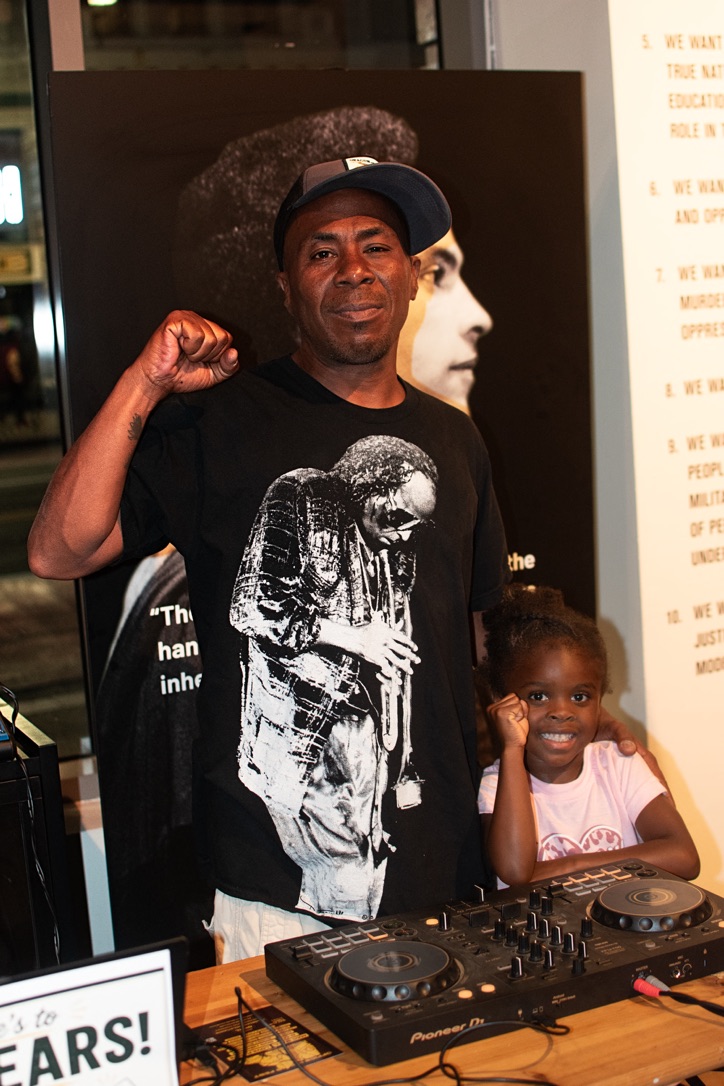
For Valrey, the mission is historical and urgent at the same time. He has described the Bay View as “the literary descendant of The Black Panther newspaper,” and says the paper exists to keep “revolutionary community journalism alive.” He also argues that every issue should carry stories that mainstream media has failed to cover, because the Bay View is a platform where Black people can speak for themselves “uncensored,” from Hunters Point to Oakland to liberation struggles abroad.
Harmony brings a different but equally necessary background to the editorial team. She grew up from birth to age 12 at Haight and Ashbury, the daughter of a mother from upstate New York and a father from Philadelphia who came west with the spirit of music, freedom and movement politics that shaped the Bay Area in the late 1960s and beyond. She later lived in Berkeley, Oakland, Los Angeles and Hunters Point, and says that while she claims Oakland, “my heart can be found in San Francisco.”
Her family history also helps explain the politics and emotional texture she brings to the work. She describes her mother as a writer and copy editor with “zero tolerance for war, racism, and the evils of capitalism,” and her father as a guitarist shaped by the Summer of Love, antiwar culture and a belief that “women were people, perhaps better people than men, & love, damn it, was free.” That inheritance of music, writing, honesty and resistance runs through the way she talks about media, community and truth.
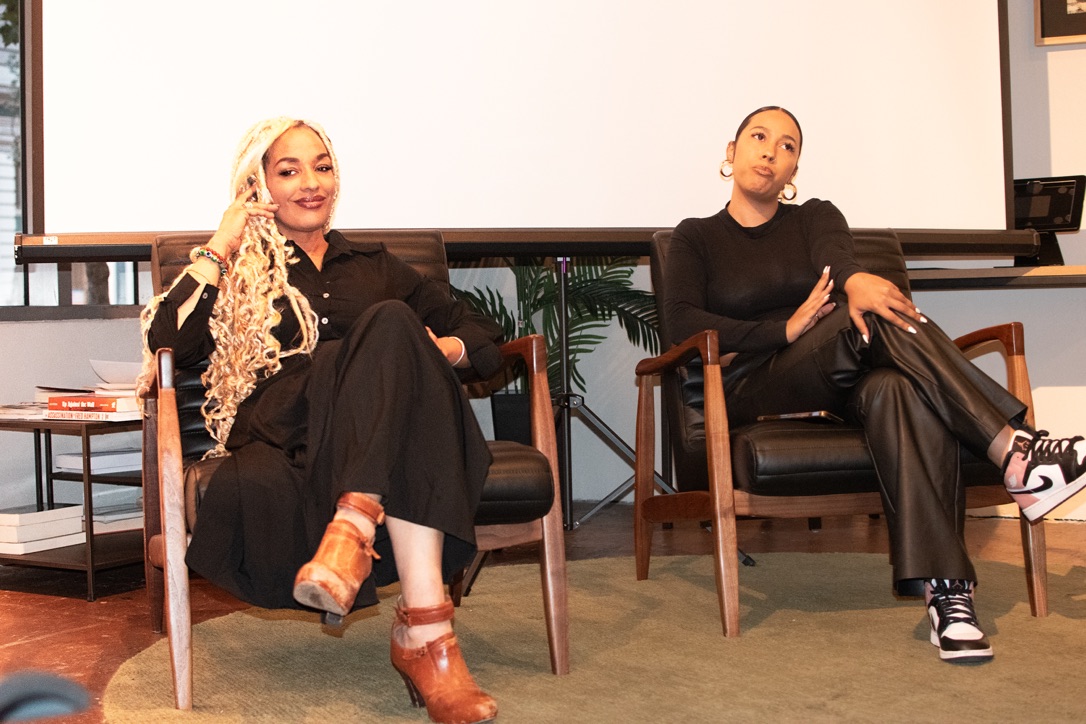
Harmony’s career in media began, by her own telling, when she read her husband’s record contract and saw how badly the system exploited artists. That moment pushed her into advocacy and entertainment work, beginning at HITS magazine and then at Edmonds Entertainment, where she moved from assistant to executive in four years and built experience across both the business and creative sides of production. She later produced and commissioned music videos for major labels and artists including Island Def Jam, Sony Music, Atlantic Records, Rihanna, Drake, Usher, JLo and Shakira, while also writing, supporting nonprofit campaigns and developing projects rooted in environmental justice, voter awareness and media accountability.
That is part of why Harmony approaches the Bay View as more than a production job. “A producer is someone who makes things happen,” she said in an earlier response, describing a role that includes story flow, visuals, deadlines and the thousands of details that make a paper worth printing. She has also said the Bay View matters because it proves “free speech, free thought and truthful media can exist, and be supported,” and because bringing “a voice and a face to Black media” can build readership, community and trust for the next generation.
Morris brings equally deep San Francisco roots and a community-grounded editorial sensibility. His grandmother was principal of George Washington Carver Elementary School. His great-aunt owned the Jazz Room on Third Street. Childhood memories of being in those neighborhood spaces, getting haircuts nearby and moving through the city with family are part of why, as he puts it, “my heart and soul is in San Francisco.” Those roots shape his belief that people are products of the same systems they are trying to survive, and that journalism has to listen for what is being said and what is not being said.
His path into the work came through an inquisitive childhood, formal journalism study and community-based health training, not elite institutions. Morris says he became frustrated watching people try to tell their stories only to be reduced to soundbites that fit somebody else’s narrative. He says his job as an editor is to be “facts driven,” to “research the researcher’s research” and validate “the source’s sources,” while making sure Bay View readers do not need a college degree to understand what is happening around them.
That outlook is strengthened by his Community Health Worker certification, and his ongoing Community Mental Health Worker training. He says those experiences help him communicate “so we can be talked to, and not at,” and bring cultural humility to reporting on health and mental health in Black communities.In a city where Black communities are overstudied, underserved and too often spoken about as problems instead of people, that kind of training sharpens the Bay View’s ability to report with accuracy, empathy and usefulness.
Together, the three editors offer more than a reshuffled masthead. They reflect three linked traditions inside Black media: movement journalism, cultural production and neighborhood truth-telling. Valrey’s role is to hold the political line and keep the paper accountable to the struggles that gave it life. Harmony’s role is to make the work sing on the page and beyond it, using images, design, production discipline and wider media forms to expand the paper’s reach. Morris’ role is to help turn all of that into a steady editorial practice grounded in facts, local knowledge, health literacy and community trust.
They also share a belief that the Bay View must evolve without losing itself. Valrey says the paper must become more of a multimedia organization as the digital age changes how people receive information. Harmony wants to restore sections lost over the years, expand coverage in health and technology, and continue building across podcasts, web work and visual storytelling. Morris sees digital publishing and video as tools that let readers not only read the news but “see and hear from the people that we’ve only been writing about and through.”
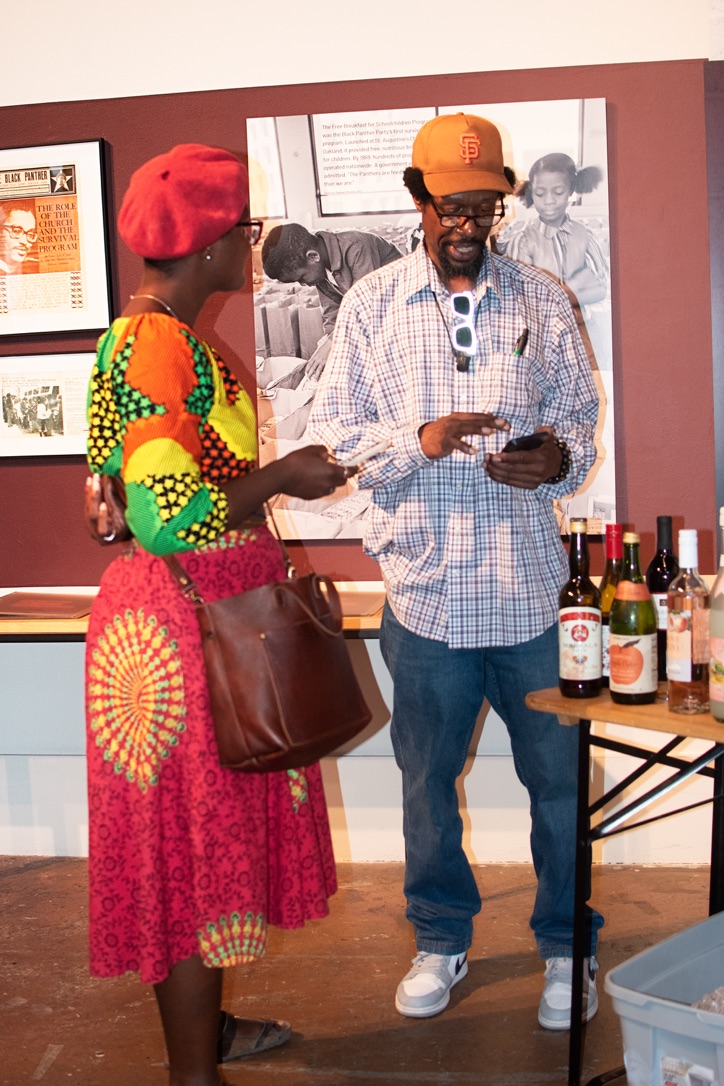
The political throughline is accountability. Valrey says that means being “accountable to our community first unlike other media organizations who are first responsive to their advertisers and political officials.” Harmony says accountability means showing up, correcting errors and staying connected enough to earn trust. Morris says the truth “has no adversaries,” and that the Bay View must use its platform to “inform, educate, advocate, demonstrate and show our people how we truly are instead of what’s being shown as ‘black culture.’”
As the Bay View heads toward its 50th anniversary, our editorial team is presenting a clear message to readers: the legacy is intact, the bench is deeper, and the paper is preparing to grow. With Valrey’s long institutional memory, Harmony’s production and creative range, and Morris’ San Francisco grounding and community-centered editorial approach, the Bay View is not stepping away from what made it matter. It is getting sharper about how to carry that mission forward.
SF Bay View Managing Editor Tabari Morris can be reached at tabari@sfbayview.com.