


by Leah Harmony
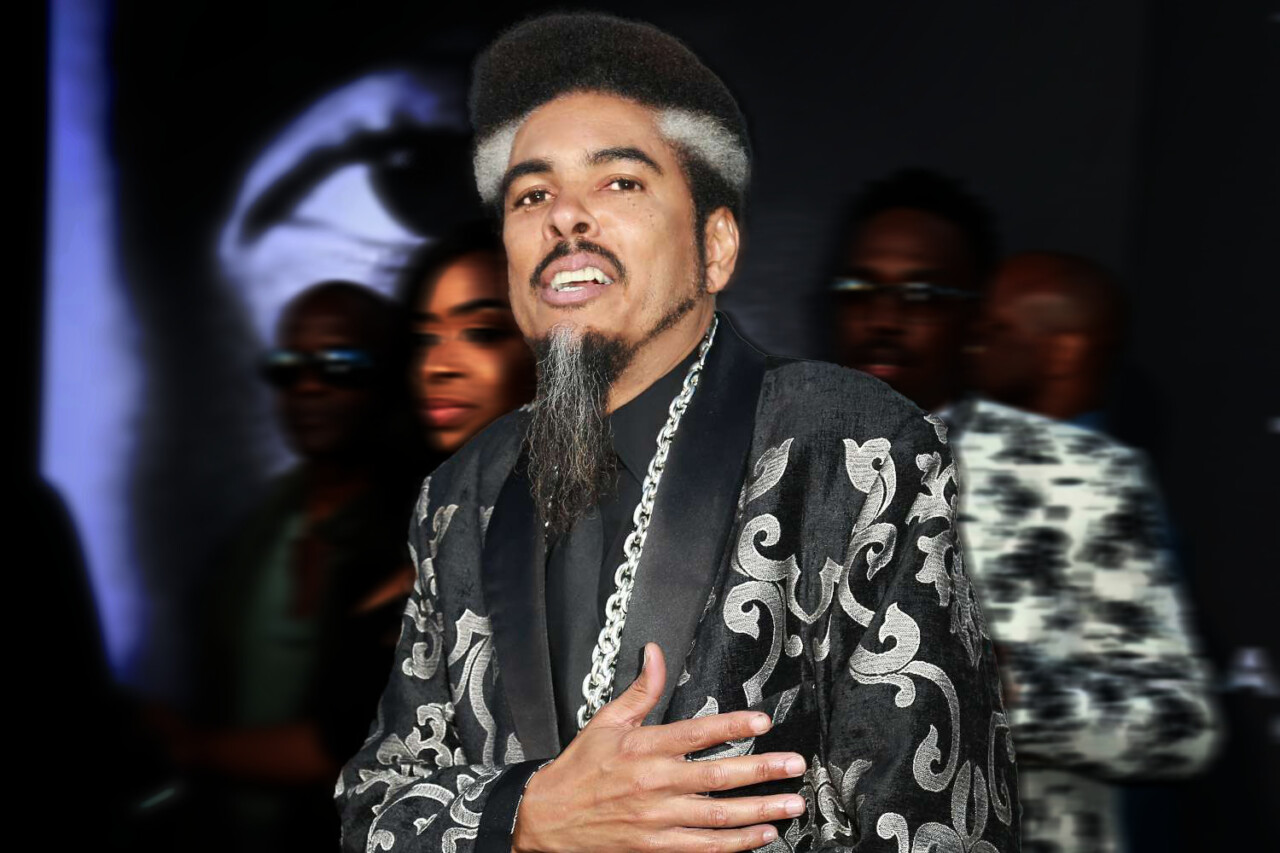
If one walks or rides past The East Oakland Collective on Aug. 22, 2026, deep in East Oakland, there will be, as there often is in those parts, a gathering of beautiful people doing beautiful things. And, while a meeting with those descriptors is not uncommon in Oakland, nor at the Collective, we are approaching Digital Underground Day, and this day in particular, marks the sixth year of a special partnership in honor of Oakland’s own Shock G.
Hygiene kits, snack bags and hearty bag lunches will be built by families, friends, and rappers, yep, rappers, all showing up in service to one another, for one another, and to honor the generous spirit of Shock.
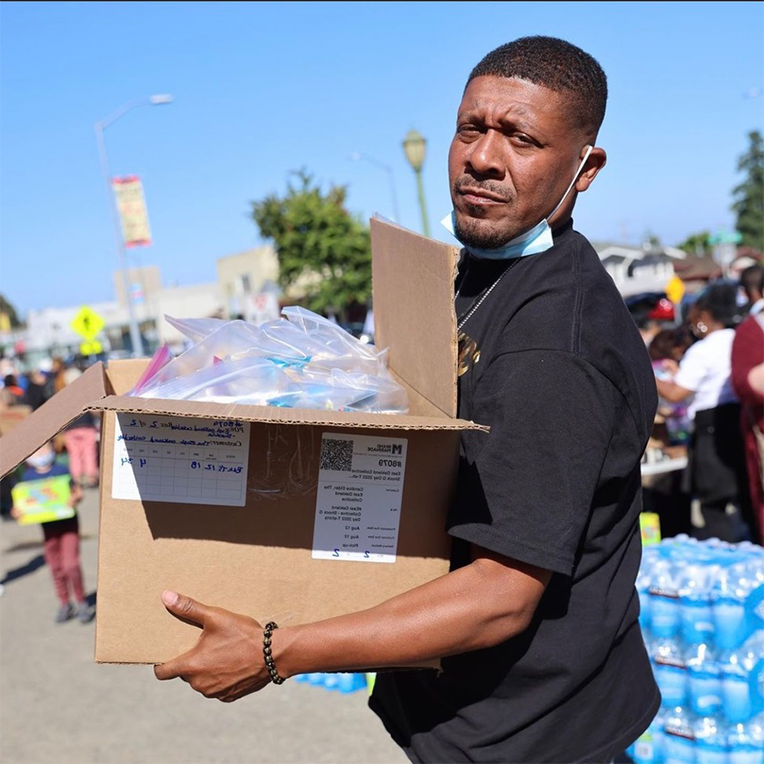
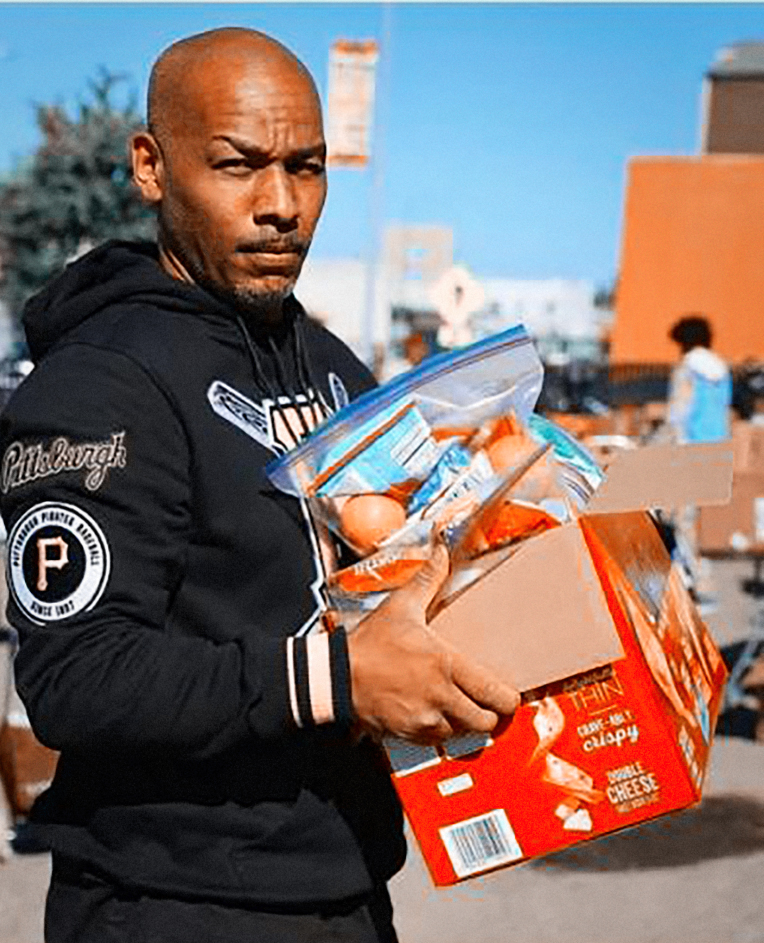
Through music and memory, East Oakland Collective’s work brings those particular currents together annually, by connecting those willing, with the daily labor of meeting people’s needs and the cultural legacy of Oakland artists who have always known service-to-others as power to the people.
I spoke with Candice Elder, an East Oakland native whose organization has built a broad network of food, housing and mutual-aid programs, and one of her partners, Mystic, an educator, a Grammy-nominated Oakland artist and member of the Digital Underground family, to tell us what it’s all about. Hint: It’s not the hokey pokey.
Oakland artists still use music, social media and community events to uplift justice.
Mystic
Leah Harmony: Candice, for readers meeting you for the first time, who are you — and what first convinced you East Oakland needed an organization like East Oakland Collective?
Candice Elder: I am an Oakland native, born and raised in East Oakland. I wanted to foster and cultivate the creativity and innovation of millennials to drive change here. I saw that there were not many young adults involved in local civic engagement, and I wanted to change that by elevating the voices of millennial East Oakland residents.
Leah Harmony: What was happening in East Oakland when EOC began?
Candice Elder: There was a rise in homelessness, decades of disinvestment and looming gentrification. But our initial focus areas came directly from the community. At a packed town hall in 2016, East Oakland residents identified blight and illegal dumping, civic engagement, homelessness services and solutions, and neighborhood planning as priorities. Uplifting community needs remains at the heart of EOC. Since then, we have also addressed systemic problems involving healthy food access and food insecurity.
Leah Harmony: Mystic, how does Oakland itself shape that spirit of service and resistance?
Mystic: Oakland made me, baby. When you grow up here — or come here and grow into yourself — you see the continued devastation from COINTELPRO, the assassination of members of our community and redlining. You grow up with it. You see it. You know the injustice.
But we have always been about it here. It didn’t matter if you were hip-hop, progressive or a street cat. You knew what injustice looked and tasted like. When there were opportunities to resist it—to beautifully resist it, as I say—we showed up. Oakland has helped create the narrative and framework, globally speaking, around liberation, justice and the power of the people.
It embodies Shock G’s generosity, creativity and community care. Remembrance becomes action.
Candice Elder
Leah Harmony: Candice, outsiders often hear only about East Oakland’s problems. What strengths get overlooked?
Candice Elder: Our deep sense of community, resilience and commitment to taking care of one another. Residents, grassroots organizations, small businesses, faith communities, artists and local leaders consistently step up to create solutions with and for the community. East Oakland is rich in culture, creativity, history and innovation. Our people have always been resourceful and powerful, and that community spirit is one of our greatest assets.
Leah Harmony: What does mutual aid mean beyond the buzzword?
Candice Elder: It means communities being resilient and supplying our own needs instead of relying on government and agencies to save us. Mutual aid is critical to EOC. Community support allows us to distribute essential food and supplies every day and in times of crisis.
Mystic: If the powers that be could serve the whole community, East Oakland Collective wouldn’t need to exist. A nonprofit’s goal in service should be to work itself out of a job because the need it is meeting has been addressed. I don’t want people to have to come to us for food or water. Everybody deserves to care for their body, have their humanity seen and be treated with respect and kindness.
Leah Harmony: How did Digital Underground become part of this work?
Mystic: After Shock G became an ancestor, me Money B, Clee, Atron and Danita had a conversation about how we could honor his love of people and generosity. Atron brought East Oakland Collective to the table and introduced us to Candice.
We felt immediately that Shock would love it. The work is about people’s humanity and meeting people where they are. It is in the legacy of the Black Panther Party and serving the people — understanding that a community’s basic daily needs include food and the ability to care for ourselves. We met with Candice, and now we are in the sixth year of the partnership.
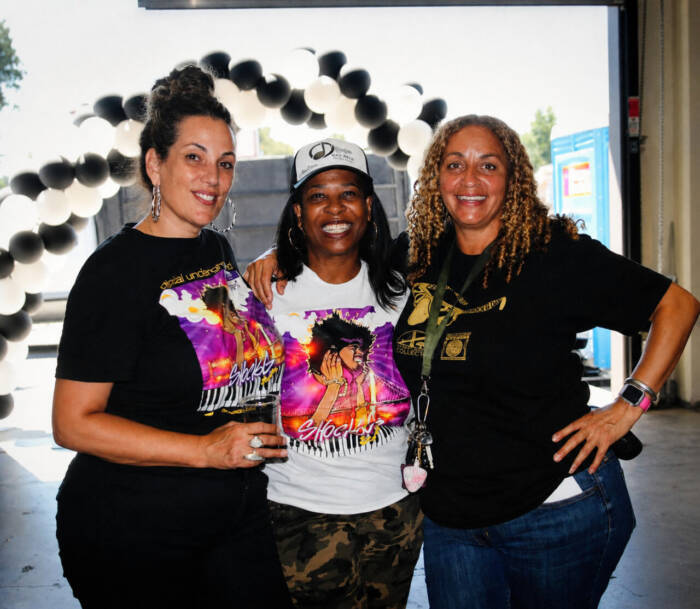
Candice Elder: It has grown into an incredible collaboration rooted in community, service and a shared commitment to addressing food insecurity among Oakland’s unhoused residents and families experiencing economic hardship. Digital Underground has helped us provide direct support and bring greater visibility to food insecurity and homelessness in Oakland.
For unhoused residents, food access is about more than having groceries. Many people living outdoors, in vehicles or in temporary situations do not have kitchens, refrigeration or clean water. Fresh, prepared, ready-to-eat meals are critical. Through this partnership, we connect more people with meals, groceries and essential supplies while drawing attention to the broader conditions behind food insecurity and housing instability.
Digital Underground brings a unique cultural legacy, platform and connection to Oakland. What makes the collaboration especially meaningful is that it goes beyond a one-time event or donation. Six years represents a sustained commitment to Oakland and to people who are too often overlooked.
Leah Harmony: What is the annual Shock G celebration, and how does it connect with Feed the Hood?
Candice Elder: A cornerstone of Feed the Hood is its annual partnership with Digital Underground honoring the late Gregory “Shock G” Jacobs. Shock G was a pioneering artist and a passionate advocate for Oakland communities and social justice. Since his passing, EOC and members of Digital Underground have come together each August to celebrate his life and commitment to uplifting the community.
The event brings residents, artists, community leaders and volunteers together to provide food, resources and services to hundreds of unhoused families while celebrating Oakland’s cultural heritage. It embodies Shock G’s generosity, creativity and community care. Remembrance becomes action.
Leah Harmony: Mystic, what has that remembrance meant to the Digital Underground family?
Mystic: It has been part of our healing journey. Losing our brother brought devastation, but being in community with each other is part of the healing process. The work may start as, “This gives us something to do.” But the beauty is that we get to be together and love on each other while preparing for the event.
Leah Harmony: We lost Cleetis “Clee” Mack of Digital Underground in April. He was also an intimate part of it. His absence will leave a big, gaping space.
Mystic: Clee loved Feed the Hood. It was deeply important to him. I am usually the crew representative who gets up to speak that day, and for the past five years, Clee has been the person beside me. I will not have my partner or my brother with me this year.
In connection with Shock, Clee, Feed the Hood and the Black Panthers, we are the memory keepers. We create memories while volunteering and while traveling in the caravan to serve the community. Those memories include laughter, love and smiles. They cannot take away our pain, but the greatest love in this world is being of service to others. If we practice more kindness, compassion, empathy and community, we just might be all right.
Leah Harmony: How does Oakland’s music connect to activism and mutual aid?
Mystic: A lot of Oakland artists are also educators and come from families with histories of activism and organizing. That is represented in the music. Not every artist is down for the cause, and that’s OK. I would rather see people learn through community than step into leadership when they are not about the people or service.
Hip-hop removes us from the confines of the conditions in which we live. It teaches us that our experiences in West, East or North Oakland are not isolated. These conditions exist everywhere, and music brings people together. Hip-hop has always been a unifying force here. It might not seem hella rebellious now, but in our younger era it was fucking rebellious and radical, very much in the tradition of punk music.
Hip-hop has changed, but the conditions have not. Those conditions are still reflected in the music of young people. Oakland artists still use music, social media and community events to uplift justice. There may be more emphasis on financial rewards, but there have always been people who were only trying to make a dollar.
Leah Harmony: How do young people find their place in movements like Black August and service to the people?
Mystic: A huge part of Black August is political and sociopolitical education — raising our consciousness. The books, speeches and videos are available, but getting through the noise of the internet can be difficult. I think young people need more love and understanding. I offer myself by saying, “Tell me what you need. How can I support what you want to do? If I don’t know, I will find somebody who does.”
We are also more isolated after the height of COVID. We have to keep building community. Feed the Hood helps because it is not only one annual event. It happens every quarter, and East Oakland Collective offers opportunities to serve year-round. Families can volunteer together. People cross geographic and economic boundaries and come together because they believe everybody deserves to have their humanity seen and their basic needs met.
Leah Harmony: Candice, what does EOC provide today, and what do the numbers tell us?
Candice Elder: We provide free groceries and household supplies, diapers and baby supplies, rent-relief application support through Keep People Housed Oakland, a quarterly Freecycle Pop-Up Thrift Store, weekly encampment outreach, hot meals for unhoused residents and the stipend-based East Oakland SuSu Financial Literacy Academy.
We serve approximately 10,000 people a year. More than 500 families are served each week, more than 250 families have been prevented from becoming unhoused, and more than 10,000 volunteers have been mobilized. Feed the Hood has delivered 92,500 meals, and our free grocery program has distributed more than 2 million pounds of fresh and nutritious food.
Leah Harmony: What is the greatest challenge now?
Candice Elder: Consistent and sustainable funding. Rising operating costs, growing demand for food and essential services, and limited unrestricted funding place pressure on our staff, programs and capacity. With unlimited resources, I would build a free grocery market and use vacant land to create alternative housing for our unhoused neighbors.
Leah Harmony: How can readers help?
Candice Elder: We appreciate donations of small or travel-size hygiene supplies — soap, shampoo, lotion, toothpaste, toothbrushes, deodorant, hand sanitizer, wipes, menstrual products, socks and other essentials. Volunteers assemble them into hygiene kits for Oakland’s unhoused neighbors. We could not do this work without the hundreds of volunteers who distribute groceries and make bagged lunches at Feed the Hood.
Mystic: Even if you can’t make the annual Shock G event, Feed the Hood happens four times a year. There are opportunities to volunteer and donate year-round. Tune in to the East Oakland Collective — and wherever you live, tune in to the people serving around you. Shout out to Mister Rogers: Find the helping hands. The neighborhood is the hood.
Leah Harmony: Lastly, what do you think Shock would feel about the Shock G Forever and Feed the Hood if he saw it today?
Mystic: I think Shock would love it. It serves people, brings the Digital Underground family together and brings the broader community together. Through service, we honor multiple legacies — not only his, but the Black Panther Party’s legacy of serving the people and feeding the community.
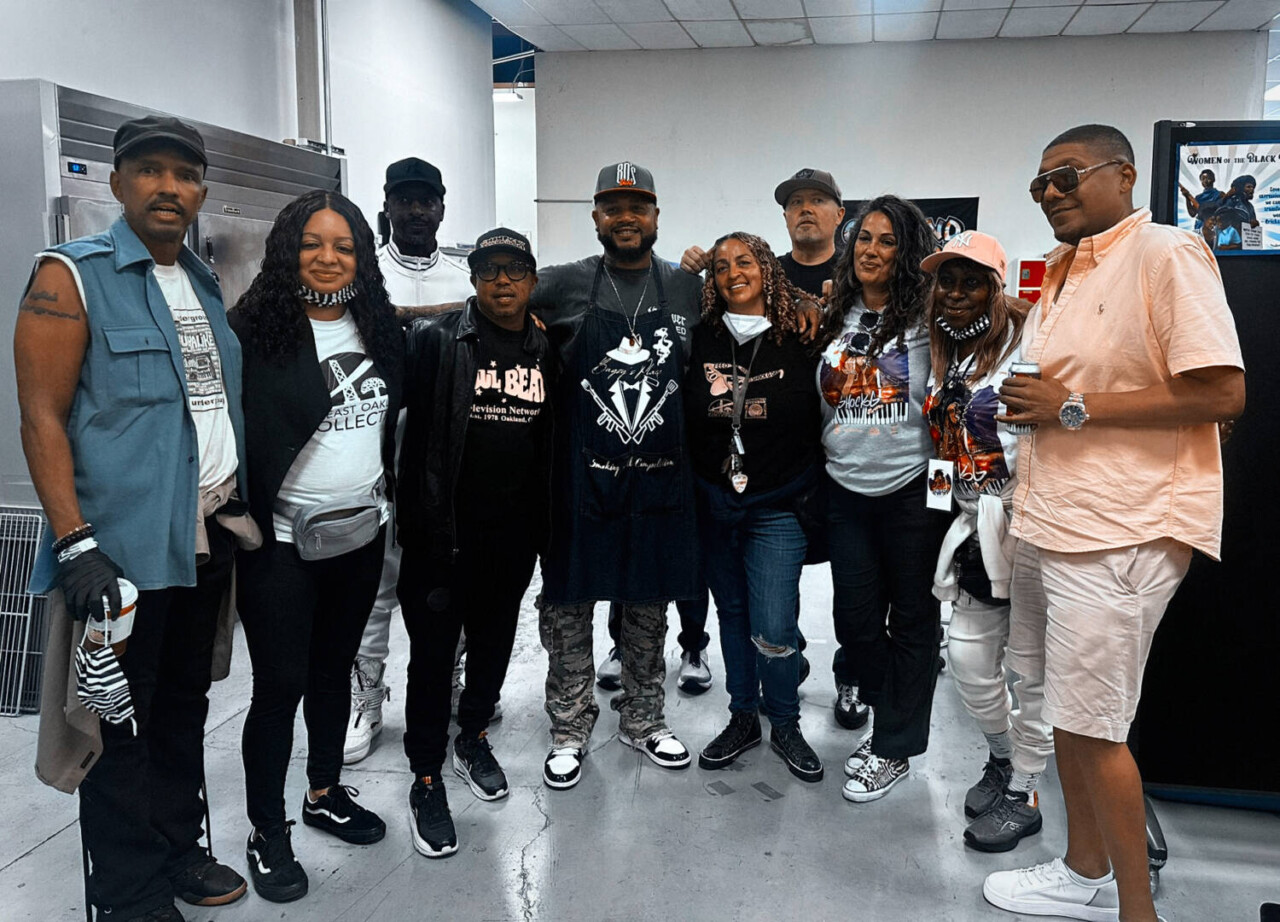
People know pieces of Shock — the videos he sent us of birds, ducks and other animals, or his deep philosophical thoughts. But I’m not sure people know how much he loved people, how much he loved us and how much he loved bringing people together. Do I think he would sit on the organizing committee? No. Would he show up? Absolutely. Would he help fund it? Absolutely.
Do I think he would love it? I think he would love it.
The East Oakland Collective is on IG: @eastoaklandcollective; and Candice can be reached at candice@eastoaklandcollective.com.
Mystic is on IG: @thatgirlmystic
Leah Harmony is manager of production for the San Francisco Bay View, a writer and film producer. You can reach her at leah@sfbayview.com.