


by Pearci “PJ” Bastiany III
In August 2025, SF Bay View published “Rotting from the coast in: Sea Scouts displaced, waterfront in decline,” an article documenting how the Sea Scouts were pushed off their historic waterfront base and how visible deterioration along San Francisco’s shoreline was being met with delay, bureaucratic deflection, and piecemeal action. That article was never just about one dock. It was about a larger pattern: San Francisco keeps allowing working-waterfront infrastructure to decay until removal becomes easier than repair.
After that article was published, its findings were brought directly to the Port of San Francisco Commission during public comment. Some visible work did appear to follow elsewhere on the waterfront, including attention to dilapidated pilings near Chase Center and repair activity near Fisherman’s Wharf, but the broader set of deteriorating sites that had been documented were not fully addressed. The deeper issue remained untouched: the city still has not shown that it is serious about preserving public-serving maritime infrastructure before access is lost.
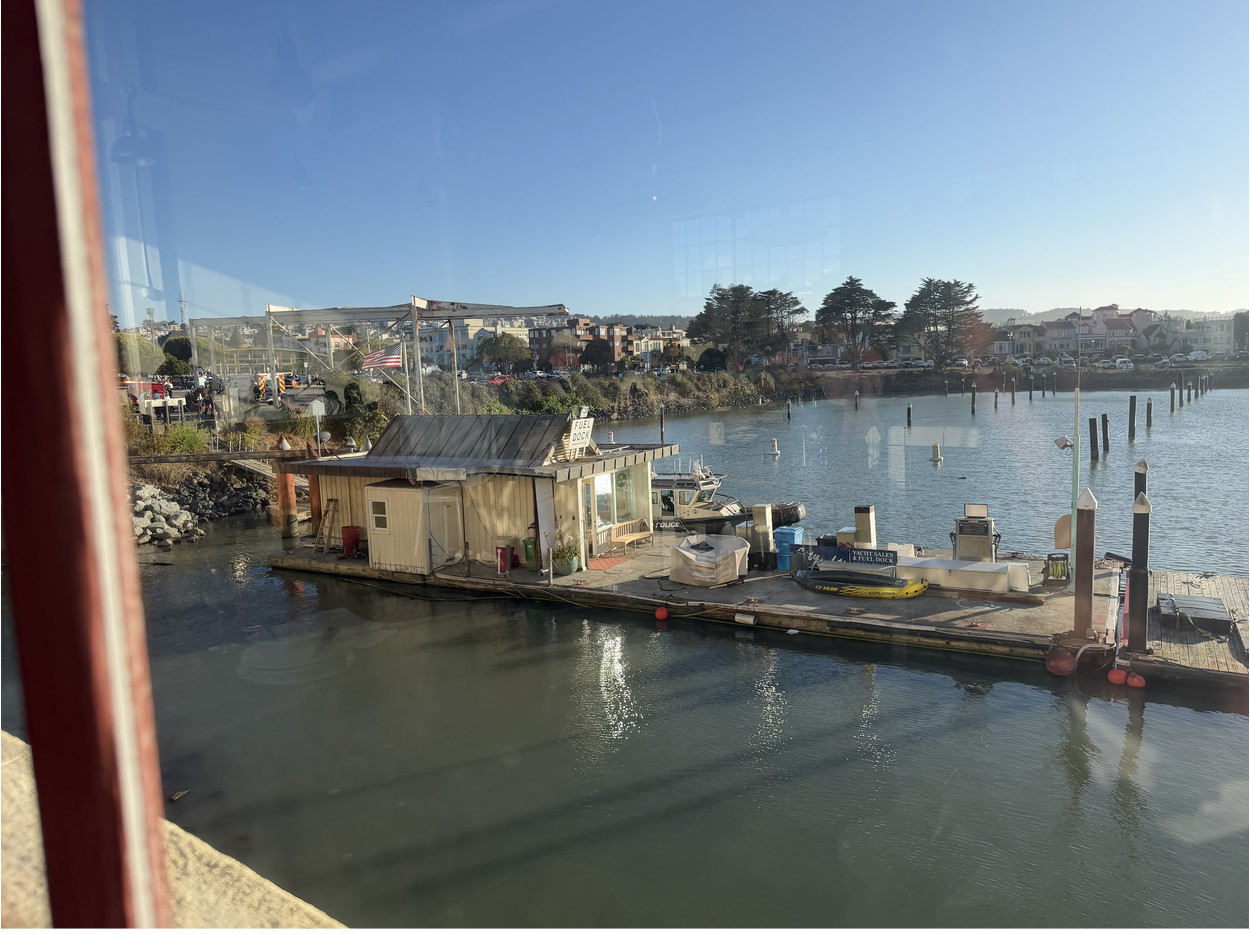
Now that same pattern is playing out at Gashouse Cove. What happened to the Sea Scouts at Aquatic Park and what is happening now at Gashouse Cove are connected parts of the same story: a working waterfront asset is treated as expendable even when youth programs, everyday boaters, emergency responders, and blue-collar maritime users still rely on it.
Captain Maggie Hallahan, a licensed Coast Guard captain and Sea Scout leader, has become one of the clearest public voices in the fight to preserve the cove as a public access site to the water and as an emergency response center. In a recent Latitude 38 podcast focused on Gashouse Cove, Hallahan joined youth Sea Scouts Wrenn Holloway and Pismono Mata-Lee to explain what is at stake there, what the Sea Scouts have been doing to fight for access, and why the site still matters to the broader boating community. Hallahan said the Sea Scouts have spoken before the California State Lands Commission, the Port of San Francisco, San Francisco Recreation and Park, the Board of Supervisors, the California Water Board, and the Harbor Safety Committee of the San Francisco Bay Region in an effort to preserve the site.
That matters because this is no longer a niche marina dispute. It is an ongoing public fight taking place across multiple agencies, with the Sea Scouts arguing that waterfront access, youth opportunity, emergency readiness, and public-trust maritime uses are all being pushed aside by a redesign that does not reflect how the cove is actually used.
The Sea Scouts’ case is not based on sentiment alone. In the podcast, Hallahan said the city is relying on a permit from 19 years ago to repair Gashouse Cove and is now using that same permit to justify decommissioning the fuel dock rather than repairing and preserving it. She also argued that the fuel dock can remain operational during cleanup because it sits about 167 meters from the active cleanup area and still has enough depth for many vessels to fuel there, even at low tide. Those are not emotional claims. They are substantive disputes about design, access, and whether city agencies are choosing removal over practical preservation.
The June 17, 2026 Harbor Safety Committee letter to BCDC strengthens that argument in a major way. The Committee said it supports environmental remediation within East Harbor, but stressed that environmental remediation and preservation of critical maritime infrastructure can occur at the same time. The letter warned that the proposed removal of the Gashouse Cove gasoline and diesel fuel dock raises concerns about emergency preparedness, navigation safety, maritime resiliency, and public access to San Francisco Bay, and said those concerns were supported by materials reviewed by the Committee and discussions with emergency responders, marina operators, San Francisco Bar Pilots, and maritime stakeholders.
That letter matters because it moves the issue beyond advocacy alone. It shows that a formal maritime safety body sees Gashouse Cove as infrastructure with real operational value, not a leftover waterfront feature. According to the Committee, the San Francisco Police Department Marine Unit confirmed that SFPD, the San Francisco Fire Department, and the United States Coast Guard all use the Gashouse Cove fuel dock for emergency response operations, vessel boardings, medical evacuations, and other public-safety missions on the Bay. The Committee also noted that the Bay Area continues to lose publicly accessible marine fuel facilities, especially gasoline fueling infrastructure.
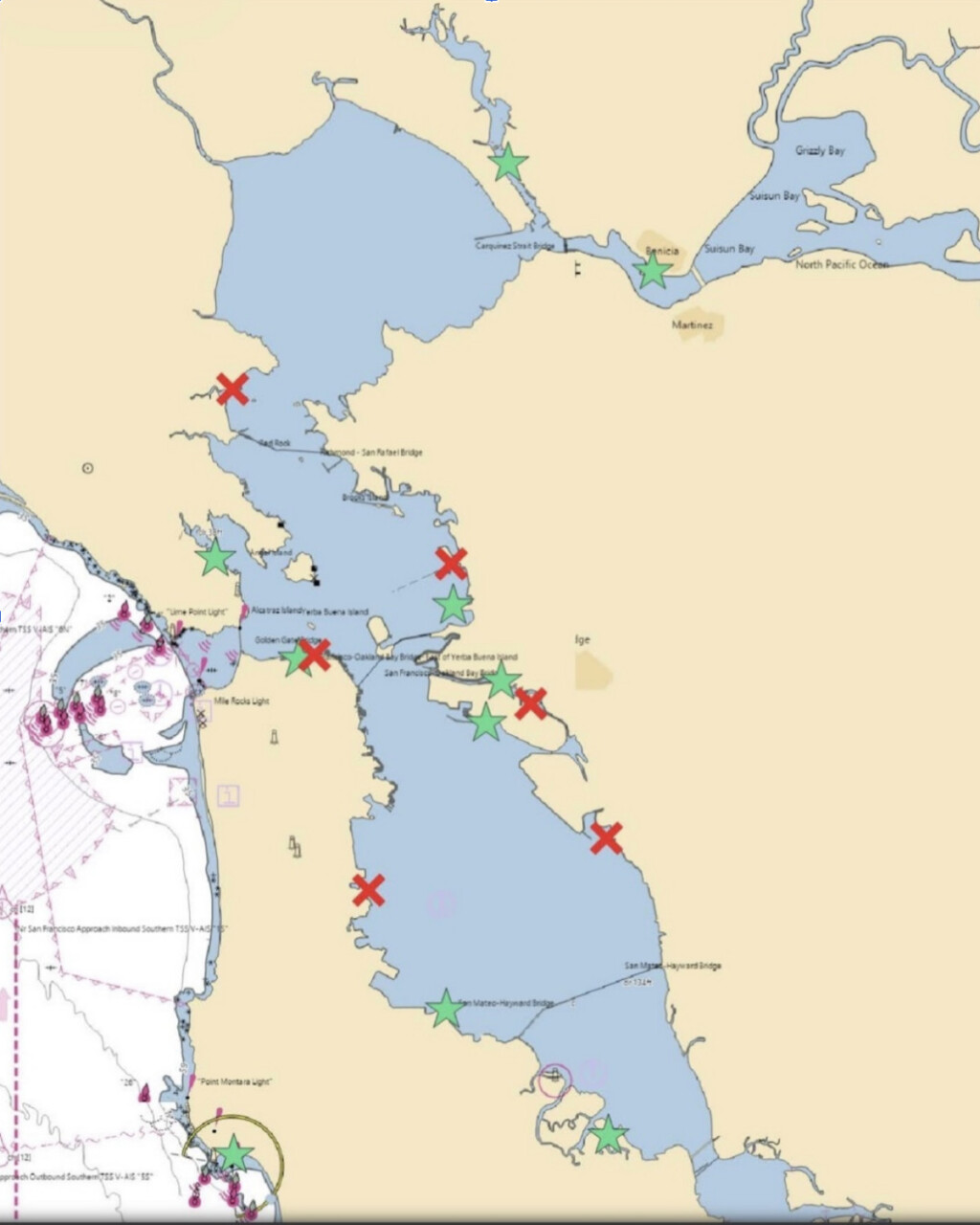
The Harbor Safety Committee also makes clear that replacement options are not simple. The letter says the San Francisco Bar Pilots rely on marine fuel access near the Golden Gate Bridge to fulfill their statutory and regulatory responsibilities and maintain operational readiness. It explains that sedimentation and lack of dredging can make the Clipper Yacht Harbor fuel dock in Sausalito effectively unnavigable during low tides, while East Bay fuel facilities are too far away to support emergency response and operational needs in the Central Bay and Golden Gate Bridge area. In other words, Gashouse Cove is not easily replaceable by simply pointing to another dock on a map.
The Committee also directly addresses the likely argument that remediation and continued dock operations cannot safely coexist. It points to recent remediation work near SF Pier 41 1/2, where ferry operators continued service within approximately 10 meters of active remediation areas. According to the letter, that project demonstrated that environmental remediation and maritime operations can safely coexist when proper environmental and operational controls are used. The Committee specifically notes that projects commonly use perimeter float containment systems, turbidity barriers, and phased construction methods to maintain maritime operations during remediation.
That is a critical point because it shifts the public debate. The question is no longer whether cleanup should happen. The Committee itself supports cleanup. The question is whether Rec and Park is choosing the most restrictive and destructive version of the project instead of a balanced one that preserves working-waterfront functions.
The letter is also skeptical of the city’s cost and feasibility case. According to the Committee, members heard two primary concerns from San Francisco Recreation and Park Department staff about keeping the fuel dock operational during remediation: crowding within the work area and increased project costs. But the Committee also noted that SFRPD included approximately $25 million in its estimate for dredging a 145-foot-wide access channel to the fuel dock and engineered cap, even though the fuel dock currently operates without dredging and has remained functional for 38 years. The Committee concluded that SFRPD did not establish to its satisfaction that continued operation of the fuel dock during remediation would be infeasible, and added that information it reviewed, including discussions with Regional Water Quality Control Board staff, indicated the city could keep the existing dock operational during remediation while still meeting environmental protection requirements.
That is potentially the most important argument in the entire debate. If continued operation is possible, then closure is not simply an unavoidable side effect of cleanup. It is a policy choice.
The Harbor Safety Committee asked BCDC to exercise its oversight authority over waterfront redevelopment, marina modifications, changes to water-dependent uses, and Bay Plan policies by rejecting the San Francisco Marina plans in their current form. Its reason was direct: the current proposal does not preserve essential maritime infrastructure and public-trust maritime uses. The letter specifically says the proposal fails to preserve marine fuel access, continued operation of the only public boat lift in San Francisco, continued operation of the only touch-and-go dock in northern San Francisco, blue-collar boating access, and dedicated areas supporting maritime safety training and youth maritime education. That language should be at the center of this public debate, because it shows exactly what would be lost.
The Committee’s second-page request is just as important. It asked BCDC to carefully evaluate the maritime safety and resiliency impacts associated with permanently removing the Gashouse Cove fuel dock and to determine whether continued operation during portions of the remediation process, or preservation of equivalent centrally located fuel access, would better support the Bay’s public-trust and maritime uses. That is not an anti-cleanup position. It is a call for a real safety and resiliency analysis before a permanent loss is locked in.
The Sea Scouts have also raised a water-quality concern that deserves far more public attention. Hallahan and the youth advocates said the Laguna outfall sits adjacent to the site and drains into the area proposed for kayaking and paddleboarding, which raises obvious questions about whether the city’s recreation plan matches the actual conditions on the water. Public materials on the Laguna Street outfall and community letters opposing the redesign reinforce that the outfall is a real feature of the site and not a hypothetical talking point. If people are going to be encouraged to paddle there, then the city owes the public a direct and transparent answer about what exactly is entering that water and whether the site is truly fit for that kind of recreation.
The emergency-response case may be even more compelling. In the podcast, Hallahan and the Sea Scouts said police, sheriff, and fire vessels rely on the fuel dock and warned that there is no equivalent fuel point in San Francisco that can easily replace it. The show notes for the episode also describe the cove as the city’s last remaining marine fuel dock for recreational use, while noting its use by police, sheriff, and fire department vessels. The Harbor Safety Committee letter reinforces the same basic point from an institutional standpoint: the dock is used for emergency response, medical evacuations, and other public-safety missions, and its loss would affect maritime readiness.
That claim took on greater weight after the recent Alcatraz boating tragedy. During the July emergency, reports showed that Gashouse Cove served as a triage and evacuation point for rescued passengers, and other reporting indicated that the fuel dock played a role in supporting the emergency response. The proximity of Gashouse Cove to the tragedy made it ideal for emergency evacuation and rapid refueling of emergency vessels, which is exactly why treating the site as expendable is such a dangerous mistake. The Harbor Safety Committee’s warnings about emergency preparedness and centrally located fuel access look even more credible in light of that tragedy.
This is the point city decision-makers should not be allowed to dodge. Gashouse Cove is not spare waterfront real estate. It is part of the city’s marine response network, and recent events showed that clearly. Once a site like that is removed, its function is not easily recreated somewhere else, especially in a dense city with limited shoreline access and increasing strain on public infrastructure.
The podcast also makes another point that planning documents often miss: access to the Bay is already shrinking. Hallahan described a past waterfront culture in which public docks and informal boating communities made it easier for ordinary people to get on the water, while the youth voices in the podcast described Sea Scouts as one of the few affordable, welcoming ways left for young people to learn maritime skills in San Francisco. Wrenn Holloway described Sea Scouts as a place to build friendships and community, while the group discussed weekly outings, regattas, Delta cruises, whale reporting, and the SSS Viking’s recent national flagship award. That is not just nostalgia. It is evidence that Gashouse Cove and programs like Sea Scouts still create living public value.
That public value also matters because access to the Bay has become uneven. Yacht clubs and private slips remain available for those who can afford them, but the podcast makes clear that Sea Scouts and informal public boating access offer something different: a lower-cost, community-based path into maritime life. When the city removes places like Gashouse Cove without preserving their working public function, it is not expanding access. It is narrowing it.
San Francisco should not repeat with Gashouse Cove what it already allowed to happen with the Sea Scouts’ former dock. The city should preserve the site, clean what needs to be cleaned, repair what needs to be repaired, and keep Gashouse Cove functioning as a real public-serving maritime asset. If the city truly believes in resilience, access, environmental justice, and emergency preparedness, then saving Gashouse Cove is the test.
A working waterfront cannot be rebuilt by press release after it is gone. Gashouse Cove should remain open not just for boaters, but for the next emergency, the next evacuation, and the next young person who still deserves a real way onto the Bay.