



by Leah Harmony
Hip Hop grew up and the work kept movin’
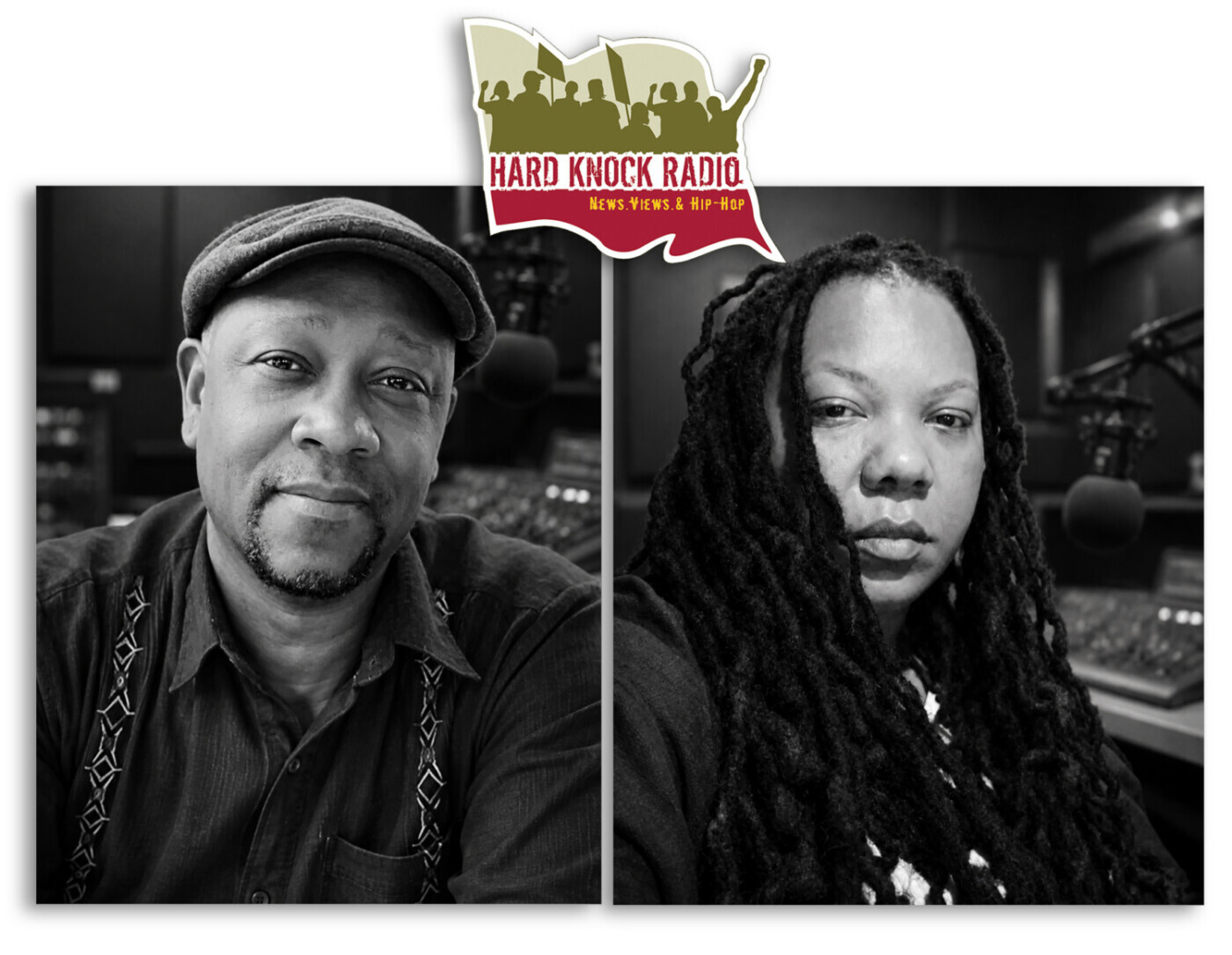
Twenty-five years ago, Hard Knock Radio entered KPFA’s afternoon drive time as “a talk show for the Hip Hop generation.” On airwaves Hip hop had graduated from background music between “serious” subjects and begun making news of its own. It was now a way into politics, policing, housing, education, war, culture and the communities public radio too often discussed from a distance—or ignored.
The show grew out of a fight over who public radio belongs to. Following massive resistance to the attempted corporate takeover of KPFA and the Pacifica network in 1999, listeners demanded programming that spoke for and to them, especially young people of color. Hard Knock Radio helped answer that demand. It brought the people living the story to the microphone as analysts of their own conditions, not specimens to be studied after think-tanks and scholars decided they had become newsworthy in the moment.
A quarter-century later, co-host and producer Anita Johnson and host, producer, journalist, educator and hip hop historian Davey D are still doing that work. I interviewed them separately, but their answers kept finding one another. That speaks to the overall formula of the duo. It works. The conversations have been edited and interwoven here as a roundtable. Johnson sees an anniversary; Davey D did not even realize it had been 25 years. Together, they explain why Hard Knock Radio has lasted without treating longevity as permission to kick back and enjoy the ride
Leah: Happy 25th anniversary! The show began as “a talk show for the Hip Hop generation.” What happened when that generation — and hip hop itself — grew up?
Anita:: Twenty-five years ago, young people were fighting to be heard and challenging systems from the outside. Now many are parents, educators, organizers, journalists, elected officials, entrepreneurs and cultural leaders.
Hip hop is no longer outside the mainstream. That creates opportunity and tension: Who controls the narrative, who profits and is its political consciousness still being amplified?
Davey D: Hip hop is 50 years old, and at 50 it has a maturity that should come to the forefront. Your peers control levers of power in institutions. We need to discuss how to affect those levers. You went to school with the mayor. Tell us what we need to do — not only who the best rapper is.
We are hip hop, period. But we should not have to lead with being rappers when trying to resolve a missing-persons case.
Leah: In the beginning, did people resist the “talking” part of a hip hop show?
Anita: Yes. Conversations on politics, racism, policing, housing, education and social movements — presented by people of color during afternoon drive time — generated responses rooted in fear and racism. Voicemails called what we played “jungle bunny music” and used other racial epithets.
KPFA’s audience was not accustomed to our voices or communities. But we were intentional: Communities of color and young people would not be subjects somebody else studied. They would bring their own analysis and lead the conversation. But an audience was waiting to hear itself reflected.
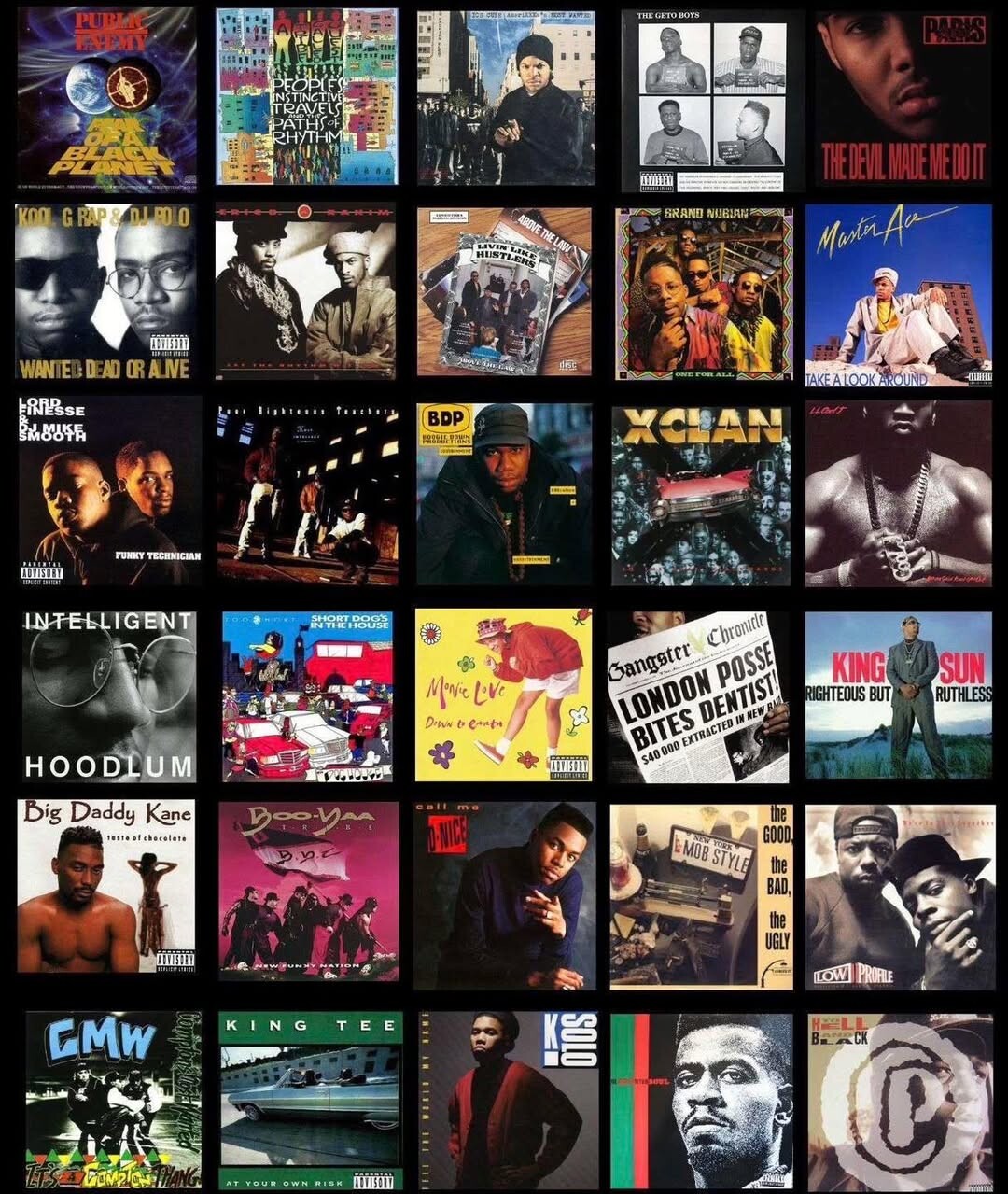
Davey D: We brought a hip hop perspective into the burgeoning activist scene. The conversation grew beyond quote-unquote hip hop. It is about what is happening in the community and where we can fill a void as so many things are shut down.
Leah: What makes somebody an expert on Hard Knock Radio?
Anita: We have hosted mainstream figures, grassroots organizers, independent journalists, artists, academics, formerly incarcerated people, young people and people you may never hear nationally. Visibility has never determined whether somebody has something important to say.
The question is: What do you know? What have you experienced? What can you help us understand?
The expert may be a veteran organizer, an artist documenting events or a resident who knows a place better than a reporter parachuting in. We never separated culture from the “serious” conversation.
Davey D: If somebody is a rapper but has spent 10 years collecting files on police, that is what we need to know. Unless the music is germane, I do not need to announce, “By the way, this is a rapper.” If we are talking about Palestine, let us talk about Palestine. People from our extended hip hop community do not have to perform their credentials before offering analysis.
Leah: Anita, how does a producer earn trust from people whose communities have repeatedly been misrepresented?
Anita: Trust starts before the microphone comes on. I am a Black woman, I am queer, and I have a deep commitment to truth and justice. I know what it is like to have your voice dismissed because of who you are. Sometimes I am part of the community we are discussing.
But I cannot assume I understand somebody else’s experience. Class, gender, geography, generation and culture matter. Do your homework and ask better — not necessarily safer — questions. My job is to listen for what we might be missing, not impose a narrative.
You build trust over time by treating people’s stories with seriousness, context, dignity and respect, especially after everybody else has packed up their microphones and moved on.
Leah: What did that look like when the country suddenly turned its attention toward a community?
Anita: After Michael Brown was killed, we examined what happened before the national cameras arrived — the policing, politics, organizing and history — and what would happen after they left. Our coverage of the murder of Oscar Grant III centered affected communities. During COVID, we insisted not everybody was living through the same pandemic.
Media can connect people doing the work and give language to what a community already knows. We talked with people making history while it happened.
Davey D: With Oscar Grant, national shows would ask me to come on. I would say, “OK, I am bringing Uncle Bobby, or I am bringing this person.” If I went on, I called everybody involved and asked for their talking points. It should be about the people doing the work.
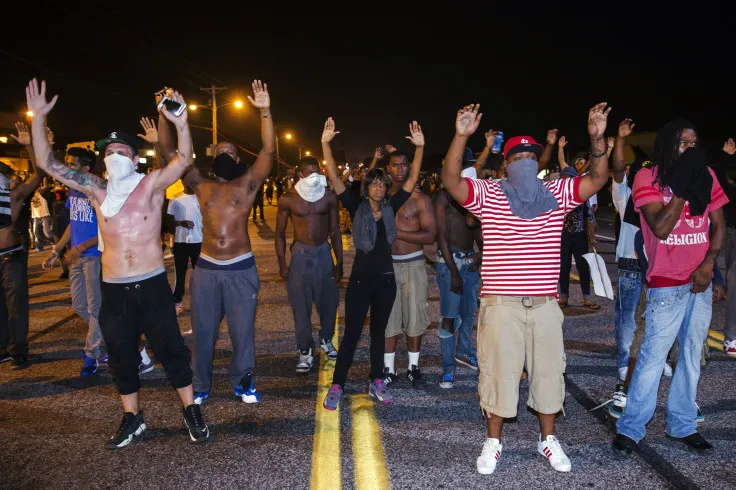
When Ferguson happened, I did not go for the first year, though I had invitations. People there could speak to their reality, so we brought them on every day — from Tef Poe on down. Our job is to give people on the ground space, not become the centerpiece.
Leah: Institutions learned to say “diversity,” “equity,” “inclusion” and “belonging.” Did the language improve journalism, or become branding?
Anita: Both. A broader vocabulary helped us ask whose voices are missing, who tells the story and what counts as a story. But the language sometimes moved faster than the institution.
You can change what the room looks like without changing who controls it. For us, it was about perspective, power and whether we show up only during a crisis. Hard Knock Radio did not wait for somebody to diversify the table. We built our own.
Leah: What does keeping a daily community show alive require that listeners may never hear?
Davey D: When you care, it takes a mental and physical toll. Before airtime, you may hear somebody crying about what happened to their child but afraid to discuss it publicly. Then comes another police story, another crisis, and you try to give it meaning. I read, watch and watchdog the bullshit people are bombarded with, hoping to leave listeners better.
This is not stuff you take bows for. You fill the voids and carry your communal weight. People opened doors for me, so I open doors for others. People pulled me up, so I pull others up. We are part of a continuum.
Anita: Independent media survives because communities decide their stories and issues are worth supporting. Support KPFA and Hard Knock Radio financially when you can, but also listen, share interviews and send stories. Hold us accountable. Help bring the next generation of journalists, producers, artists, DJs, organizers and storytellers through these doors.
Leah: What has 25 years taught you about community in the age of algorithms, bots and online performance?
Davey D: Nothing beats hand-to-hand, face-to-face conversation. Technology lets me talk to 100 people at once, but I had better pick up the phone. One friend’s pictures online said one thing; when I called, I learned they had stage-three cancer. Another friend’s mother had died, and they were still grieving. I would not have known from what I saw online.
Check in with your people. We must nurture our relationships and commit to people we love and want to fight alongside for collective liberation.
Not everything online needs an answer. Some of it is bots or paid contrarians. If you respond, have a strategy. Some can speak truth to power unimpeded; others hold positions that help the community and should not lose them performing militancy online.
The Bay View can say things a person at a commercial outlet cannot. That does not mean we are not on the same page. I learned to fight smarter, not harder. We do not have all the time in the world.
Leah: Davey, is 25 years a milestone? How are you celebrating?
Davey D: I did not realize it was 25 years. Each day and each show is important. We try to dial in with presence, urgency and commitment.
I do not want to say, “We have been doing this 25 years; let me mail in the show.” No. We wake up, try to do our best and not rest on our laurels. We are part of a larger collective, and our job is to hold up our side of the weight.
Anita: There have been talks, but nothing I can share publicly just yet.
Leah: What does a mature hip hop generation build now?
Davey D: Collectively, the question is: What institutions do we have? What tools have we fashioned for the community to counteract everything going on?
Community is knowing who goes where, what we are doing and how we protect one another. It is strategically putting people in positions where they and we can win.
We have been blessed with platforms. We should use them wisely. We have sat at the feet of people who laid solid groundwork. We are supposed to add to it. I do not look at that as extraordinary. We all do our parts.
__
Hip hop does not have to keep proving it is hip hop. At 50, it should know what it is. At 25, Hard Knock Radio does not need to admire its history either. That history is in the lives of people who found language on the air, organizers whose work was amplified and listeners who got the answers mainstream didn’t bother to seek.
That is worth celebrating. But Davey D’s inability to stop long enough to notice the anniversary is as honest a celebration as any. It’s not a ceremony. It’s a life. Each day brings another story, another voice, another chance to open the door and keep movin’.
Hip hop isn’t arriving. It’s arrived. Now we build and sustain our own institutions — independent enough to tell the truth and rooted so strong in community, they cannot take either away.
Hard Knock Radio airs Monday through Friday from 4 to 5 p.m. Pacific on KPFA 94.1 FM and streams at KPFA.org. Past programs are available through the KPFA archives.
Leah Harmony is Manager of Production at the San Francisco Bay View and can be reached at: leah@sfbayview.com.