


by JR Valrey
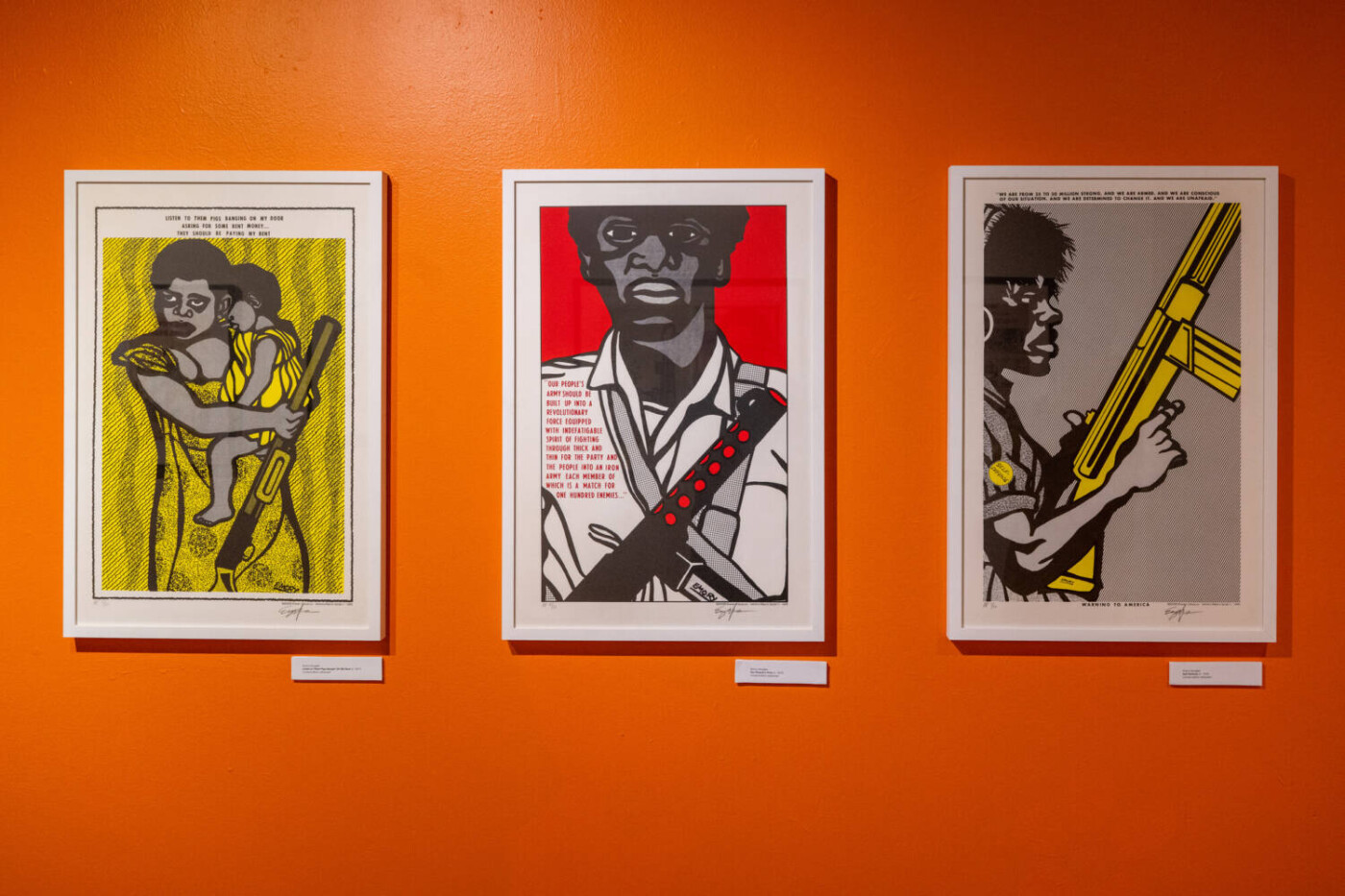
The African American Art and Culture Complex in the Fillmore district has been a beacon of Black art and culture in the city of San Francisco for decades. Currently, each floor of the three-floor building is decorated with visual masterpieces created by San Francisco native Emory Douglas, the Minister of Culture and Revolutionary Artist of the Black Panther Party, for his hosted exhibition.
This place is one of the hearts of Black culture in the Bay, and it is set to temporarily close at the beginning of November for a few years for seismic retrofitting.
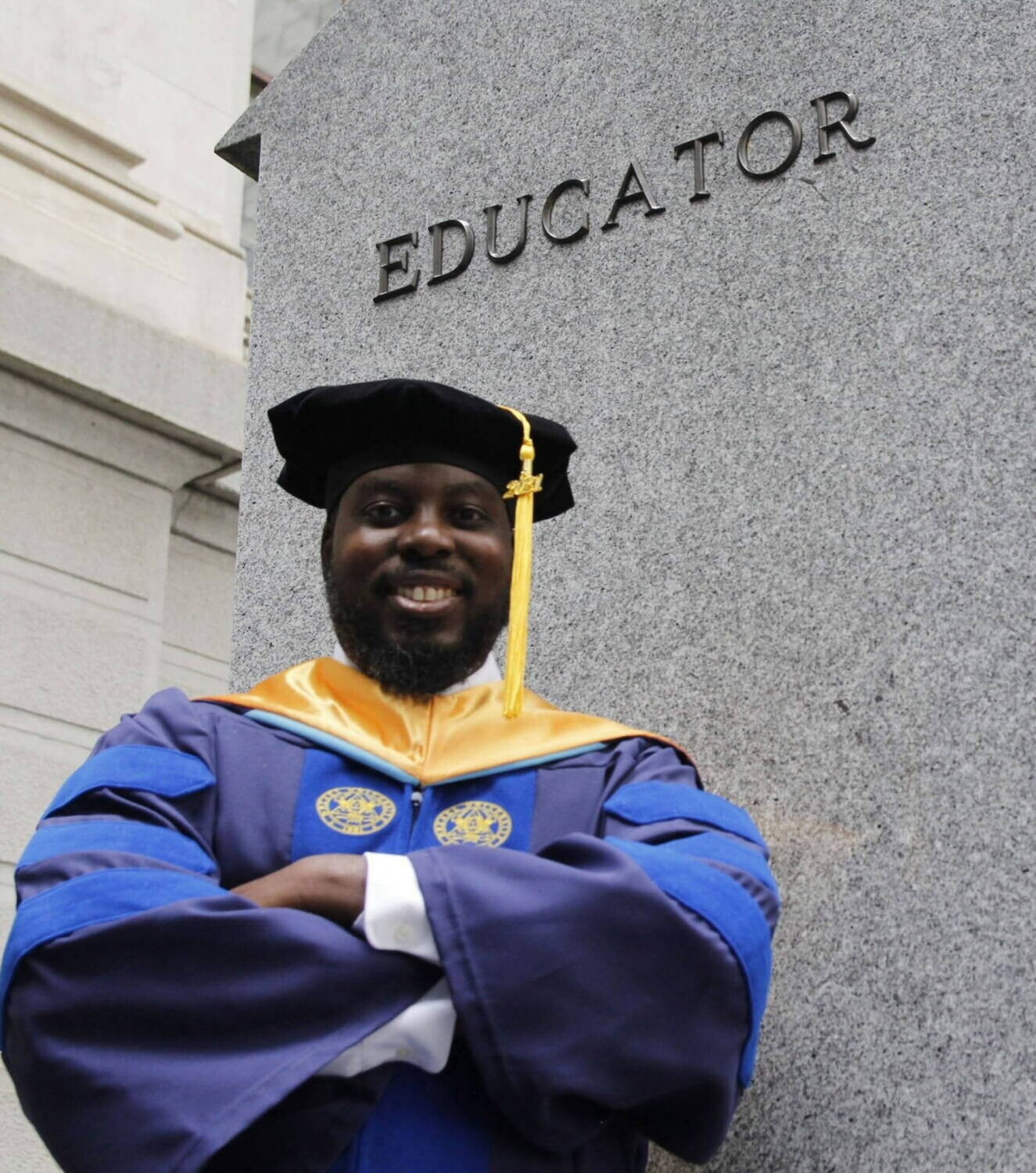
Following in a line of extremely talented, committed and community-driven executive directors, Dr. Murrel Green is the new executive director of the African American Art and Culture Complex, leading this transitional period. Although the beloved building will not be in service, he is assuring that programming will not cease.
Check out what Dr. Green has to say about what’s happening to our building and the programming that the community has long depended on.
JR Valrey: Can you tell us how it feels to be the new executive director for the African American Art and Culture Complex, which has a prestigious history spanning many decades?
Dr. Green: It feels absolutely phenomenal for so many different reasons. First and foremost, to be back home in the neighborhood and community that raised me is something that not everyone gets the opportunity to experience, and I feel truly blessed to have that opportunity.
There is also a very personal history for me with the African American Art and Culture Complex. I worked here 25 years ago under then-Executive Director London Breed, and the Complex became an extension of my family. To now return as executive director and follow in the footsteps of people like Mohammad Bilal and Co-Executive Directors Melonie and Melorra Green is incredibly meaningful to me. When I think about the staff from those days, people like Errol, Victor, Tonya and so many others who poured themselves into this institution, I understand the legacy that I have been entrusted to help carry forward.
There is something special about being able to walk into this building every day and absorb the culture, the history, the energy and the spirit of the space. This is more than a job for me. It feels like coming home, and I am grateful for the opportunity to serve a place and a community that have meant so much to me for so many years.
JR Valrey: What is going on in the month of October at the AAACC?
Dr. Green: October is going to be an incredibly active month at the African American Art and Culture Complex. I would start with our artist installations. We have the extraordinary work of Emory Douglas displayed throughout the building, from the first through the third floors. If you have not had an opportunity to experience that exhibition, it is beyond amazing.
We are also featuring the work of Gustavo Castillo, who is simply a genius in his craft. What he is able to create through his work is phenomenal. Then we have a young artist, Isaiah “Zay” Williams, whose exhibition, “Zay’s Notebook,” demonstrates a formidable ability to tell the story of his life, experiences and perspective through art. I am particularly excited that we are able to have multiple generations and artistic voices represented throughout the Complex.
Beyond the exhibitions, we have several community events happening throughout the month. Alpha Phi Alpha Fraternity, Inc., Gamma Chi Lambda Chapter will be hosting a voter registration event, and our Community Days will continue to bring people into the building for programming and engagement. One of my favorite people, neighborhood native and boxing champion Karim Mayfield, will also be putting on an event here at the Complex.
And, of course, October means spooky season. Our senior program coordinator, Ashley “Smiley,” is developing what I would describe as a Halloween extravaganza, with programming for young people as well as an adult-centered celebration that is going to be very difficult to miss.
Although you asked specifically about October, I also want people to know that our indoor programming will continue through Nov. 7 as we prepare for the temporary relocation. We plan to go out strong. We will host our Legacy & Vision reception, celebrating the people who helped build the history of the AAACC while also looking toward its future. We are bringing back our “A Different World” activation, using the excitement around the series to engage students around college and career preparation in a way that is both educational and culturally relevant. We will also bring back our one-day robotics camp for young people.
And Nov. 7 does not mean the work stops. We are planning outdoor community activities after we leave the building, including turkey giveaways and other events during November and December.
So this is not a quiet period for the AAACC. We are filling the building with art, culture, community, education, celebration and history, and then carrying that same energy with us as we move into this next chapter.
JR Valrey: Why will the AAACC be closing down? How long will it be closed?*
Dr. Green: I think the first thing that is important to clarify is that the African American Art & Culture Complex is not closing down, and Oct. 31 is not the end of our programming. Our last day of indoor programming at 762 Fulton St. will be Nov. 7. After that, we will temporarily relocate while our historic home undergoes a much-needed seismic retrofit. We anticipate the work taking approximately a year and a half.
That distinction is extremely important because the AAACC is much more than a building. We fully intend to continue our programming, grow our presence and remain actively engaged with the community throughout the retrofit period. Even after our indoor programming concludes, we anticipate outdoor events and community activities during November and December as we transition into our temporary locations.
The need for the seismic work is very real. The 1989 Loma Prieta earthquake demonstrated the vulnerability of buildings throughout San Francisco and the Bay Area, and this retrofit is intended to provide the structural improvements necessary for the long-term safety and future of 762 Fulton St.
I actually think there is a larger metaphor in that. A building needs a strong foundation in order to stand, grow and thrive, and I believe the same thing is true of our AAACC community. This retrofit is about strengthening the foundation of this historic institution so that it can continue serving generations of San Franciscans well into the future.
Most importantly, this work is necessary for the safety and security of our artists, staff, tenants, program participants, visitors and community. So while 762 Fulton will be undergoing an important transformation, the work of the AAACC will continue. We are not going anywhere.
JR Valrey: What will happen to the programs that are currently housed at the AAACC?
Dr. Green: That is an interesting question because, as the new executive director, I think this is also an important time for me to work with our team to assess the programs we currently offer and determine how we can make them even stronger.
One of the responsibilities I was asked to take on when I came into this position was to examine how the AAACC has survived over the years. I have actually begun changing that language. I am less interested in how we survive and much more interested in how we thrive.
That means taking an intentional look at our programming: What is working? What is not working? What can we do better? What should we increase? Are there things we should decrease or rethink?
We have to ask those questions if we want the AAACC to remain a sustainable institution and a strong, reliable resource for our community for generations to come.
I also see our temporary relocation as an opportunity to expand rather than contract. While we are outside of our building, we have an opportunity to cultivate new relationships, take our programming into other spaces and bring our talents and resources directly into communities that can benefit from them.
I believe there is a lot in a name. We are the African American Art & Culture Complex. To me, that carries a responsibility that extends beyond the walls of 762 Fulton St. The Fillmore-Western Addition will always be our home and our base, but there is no reason our impact has to stop there.
I want us to explore opportunities in other parts of San Francisco where there is an interest in African American art and culture, throughout the Bay Area, across California, nationally and eventually through international collaborations.
We are already beginning conversations about potential collaborations in Harlem, New York, and I am also exploring ways that we might build relationships with the National Museum of Liberia. Those kinds of partnerships excite me because culture is not supposed to exist in isolation. If we truly believe in community, then we should be looking for opportunities to support one another, share resources, exchange ideas and build together.
So our core presence will remain rooted in the Fillmore, but my vision is for the AAACC to use this period to strengthen what we already do while expanding our reach. We want to collaborate with people and institutions that share an interest in advancing African American art and culture and make the AAACC’s impact even broader than it is today.
JR Valrey: How can people keep up with the developments at the AAACC?
Dr. Green: Great question. We have several resources that I encourage anyone who is interested in the AAACC to stay connected to.
First, there is our website, which we will continue updating with developments, programs, events, relocation information and ways to find us while we are outside of 762 Fulton St. We also have our newsletter, which gives us another opportunity to communicate directly with our community. And, as you are asking me this question, you are reminding me that I need to update my Executive Director’s message for the next edition!
Social media will also become increasingly important for us. We have Facebook, we are going to become much more active on Instagram, and we have been discussing developing our presence on YouTube as well. I am even willing to venture onto TikTok. It is definitely not my forte, but if doing a TikTok dance or two helps introduce another generation to the AAACC and gets them interested in African American art and culture, I may have to take one for the team.
But communication cannot only happen through technology. We are also committed to maintaining strong relationships with important community media institutions like the SF Bay View newspaper and others that have historically helped tell the stories of our community.
And then there is something that I still believe is incredibly powerful: word of mouth. As we move throughout the city during this seismic retrofit period and partner with other organizations and communities, I believe more people are going to encounter the AAACC in places where they may not have encountered us before.
I was born and raised in San Francisco and in the Fillmore-Western Addition. This is home for me. Organizations that may sometimes have been viewed as competing organizations are, from my perspective, extensions of our family. I intend to work with them, not around them. The same is true of our faith-based organizations, which have historically played such a pivotal role in supporting and sustaining San Francisco’s African American community.
So whether it is through our website, newsletter, social media, community media, churches, partner organizations or simply people telling other people about the work, we are going to make sure the community knows what the AAACC is doing.
You will not have to wonder where we are or whether we are still working. We will be out there, we will be visible, and we will make sure people know that the AAACC is still here.
JR Valrey is a veteran journalist and Editor in Chief at the San Francisco Bay View. He can be reached at JR@sfbayview.com