


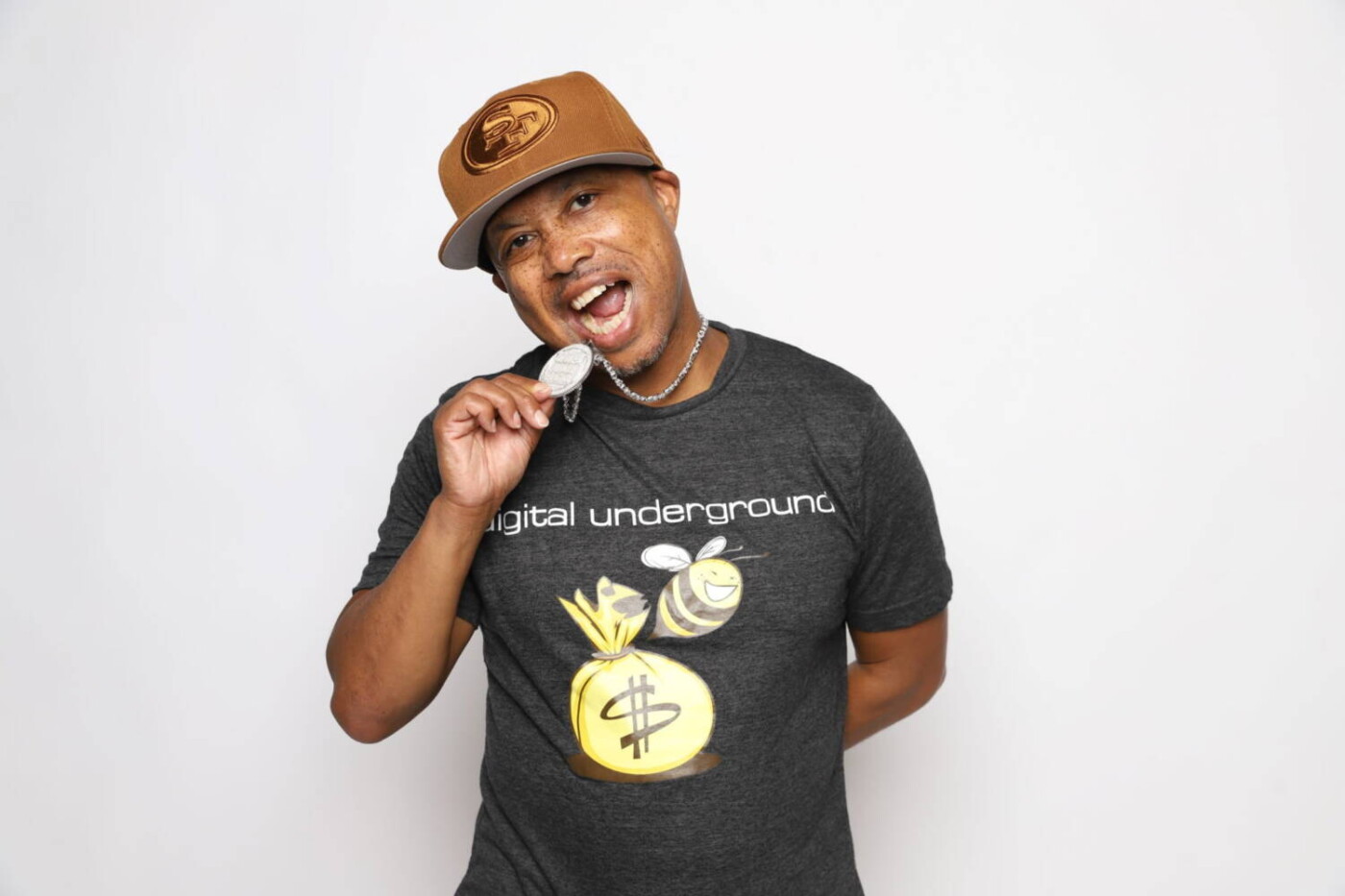
By Leah Harmony
The first time I heard a Digital Underground song I was in Texas, a wayward teenager, missing my home in the Bay Area, and just missing the Bay Area entirely… completely. I turned on the radio to hear:
“So you’re freakin’ (freakin’), the furniture’s squeakin’ (squeakin’)/She’s tweakin’, sayin’ that she’s weak in the knees/Cheek to cheek, and pound for pound/You’re taxin’ it and waxin’ it and workin’ it around/’Til the booty starts makin’ that clappin’ sound/Which is cool, but your friends are chillin’ in the other room”
And because the Bay talks different, raps different and just hits different, I knew I was listening to home and that was everything.
That was 1990. It’s now 2026. Digital Underground has been around the world a few times, lost integral members of the Digital Underground family, including one half of the group’s mainstay duo, musical genius, Shock G. Things haven’t necessarily slowed down for Ronald “Money B” Brooks because life will do what life does, but it seems to be moving at that kind of manageable pace that comes with wisdom and years in the game. That’s what gives him room to share the stories, enjoy the nostalgia, and embark upon new endeavors in tech and literature.
We caught up at a perfect time. October is Black Panther History month and the celebration of the 60th anniversary of the Black Panther Party for Self Defense. Not many people know who Money B was before he was making records with Digital Underground, so they don’t know as a child he was fed, taught and looked after by the Black Panther Party.
Early in our conversation, when I asked him what he knew about the Black Panther Party as a child, he said the most Oakland thing ever: “I didn’t really know about the Black Panther Party, because all I knew was the Black Panther Party.” He told me, “I just thought that that’s how you grow up.”
Raised by the village: The Oakland community
“My father joined the Black Panther Party in Philadelphia, at the Philadelphia chapter, in 1970,” Money B explained “I was one year old when he joined.”
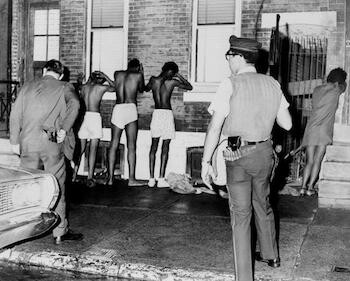
The catalyst was good ol’ state sanctioned police repression and violence. Following nationwide crackdowns and police raids—precisely the infamous raid where Philadelphia police forced Panther members onto the street naked at gunpoint with snipers trained on their rooftops—his father, who lived right next door with his family, made a decision. “He saw all this happen, and he said the next day he joined the Black Panther Party. Seeing how the police did it, the way they treated us… it wasn’t right.”
By 1971, his father was summoned west to the party’s headquarters in Oakland, working directly alongside Huey P. Newton, Bobby Seale, and the central committee. By 1973, a four-year-old Money B and his mother followed him to the Town.
While the mainstream media spent decades propagandizing the Panthers as a domestic terror threat, Money B’s earliest childhood memories were grounded in communal infrastructure and surviving to see the outcome of the revolution. He attended the historic Oakland Community School (OCS), founded and directed by the Party at 6118 East 14th Street in the heart of East Oakland.
“I was a part of the Free Breakfast and Lunch Program, which was originated by the Black Panther Party,” he recalled. “We would be fed breakfast and free lunch at the school. But it wasn’t just us—it was for the whole community. Right down the street from the Village. They had after-school programs, karate classes, meditation, movies on the weekends, teen dances. All of that was for the community.”
His recollections filled spaces we know are there but have learned to live without. Cooperative communities seem to be one such thing. Some children stayed in shared housing during the week while their parents worked. Mothers were mothers, it didn’t matter who’s biological child they were protecting, disciplining, or caring for.
“There was a bunch of us, and that’s where we stayed during the week—like a dormitory,” he said. “When people say ‘it takes a village,’ it really was that. They were taking care of us, they were protecting us, and they were also allowed to discipline us. If fourteen of us were staying in the house and somebody was messing up, you had to sit there and listen while they handled business in the back.”
When I asked whether people could sustain that kind of cooperation today, he pointed to ego and the pressure to put oneself first. He worries that giving something up for another person is looked at as a weakness these days.
“You know, it’s not all about you,” he said.
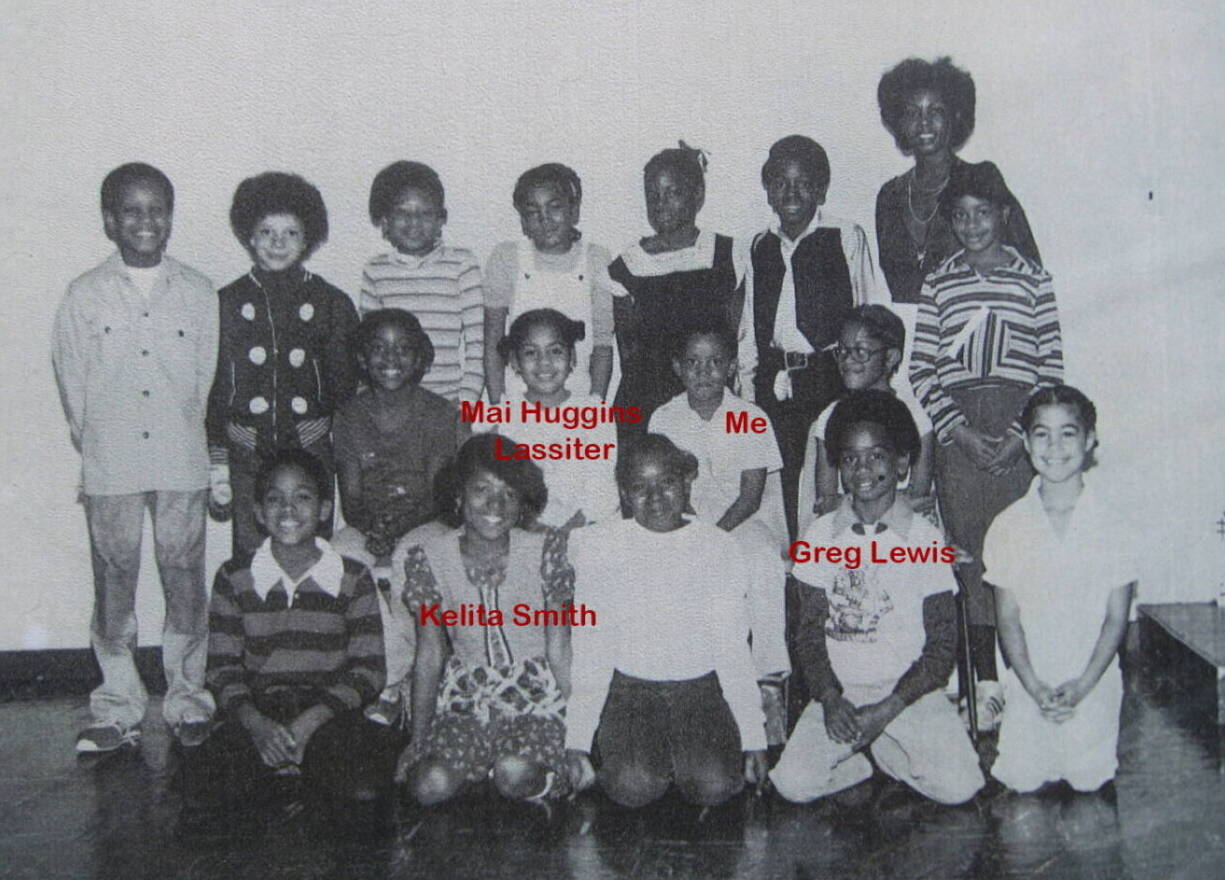
Out of that structure lifelong bonds were formed. Classmates at the Oakland Community School included Gregory Lewis (who went on to pen his own memoir about the experience), Mai Huggins (daughter of iconic Panther leader Ericka Huggins), and actress Kellita Smith (best known as Wanda on The Bernie Mac Show).
“Ericka Huggins was the director of the school, and we still have a relationship to this day,” Money B shared. “Elaine Brown runs the Black Panther apartments where my mother lives right now. Emory Douglas, who did all the revolutionary art, his daughter rhymes. Saturu Ned (formerly James Mott), who is still deeply influential around Oakland, was one of my teachers.”
Money B did not grow up waiting for somebody to introduce him to Black history. He remembers reading Malcolm X young, learning about Marcus Garvey and Langston Hughes in elementary school, and meeting Rosa Parks when she visited his school.
“We knew about ourselves,” he said. “We were taught our own history, and I thought that everybody knew that.”
Growing up immersed in this environment shaped his early worldview before he was grown enough to understand it was a rarity.
“When the late ’80s came around and everyone in hip-hop started wearing African medallions, dashikis, and talking about Black awareness, I never really hopped on it as a trend. I realized later that college kids were just discovering their Blackness. But I had read Malcolm X when I was 11. I knew Marcus Garvey. We were taught our own history in elementary school. Rosa Parks came to our school—we met Rosa Parks in person.”
Drugs as weapons and apathy as the norm
Rising above and looking through a wide lens over the mid-1970s into the 1980s, the purposeful sabotage of Black self-determination cannot be ignored. The destruction of the Black Panther Party through the FBI’s counter-intelligence program (COINTELPRO) coincided directly with the flooding of crack cocaine into inner-city neighborhoods, followed by the rapid expansion of the prison-industrial complex.
“It’s definitely on purpose,” Money B noted without hesitation. “When Public Enemy was going platinum in 1990, they didn’t just all of a sudden start making bad music. It was purposely pulled from the radio, and other messages were pushed forward. The negative messages were promoted at the exact same time industrial prisons were being built and needed to be filled. It’s not a coincidence. You dangle the carrot: ‘Keep making this stupid shit, you’ll get rich.’ And now our people have been conditioned to risk their entire lives over nothing, but won’t risk anything over something meaningful.”
Living through the peak of the crack epidemic on the streets of Oakland tested every ounce of discipline instilled in him as a Panther child. Yet, when he linked up with Gregory “Shock G” Jacobs, Jimi “Chopmaster J” Dright, and DJ Fuze to form Digital Underground, they chose a path that resisted the commercial pull of street exploitation.
“Digital Underground wasn’t on that,” Money B said. “Shock wouldn’t allow it. Shock was all about unity, peace, and bringing people together—One Nation Under a Groove. Early on, I had people telling me, ‘Man, if you talked about what you really do and where you really came from, you could say just as much as these gangsta rappers.’ But I was never impressed by that lifestyle. I lived around it, I lost people to it, and I knew what it really was. I wasn’t going to glorify it on a record.”
A DU Party Don’t Stop: Preserving Legacy and Reclaiming Ownership
That same stubborn integrity runs through every page of his upcoming book, A DU Party Don’t Stop: The Money B Story. Rather than producing a sensationalized tell-all about tour buses and backstage antics with 2Pac, Money B approached his memoir as a living historical document.
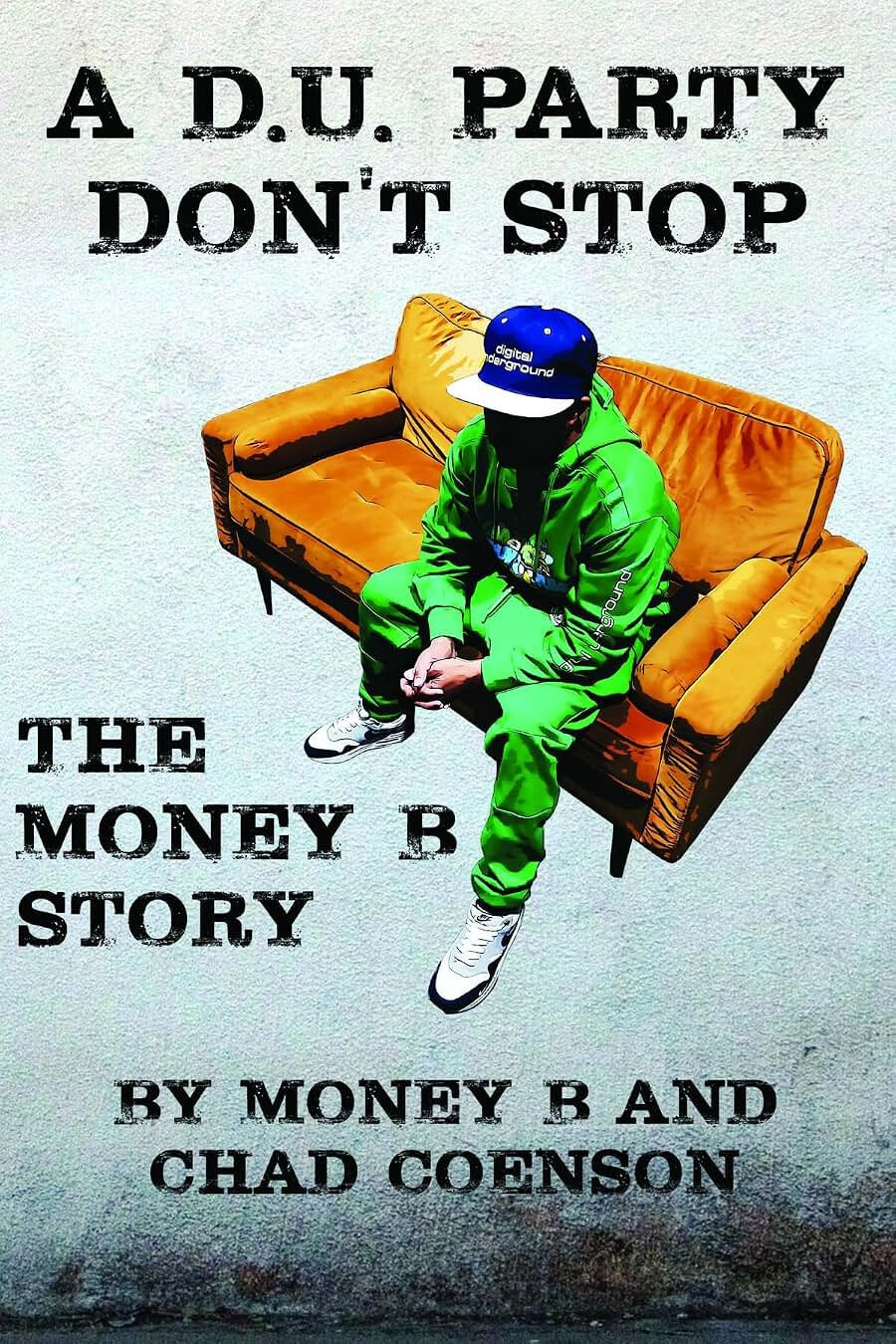
“People automatically think it’s going to be a tell-all hip-hop gossip book about being on tour with Digital Underground and Pac,” he said. “That’s in there, but that’s just a portion. I equate it to an American history tale. It’s a firsthand experience of being a child of the Black Panthers in the ’70s, surviving the crack epidemic as a teenager in the ’80s, rising with Digital Underground and Tupac in the ’90s, and then facing the 2000s when your star begins to fade at just 25 years old—navigating what comes next, family, survival, and reinvention.”
Getting the book to the public was a war in itself. After completing the original manuscript around 2017, predatory publishing practices dragged him into a three-year court battle just to secure the legal rights to his own life story.
“I spent three years in court just trying to get the rights back to my own story,” he said. “Once I got the rights back during the pandemic, I sat down, added chapters about what was happening in the world—Trump’s first term, the pandemic, the shifting culture—and brought it up to 2022. It’s information that doesn’t expire because it’s what really happened. It’s primary history.”
The book’s The release date—October 13—has an eerie, cosmic glow. October 13 happens to be the exact date of the sentencing in Las Vegas for Duane “Keffe D” Davis regarding the 1996 murder of Tupac Shakur.
When I asked Money B about the sudden “resolution” of the case after nearly three decades, his response was careful, as someone who finds it obvious that state institutions are as shady as record labels, but knows most people just really want to hear good music.
“Why 30 years later?” he asked rhetorically. “His mother, Afeni, passed away without ever getting closure. It feels too neat to just tie it up in a bow so nobody ever looks at the agencies or the deeper hands involved. But when the verdict came down and family members called me elated, feeling some sense of peace, I was happy for them. But the date lining up with my book release? You can’t plan that. Somebody close to it told me, ‘That’s Pac winking at you.’ It must be.”
Analog Wishes, Digital Dreams: Tech as Self-Defense
Unlike a large portion of the new generation of music makers, who seem too self involved to consider tools of tech, Mon stays true to the visionary culture of Digital Underground. They were, after all, a group that declared themselves “digital” back when multi-track recording actually utilized a “ginormous” multi track mixing board and getting your masters back meant you actually went to pick up boxes of 12 inch reels. Money B remains relentless about technological self-determination.
Recognizing how corporate streaming models carry the legacy of stealing from Black creators—paying fractions of a penny while blocking artists from their listener relationships—he launched Analog Wishes, Digital Dreams. Packaged as a physical, tap-to-play NFC content card (available at dumerch.com, the card operates like a credit card that opens a secure, standalone media ecosystem directly on a listener’s phone. It delivers ten new tracks, unreleased archival footage, animated stories about Tupac, and historic footage of early European freestyles between Money B and Shock G.
“You sell a million streams on Spotify, what is that? Roughly $4,000?” Money B broke down. “I can sell 100 physical cards and make the exact same amount. Our people were locked out of housing through redlining; we were locked out of generational wealth. We cannot afford to be left behind because we’re afraid of new technology. You have to adapt. Just because someone uses a tool to cause harm doesn’t mean you don’t arm yourself with information to protect your family and your culture.”
It reminds me of what we all can do with life experiences as a whole. A scarf can be a weapon or a lovely garment that keeps you warm.
From carrying the legacy of the Oakland Community School to touring the world with Young Hump keeping Shock G’s memory alive on stage (with his blessing, of course) Ronald Brooks took everything he lived through and kept that which the Panthers intended their children to be: grounded, organized, self-reliant, and incapable of selling out.
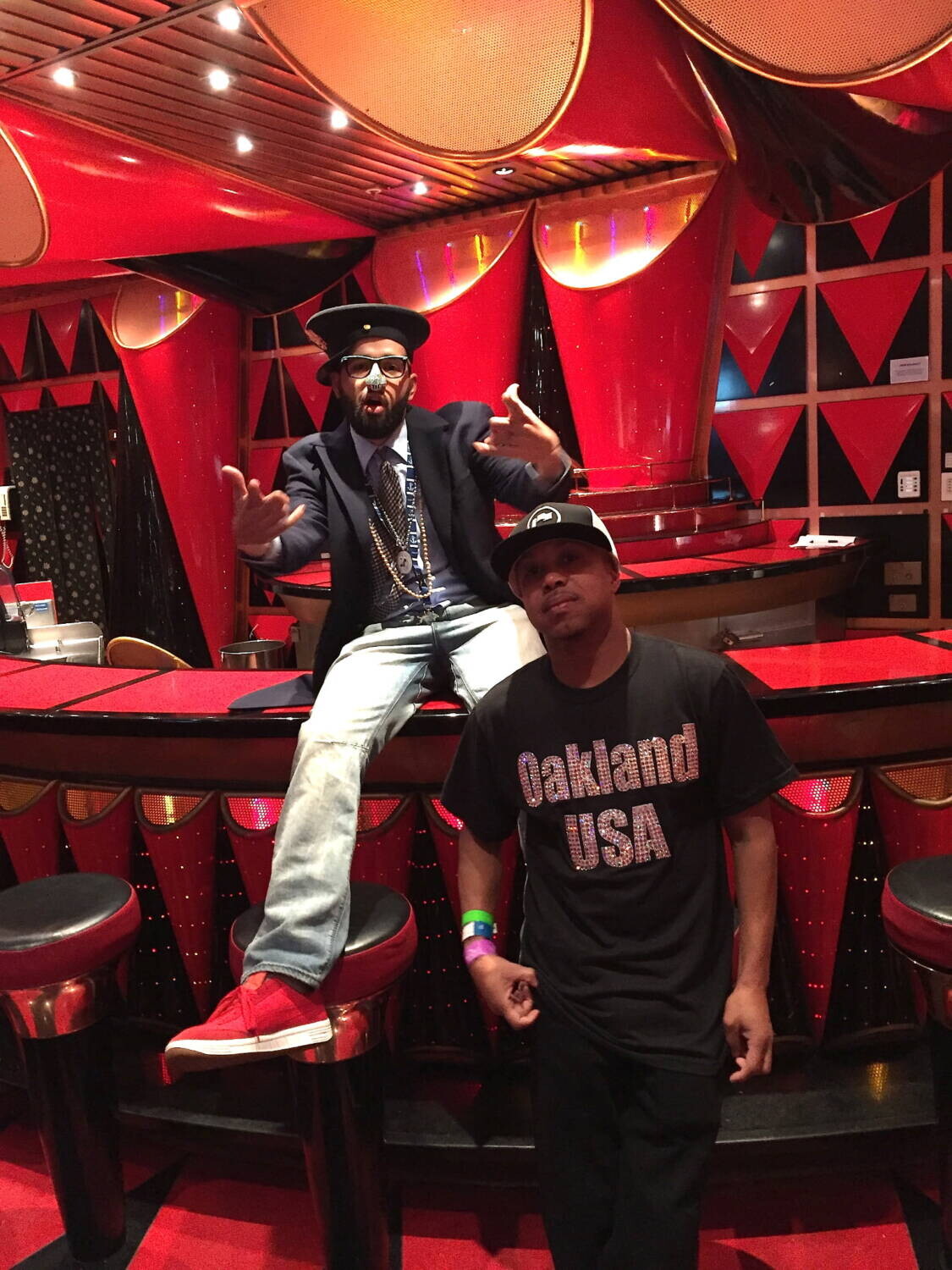
Money B’s memoir, ‘A DU Party Don’t Stop: The Money B Story,’ is available for pre-order at dumerch.com, where readers can secure signed copies alongside the ‘Analog Wishes, Digital Dreams’ NFC tap-to-play card. Digital Underground will be bringing the Bay to Belize for New Years Eve, with a show on the 2nd, with Oakland’s own Numskull of the Luniz (“I Got 5 on it”). .
Leah Harmony is Manager of Production for the San Francisco Bay View, a journalist, filmmaker, and music video producer. She can be reached at leah@sfbayview.com.