


by Tabari Morris
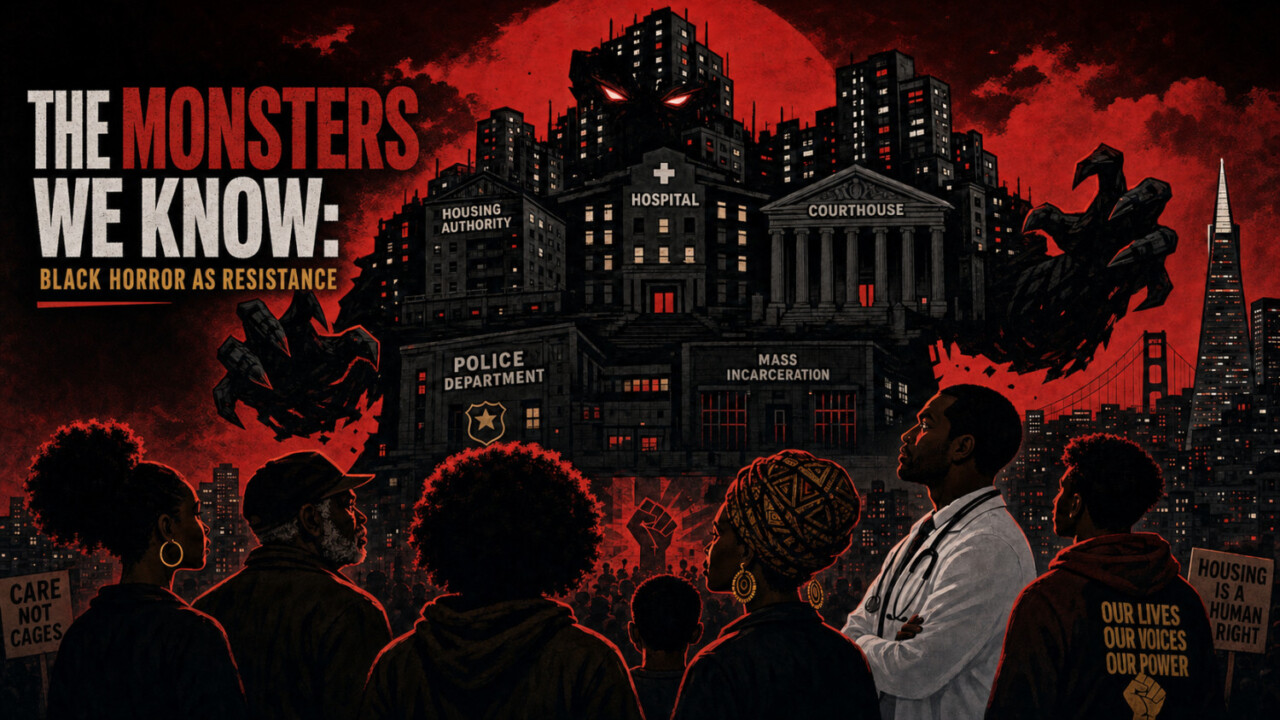
What follows is an edited print version of the event Q&A, preserving the original dialogue and Q&A format while focusing on the strongest exchanges from the conversation.
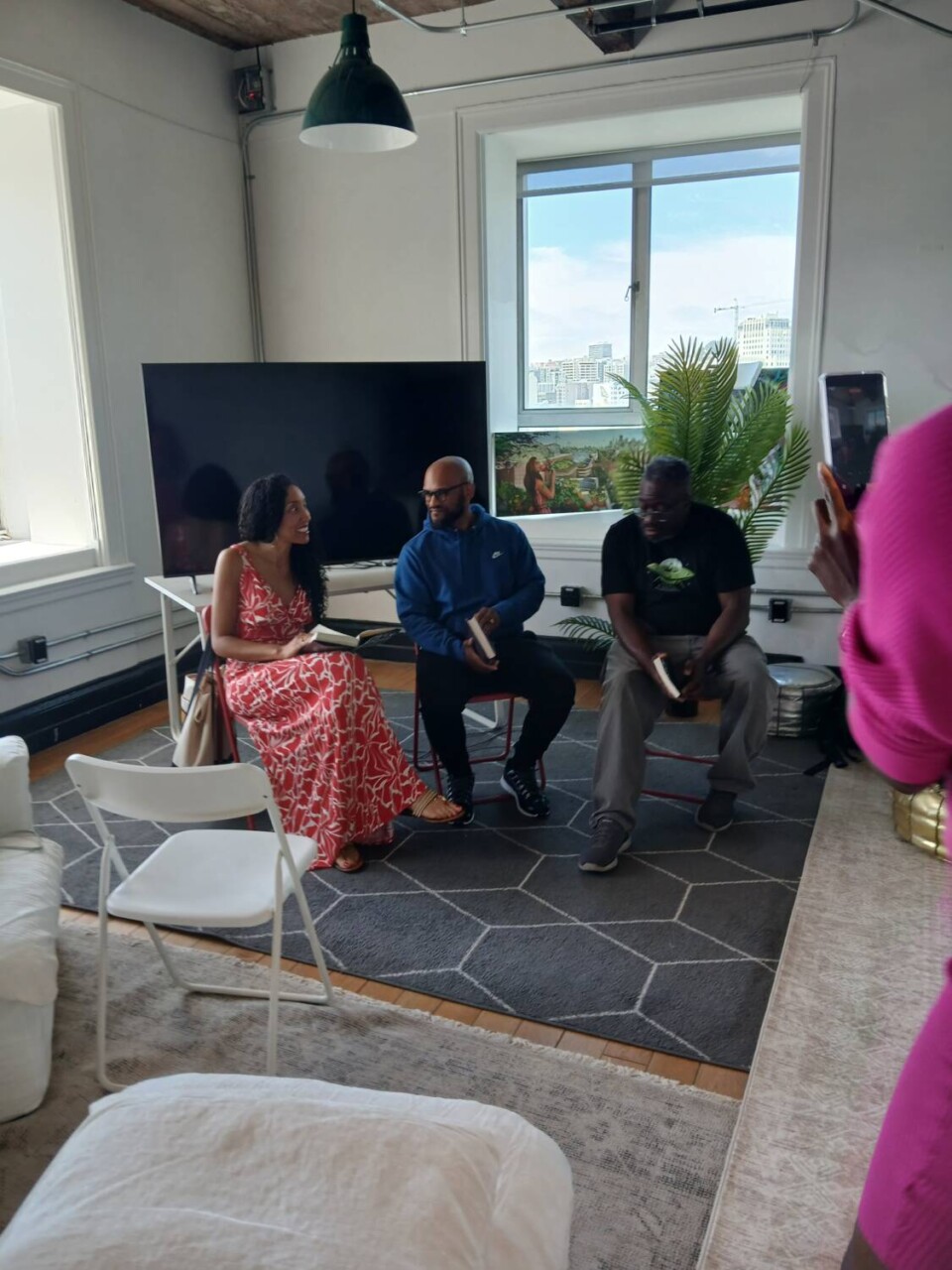
Speakers
Ayize Jama-Everett is the event moderator and a Bay Area speculative fiction writer whose work sits at the intersection of Black imagination, medicine and futurism. He frames Justin C. Key as a writer following a path laid by Octavia Butler and notes the broader literary attention around the panel’s work.
Tamika Thompson is the author of “The Curse of Hester Gardens,” a novel that places the supernatural alongside the material realities of public housing, gun violence and systemic neglect. In the discussion, she explains that the book draws on lived experience and two years of research into gun violence and public housing in America.
Justin C. Key is a horror writer, author of “The Hospital at the End of the World,” and practicing physician whose work turns medical institutions into sites of dread, power and moral conflict. In the event, he is introduced as living in Los Angeles with his wife and three children, and he says during the discussion that he is “a horror author who went to medical school.”
Edited Q&A
Ayize: So, Tamika Thompson, the curse of Hester Gardens sits a supernatural curse right next to housing authorities that won’t fix the sewer lines. Which one would you say is the actual monster? Did anyone in the publishing world ever ask you to make the host or the housing authority the bigger threat?
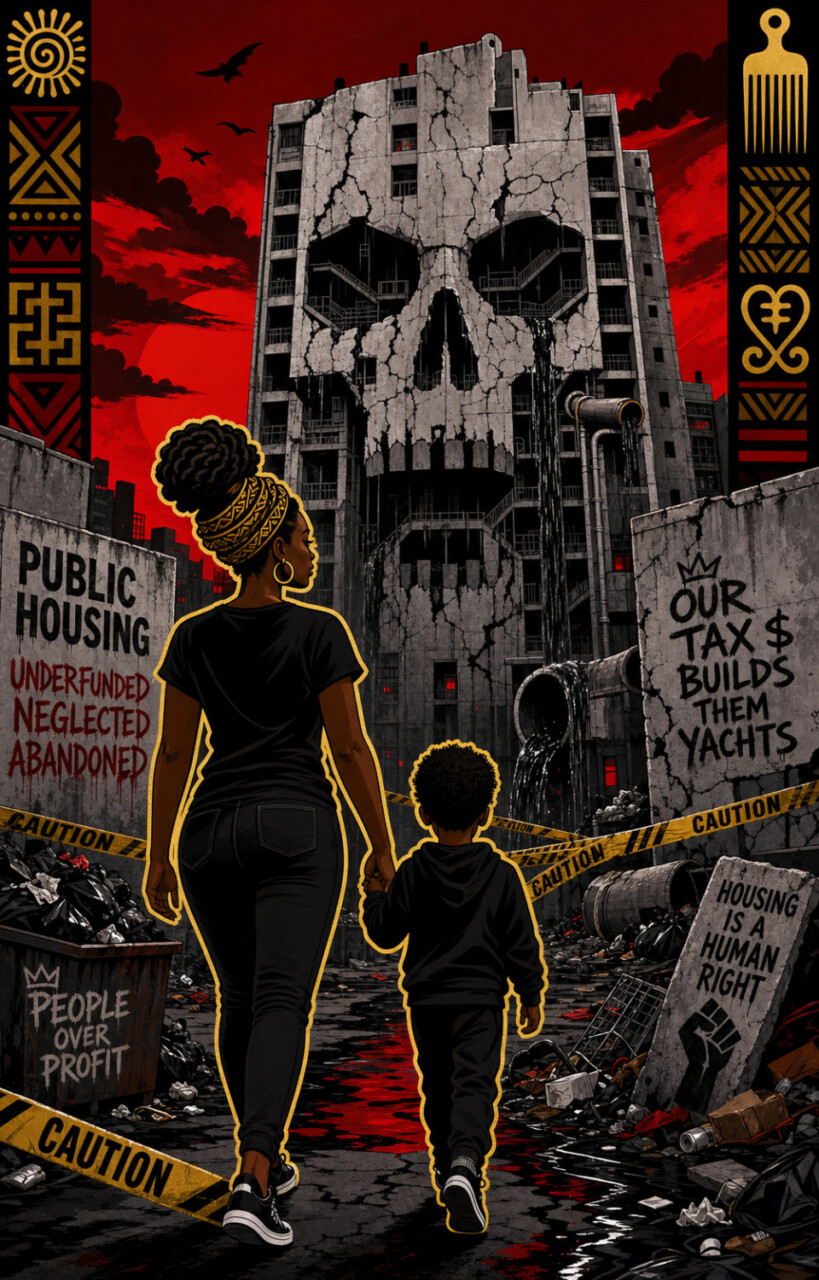
Tamika: No, no one asked me to do one versus the other. I think I was really lucky to have Diana as my editor. She’s an award winning editor at Erewhon Books. And she knew what she was getting I think when she got the manuscript. She liked the balance of the supernatural and the real world. The real world parts that you mentioned grew out of my lived experience and also grew out of years of research, two years worth of research into gun violence, but also research into public housing in America.
Looking at Herman Gardens, which was about a mile away from where I grew up, but also Cabrini-Green in Chicago, the Queensbridge projects, the Marcy projects – and so yes, the system is the monster I’d say for sure in this book. The system is the monster in the US. And so when you read the book, the curse is America. And I very much wanted to tell that story. So the supernatural I think is in service of this bigger picture, the things that I want people to see.
What has been really validating I think for me is a lot of readers who grew up in public housing projects have come back and have told me that the parts in the book that I had about the leaky pipes, the backed up sewer lines that you mentioned, the trash – just the fact that the housing authority didn’t seem to care and let the place fall into disrepair – that this was all stuff that was familiar to them as well.
So I knew from the beginning that was a story that I wanted to tell.
Ayize: Justin, for you, you don’t give people a haunted house. You give them a haunted institution. You give them the medical system in America. If somebody currently does not have healthcare, I get it. What changes structurally when the villain is a system instead of like a house?
Justin: So I like to tell people, and this is a great question and makes me think, which I love because I like to tell people that I’m a horror author who went to medical school. And going into medicine, like writing aside, I also came from … I grew up in Southern Virginia, I came from a community that does not have a good relationship with medicine. So already I was aware of the tension that’s there. Already aware of medicine and the hospital as being a place that you don’t want to go to.
So it was very interesting going in with that aspect and seeing the system as the problem and how both sides are being pitted against each other because of it. Let’s say you have overworked physicians who are burdened by the paperwork, by the patient volume, by the short staff, just the rigor of medicine and needing to take care of patients when you’re in training, while trying to please the system hierarchy. They’re there from like 5:00 a.m. to maybe midnight constantly doing orders or running around or responding to codes or what have you.
And then you have on the patient end of things, like they’re there likely with their loved ones, and feel like they haven’t seen the doctor all day or maybe only got to for a few minutes doesn’t know this order that was just put in. So they think that no one really likes thinking about them. No one is caring for them.
So then when those two come together, the patient is rightfully so, feeling resentful, feeling like you’re only here for a paycheck. Whereas the doctor, especially if they’re a training doctor, I don’t get paid…. It’s always the bottom line. And I could see it in real time, like the physicians feeling like I’m working so hard and these patients, they aren’t trusting of me. They aren’t listening to what I’m saying. So then I could hear the narrative on both sides and know that it’s like the system that’s the issue.
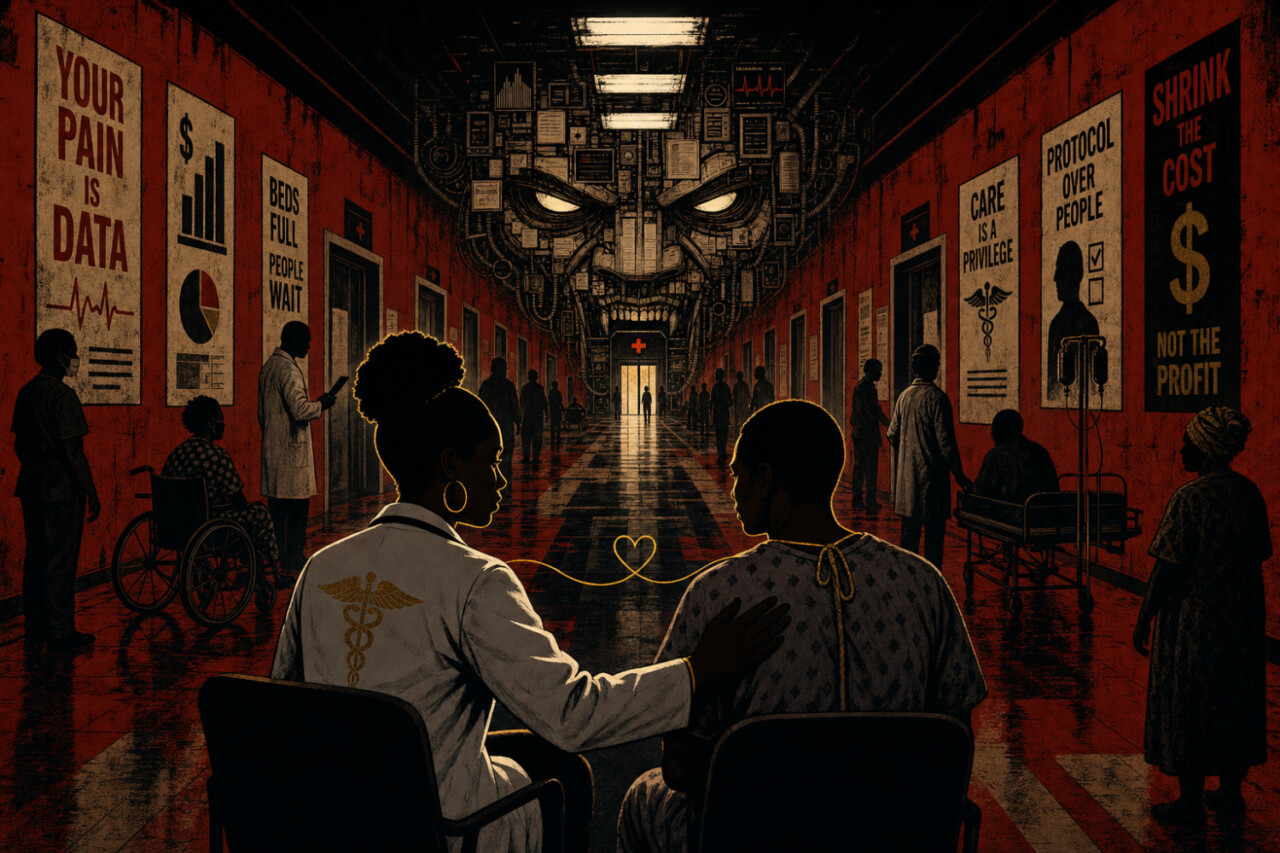
So that’s how I was thinking it was like, OK, how is this system going to not only affect the characters here but also pit the characters against each other in ways? So that’s in the medical school setting there. And then when you throw in like AI in these corporations or what have you, you’re basically throwing in something that does take almost fully away the humanity of it – and then what’s left? It’s like what the patient wants the most is like being seen by a doctor.
Like you’re almost taking that or being seen by a human. Yeah. Taking that fully away.
Ayize: Now to me, you’re a journalist, right? And this is my question about the book, right? Because you name institutional failure like on the record, so what can be a curse in fiction that a reported story could never get past an editor?
Tamika: Reported stories tend to be the media; corporate media tends to be episodic. And so you’ll get the story that day. You’ll get the gun violence or whatever it is, but it’ll just be that story. And we see those all the time. So we’ll get the shooting that happens at the birthday party or the shooting that happened at the graduation that was happening here recently. And so we’ll get it episodically, but we don’t tend to get those overarching stories to talk about it as the national health crisis that it is, the public health crisis and the fact that it is an epidemic.
You would have to have a feature story in order to do that. And feature stories cost money. And so they tend to not want to spend on those. And so because of that, the reader, the viewer is always getting these one offs and are not seeing the bigger picture. Which is why I have a journalist in the stories. First of all, “The Garden” has a journalist character named Harlan. The reason that I put him in there is because I spent two years researching gun violence and I wanted that research to live somewhere within the story, within the text.
And so his sort of research in the book mirrors what I had found out when I was researching. And it’s the fact that all of these young people, whether they’re inner city, suburban, urban, rural, that they all start off having been victimized before they ever pick up a gun. And so that’s not something that is in an everyday news story that you’re necessarily going to see.
And so that’s why I really enjoy the freedom of fiction. I enjoy the freedom of horror because horror allows me to go even deeper I think than just literary fiction. I can get really brutal and everything can be as visceral as I want it to be because the reader comes to the text sort of expecting that. But I think that there is a lot of overlap in the fact that so much of what we see in the news is horror.
Ayize: So Justin, I know that horror likes to think that it’s evolved past the Black people die first. The Black couple dies. It’s all new. Ever since what, Us, what else was it? Get out. It’s like, oh, now we got new horror. But what’s the failure mode it repeats now when it believes it’s being progressive? How does horror still keep messing up with Black people?
Justin: I think that there’s definitely a danger in seeing from the outside, seeing where the train is going and then trying to kind of replicate that without intimate knowledge of it. So if you think of the Get Out or Us or what have you, and if someone is like, oh, the horror is really like the Black experience. And then they might think, OK, how do I make that into art? The monsters are secondary. It’s like racism is the monster. It’s a horrific thing.
And then without that kind of lived experience or that curiosity, then you’re losing the joy to juxtapose it with. I think that’s one of the great things of writing horror – being able to write horror is in all of these dark things that are happening in the monster, and what have you. Then you can also still show the joy that exists there.
So I think that the pitfall that I would say is just seeing the trends, seeing like OK, this is what elevated horror looks like for Black people, but still not taking the time to actually make sure that you’re being responsible I think to the Black experience – whatever that may look like. If it’s something like a movie or a TV show, like having Black people in the room; if you’re a writer, which is a very solitary experience, there’s tons of sensitive readers out there right now who can say, “Hey, you got this right, that this is the horror, the monster is racism, but your characters are just, they’re just sad. Or you’re still just putting it through. You’re not showing them it’s human.”
Ayize: What actually scares you? Like what institution, monster, prison, housing project, medical thing, what actually still scares you guys?
Tamika: I will just jump in and say what scares me and I am working towards an essay on this idea of the shooter and the fact that we don’t have a shooter in horror. We have a slasher. We’ve had chainsaws, we’ve had everything. But what frightens me is the idea that my children have to do lockdown drills to prepare for an active shooter on campus. That was what scared me when I was young because I lived in a neighborhood where there was a lot of gun violence and I would hear gunshots.
And so what makes me afraid is gun violence in the country. And so when I look at movies, especially horror movies, the gun usually shows up and saves everyone. When you look at Halloween for instance, which is one of my favorite movies, Michael Myers towards the end is struggling with Lori Strode and Dr. Lumis shows up with a gun and shoots him and he falls off the balcony and that’s sort of when she’s saved. And so the gun is there to protect, but that is not how most people experience guns.
And so I think that there is space within horror to address this – not just my book, but I think it needs to be more of a regular thing that guns hurt people. Not only does it kill people, but it hurts people too because people are surviving gunshot wounds. And so that’s what scares me.
Justin: That combination of being not seen but also ultra seen. I feel like we’re often not seen for things that we need, but we are under scrutiny when we do wrong. I remember going through medical school. Other people were doing weird things, getting high, what have you and I was like, I cannot mess up at all. They will throw my Black ass out.
And I dealt with gun violence too. I think growing up in DC, I lost a cousin in gun violence, and been robbed before. And I think that that is also a very real fear, especially as you see all the things going on in the news and like the different acts of random gun violence.
Ayize: What advice would you give future writers? Somebody that wanted to get into writing.
Tamika: The advice I give to every future author is that you have to persevere. You have to persevere for your stories on behalf of your stories and your characters at every stage of the process. So you have to persevere to get that first draft done. You have to do multiple revisions on that. You have to persevere if you want to find an agent to go through that process. And then once you go through that process, you have to persevere through subs to find a contract. Then you get the contract and then guess what? You are developing and revising again. That same project.
And so you have to persevere. Once it comes out, you got to go out into the world and have discussions and go on tour and do interviews. And so at every stage you have to persevere. That’s what really separates published authors from writers who don’t get their work into the world. It’s not the talent. There are so many talented authors or writers that I’ve seen who have not become authors who have gotten their work out there because they just can’t finish their projects.
And so my advice is always to persevere, persevere.Because the world needs that specific story. If you are talking about yourself, the world needs your specific story because there’s a story that lives in you that only you could tell.
Justin: Yeah. I definitely would say that. It’s definitely a marathon. I would say community, because writing can be a very solitary process. But having other writers where you can read their work, you can learn from their work, where they can read your work and you can learn from their perspective. And also I think just being good to people. And I think that that can open doors. It can make a very lonely endeavor not be lonely anymore.
And then, for example, right now I just finished a draft of this horror novel and the two main characters are Black women. And I asked if she could read it later because I’m not a Black woman. You know what I mean? I’ll be bragging about that one. The only reason that you know that I can ask that is because we’ve been supporting each other for years now. So community, I think, is definitely (essential), as even if you’re failing, like failing with the community is definitely better than failing alone.
Tabari Morris: Is there anything else that you want to add on to, because it was excellent in its entirety, because learning about as Black authors and from your dialogue and such, is there anything that you wanted to add at the end portion for people to reach back or something similar?
Justin: I think the main thing I think for me as an author and why it’s important is because reading did so much for me as a kid. And as an adult, having grown up in all Black DC, Chocolate City, and went to all Black schools, I think that it ended up being interesting that the stories that I write, that I first started writing, centered white characters. And I think that I recognize what that must mean psychologically. And that me being able to come to my own as a writer and actually being able to write my story and from my perspective and it not having to be something that needs to be justified or special or what’s the reason for having this minority, part of my hope is that I can simultaneously add to, contribute to what was so magical for me as a kid, but then also have it so that people can see themselves in the work as well.
And I think that it can reach a whole new generation of people with that by just having fun with our stories. Fun in a way that encompasses everything from the actual entertainment, but also to thought provoking, to help people feel seen and heard and that they have a place in this kind of canon in society. So that’s a lot of, I think, what pushes me to continue now that I’ve reached this place of like, “Okay, I got to get more of this out.”
Tabari Morris is Managing Editor at the San Francisco Bay View as well as an investigative journalist. He can be reached at Tabari@sfbayview.com.