


by Ann Garrison
 The trial of Rwandan political prisoner Victoire Ingabire resumed for one day in Rwanda’s capitol on Monday, Feb. 13, 2012, then adjourned for another month to give Ingabire and her lawyers time to study the documents that Dutch authorities helped the prosecution seize from her home in the Netherlands.
 Four days earlier, Ingabire’s husband, Lyn Muyizere, stood in the snow outside Dutch Parliament in The Hague with more of her supporters. All wore pink, the color of Rwandan prison garb, over winter sweaters and overcoats, in one of their weekly protests for Ingabire and all Rwandan political prisoners, including journalists.
 Many journalists have been convicted of the same speech crimes that she is accused of: discussing ethnicity or disagreeing with Rwandan President Paul Kagame and his regime, also known as “divisionism,” and disagreeing with the constitutionally codified history of the Rwanda Genocide, also known as “genocide ideology.” Others have been convicted of defaming President Kagame or other officials or inciting civil disobedience.
On Friday, four members of Rwandan Journalists in Exile, a group of journalists with political refugee status in Europe and North America, sent a letter to Human Rights Watch, Amnesty International, the Committee to Protect Journalists, Reporters without Borders and Swedish authorities expressing concern for their colleague, Jean Bosco Gasasira, whom they say has been missing for a month in Sweden. Gasasira has not published anything since Jan. 11. None of his colleagues have seen or heard from him since Jan. 13, and one colleague reports that his cell phone seems to have been disconnected. There were two posts to Gasasira’s Twitter account on Jan. 21.
 On Feb. 13, a credible source who nevertheless preferred not to speak on the record said that Swedish authorities had informed him that Gasasira is safe in Sweden but that they cannot yet disclose his location or allow him to communicate with anyone directly.
Until his seeming disappearance, Gasasira had continued to publish his criticism of Rwandan President Paul Kagame’s regime from exile in Sweden on his website Umuvugizi, despite being sentenced, in absentia, to 30 months in prison in Rwanda, in June 2011, for allegedly calling for civil disobedience and insulting President Paul Kagame.
 His newspaper, also named Umuvugizi, was banned in Rwanda in 2010, shortly after its acting editor, Jean Leonard Rugambage, was gunned down in front of his home in Rwanda’s capital, Kigali. Rugambage had just published an investigation alleging that President Kagame ordered the June 2010 assassination attempt on his former general, Kayumba Nyamwasa, who was then living in exile in South Africa.
Jean Bosco Gasasira’s newspaper, Umuvugizi, was banned in Rwanda in 2010, shortly after its acting editor, Jean Leonard Rugambage, was gunned down in Kigali. Rugambage had just published an investigation alleging that President Kagame ordered the June 2010 assassination attempt on his former general, Kayumba Nyamwasa, in South Africa.
In February 2007 in Rwanda, three men armed with iron bars beat Gasasira, broke his left hand and beat his head, arms and legs while shouting that they planned to ensure that he could never write again. But he hasn’t stopped for much more than the past month, despite consequent physical problems.
 On Feb. 11, McDowell Kalisa, a Rwandan journalist also in exile in Sweden, said that the journalists who signed the statement agreed that Swedish authorities seem to be dodging their inquiries, telling them only that they didn’t know where Gasasira was and couldn’t discuss the police investigation. However, Kalisa said that if a crime has been committed against Gasasira, Rwandan President Paul Kagame and his government will be suspect no. 1 and that Rwandan journalists in exile do not feel safe.
He and others also reported that the second most senior official at the Rwandan Embassy in Stockholm had been given 48 hours to leave Sweden, in what they imagined might be a related development. In May 2011, Scotland Yard accused Kagame of sending assassins to kill Rwandan citizens in London, and the BBC reported that a Rwandan suspected of being part of the plot was prevented from entering Britain.
 On Feb. 13, the Associated Press reported that several unnamed sources close to the Swedish government confirmed that Evode Mudaheranwa, the Rwandan embassy’s second highest ranking official, had been expelled from the country for “refugee espionage.”
Reporters without Borders ranks Rwanda, a longstanding ally and military partner of the U.S., 156th – 21 countries away from the worst of 179 countries – in their 2011-2012 Press Freedom Index.
In February 2010, Umurabyo reporter Saidati Mukakibibi was sentenced to seven years in prison for inciting civil disobedience. Editor Agnes Uwimana was at the same time sentenced to 17 years for encouraging disagreement with the government, defaming Rwandan President Paul Kagame and publishing a different account of the Rwandan Genocide than that codified as “Genocide Against the Tutsis” in the Rwandan Constitution.
 Uwimana, like imprisoned opposition leader Victoire Ingabire, has said that not only Tutsis, but also Hutus were targeted in the ethnic massacres. The Rwandan Supreme Court is expected to rule on their appeal on Friday, Feb. 17. Both have spent the past year in prison, and Agnes Uwimana is reported to be ill.
In December 2011, 31-year-old Rwandan journalist and political refugee Charles Ingabire, of no known relation to Victoire Ingabire, was shot dead in a pub in Kampala, Uganda. Ingabire had been asking the United Nations High Commissioner for Refugees to grant refugee status to him and his young family without success.
 Didas Gasana and Charles Kabonero, editors of the banned Rwandan newspaper Umuseso and contributors to the SF Bay View, have since been granted refugee status and left Uganda.
I myself have been denounced in The New Times, Rwanda’s state supporting daily newspaper, five times for producing reports like this one.
I myself have been denounced in The New Times, Rwanda’s state supporting daily newspaper, five times for producing reports like this one for the San Francisco Bay View, Toronto-based Global Research, the Project Censored Yearbook, “Censored 2012,” and Pacifica radio stations KPFA Berkeley and KPFA sister station WBAI’s AfrobeatRadio hour.
 In November I submitted an assault complaint to the Sacramento State University campus police against members of the Rwandan contingent at the university’s Third International Genocide Conference. I wasn’t hurt but two of them did lay hands on me before someone from the university said, “Hey, hey, hey, you can’t do that here.”
In Rwanda, I can only imagine.
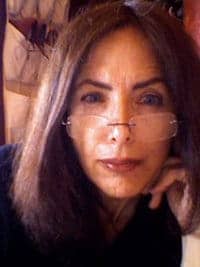 San Francisco writer Ann Garrison writes for the San Francisco Bay View, Global Research, Colored Opinions, Black Star News, the Newsline EA (East Africa) and her own website, Ann Garrison, and produces for AfrobeatRadio on WBAI-NYC, Weekend News on KPFA and her own YouTube Channel, AnnieGetYourGang. She can be reached at ann@afrobeatradio.com.