




by Julian Davis
The murder trial of celebrated San Francisco filmmaker and journalist Kevin Epps took a dramatic turn this week when defense counsel moved for a mistrial midway through the prosecution’s closing argument, accusing Assistant District Attorney Jonathan Schmidt of prosecutorial misconduct. The allegation is not only serious — it is uncanny. Schmidt is the very same prosecutor whose conduct once helped establish Ninth Circuit precedent on this exact form of misconduct.
In United States v. Blueford (2002), the Ninth Circuit held that a prosecutor violates a defendant’s constitutional right to a fair trial when he urges jurors to draw inferences he knows are false — or has strong reason to doubt — especially when the government itself possesses evidence directly contradicting the inference. In that case, the prosecutor was rebuked for precisely such behavior. The prosecutor’s name: Jonathan Schmidt, currently prosecuting the People of the State of California v. Kevin Epps.
That is not mere irony. It is an indictment of the justice system in San Francisco.
A prosecutor’s duty is not to win — it’s to seek justice

The Ninth Circuit in Blueford reminded us why prosecutorial misconduct strikes at the heart of due process. A prosecutor “is a representative not of an ordinary party, but of a sovereignty whose obligation to govern impartially is as compelling as its obligation to govern at all. His interest … is not that he shall win a case, but that justice shall be done.” A prosecutor may argue reasonable inferences from the evidence, but he may not urge the jury to believe something he knows — or has strong reason to believe — is false, particularly when the government declines to correct the record.
It is hard to imagine a clearer echo of Blueford than what occurred in Epps’s trial this week.
Portraying a violent intruder as calm and peaceable
According to the defense, Schmidt has encouraged the jury to view the decedent, Marcus Polk, as a calm, peaceable presence — a man minding his own business and “going to his happy place,” as Schmidt put it when he forced his way into the residence where Epps lived with his partner and two young children in October 2016. The implication was that Polk was no threat to Epps — that Epps could easily have deescalated the confrontation and “sat down over some pizza” to talk things through.
But Schmidt knows better. He knows Polk had a documented history of violence, including multiple restraining orders, incidents of domestic violence, and daily methamphetamine use. He knows Polk had been convicted of lewd and lascivious acts against a child. He knows that forensic evidence presented at trial showed Polk had meth in his system and that witnesses testified to his aggressive and erratic behavior in the moments leading up to the shooting.
In other words, Schmidt knows that Polk was not the calm and gentle figure he described to the jury. And under Blueford, inviting a jury to adopt a false narrative contradicted by the prosecution’s own evidence is the definition of misconduct.
Why misrepresent Polk at all? The Castle Doctrine
Schmidt has a problem, and he knows it: the Castle Doctrine.
California law presumes that when a person uses deadly force against an intruder inside a home, they reasonably fear imminent death or great bodily injury. The prosecution must overcome that presumption beyond a reasonable doubt. The evidence at trial — eyewitness statements, some though not all of Polk’s history, and forensic evidence — makes that a very high bar.
So, Schmidt attempted to lower the bar by rewriting the character of the man who forced his way into the home that day. Only by depicting Polk as mild and harmless could the state argue that Epps did not fear for his life.
That argument collapses if jurors learn who Polk actually was.
A repeated pattern?
This is not the first time Schmidt has walked this ethical line. In Blueford, the Ninth Circuit chastised him for urging a jury to draw an inference he knew was false. That misconduct was significant enough that the appellate court established it as a constitutional violation. Today, that case is cited in appellate practice guides nationwide as textbook misconduct for prosecutors to avoid.
And yet Schmidt now stands before another jury — this time as an Assistant District Attorney in San Francisco — doing the very same thing.
Trial disrupted by shouts of ‘prosecutorial misconduct!’
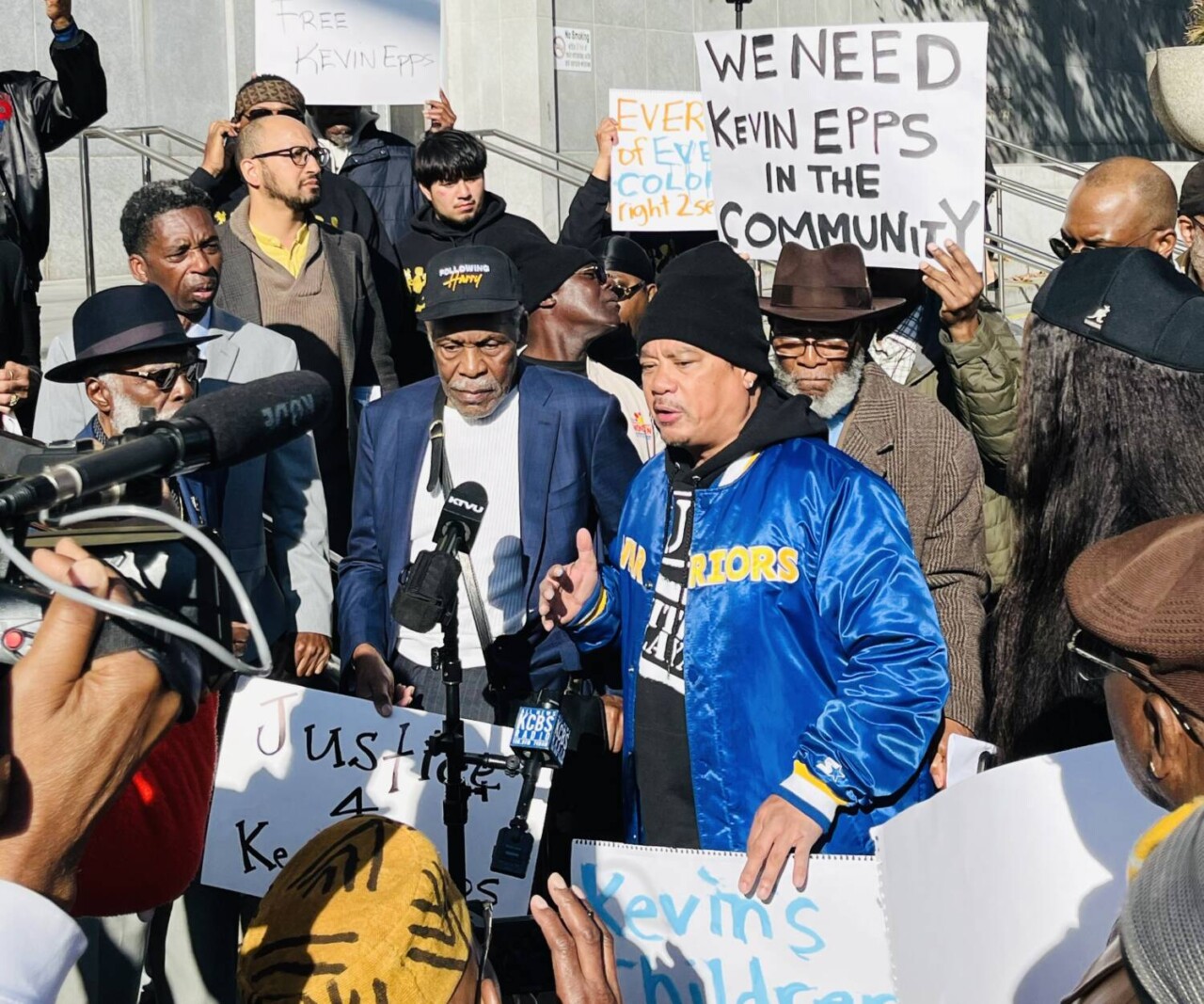
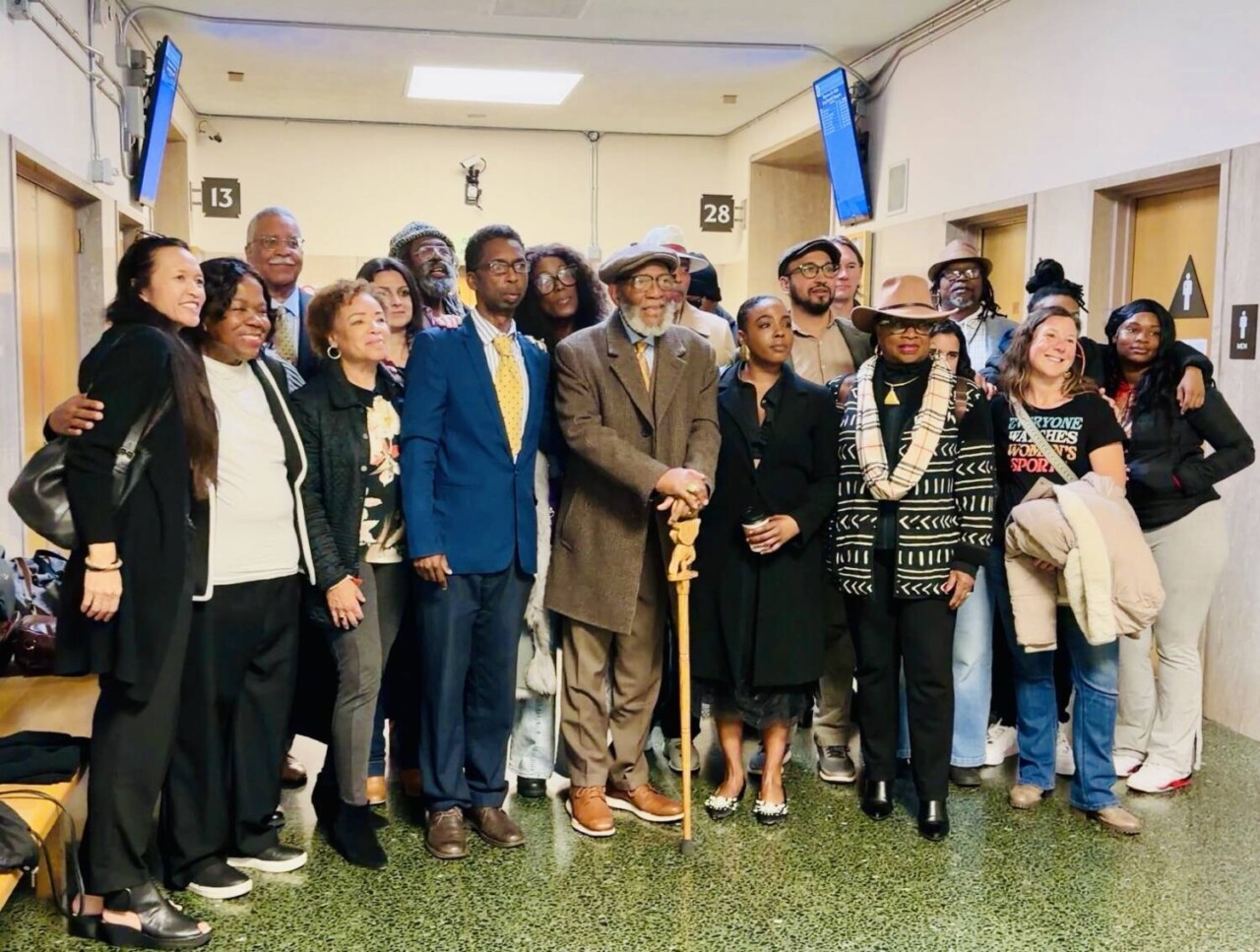
As Schmidt delivered his rebuttal on Tuesday, multiple members of the gallery erupted, shouting “prosecutorial misconduct!” in the middle of proceedings before storming out. The outbursts prompted Judge Brian Ferrall to instruct the jury to ignore them but also to remind the jury that the prosector’s closing argument does not constitute evidence in the trial. But Ferrall’s admonitions fell well short of his duty to proactively correct the record – a clear sign of judicial error in the case – underscoring public frustration with what supporters view as a fundamentally unfair prosecution.
Defense counsel Darlene Comstedt’s motion for mistrial cites the same misconduct principles Schmidt helped crystallize in Blueford. The motion argued that the prosecution’s misrepresentations violated Epps’s constitutional right to a fair trial.
The jury began deliberations late Tuesday morning.
Who is Kevin Epps—and why this matters
Lost in the courtroom theater is the life of the man the state seeks to imprison.
For decades, Kevin Epps has been one of San Francisco’s most vital cultural storytellers. Raised in Bayview Hunters Point, he chose not the path of crime or deviance but of documentary truth-telling and community uplift. His award-winning film “Straight Outta Hunters Point” (2003) became a landmark account of poverty, policing, environmental racism and community resilience. He has mentored youth, taught filmmaking, documented injustice, written for and now leads the San Francisco Bay View newspaper, and remained a stalwart community presence in the neighborhood that raised him.
He is a father, journalist, community advocate, and chronicler of the pain and beauty of Black San Francisco.
The tragedy is not only that Kevin had to defend himself and his family from a violent intruder — it is that for nine years he has been forced to defend himself from the state that should be protecting him.
A verdict beyond one man
At its core, the Epps trial poses a simple question: Do Black men have the same right to defend themselves in their homes that the law purports to guarantee to everyone?
If the answer is yes, then this prosecution — built on flawed evidence, marred by misrepresentation, and weighed down by its prosecutor’s own history of misconduct — should have never reached a jury.
If the answer is no, then this trial will be remembered not only as an injustice against one man but as a referendum on whose rights the law is truly willing to recognize.
Either way, the integrity of the system — and the fate of a community stalwart — hang in the balance.
Julian Davis is a California attorney based in San Francisco. He can be reached at julian@telegraphlaw.com.