


by JR Valrey, The People’s Minister of Information
Within the last few weeks, the US government has issued a myriad of threats in the international corporate media – threats that include military aggression against the people of Cuba, on top of the illegal U.S. government-imposed total oil blockade since January, on top of the genocidal US government-imposed 67-year-old general blockade against Cuba, because Cuba was determined to guide its own destiny instead of remaining a U.S. colony.
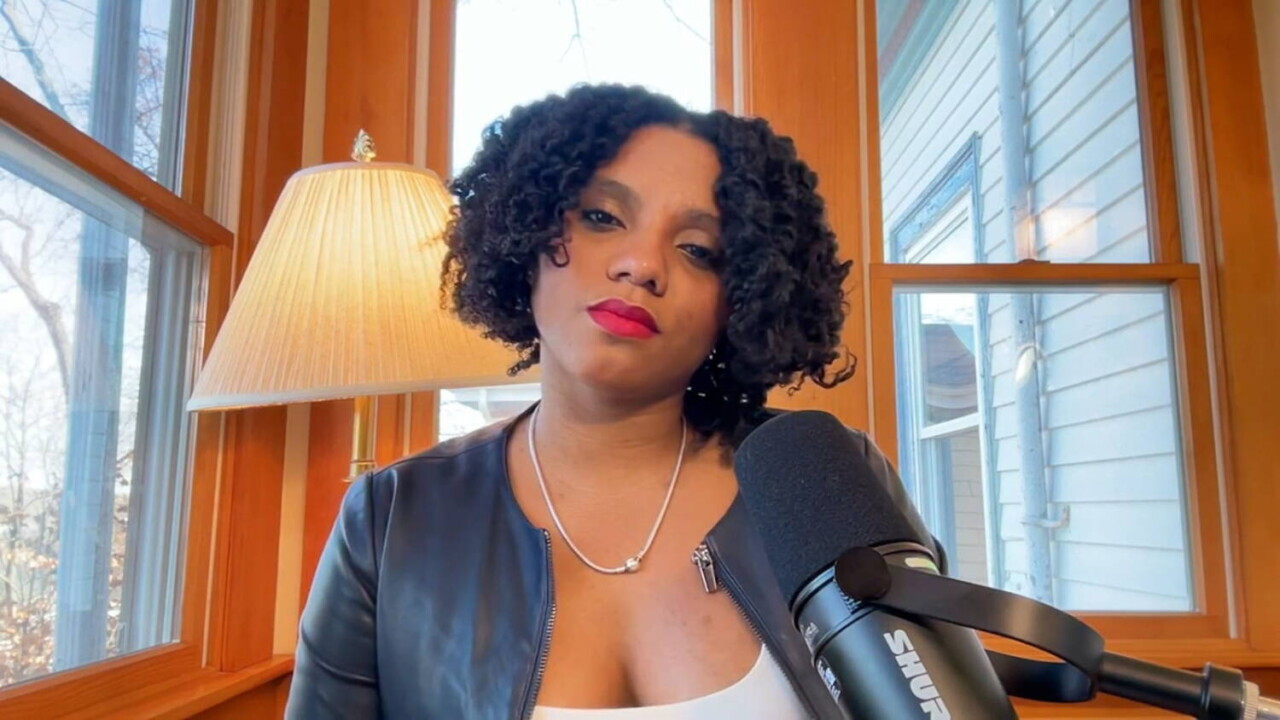
With all this propaganda spewing about Cuba from government-agenda-supporting mainstream corporate media, I talked to Cuban journalist Liz Oliva Fernández, who is based in Havana, fights with her microphone, and works for Belly of the Beast, a U.S.-based multimedia platform. I wanted her to set the record straight on what’s happening on the ground of where she was raised, and still lives.
People’s journalism, which we practice, gives voice to the people being affected, rather than just to intellectuals and academics who study stats and data about issues in our world. This is our way of being in journalistic solidarity with the people of Cuba, who the US government is genocidally killing with the imposition of their multiple blockades funded by U.S. taxpayers.
JR Valrey: Who created Belly of the Beast? What is the story behind how Belly of the Beast was created?
Liz Oliva Fernández: That’s a question for Reed Lindsay, who is actually the creator and director of Belly of the Beast. He and a group of friends were thinking about creating a media outlet. It took some time, but he finally did it back in 2020.
I think it’s a dream for filmmakers and journalists around the world to have your own media outlet with your own rules and your own political editorial line. That’s the dream, because it means that, in some way, your work will reflect who you are and your expectations as a journalist.
JR Valrey: How did you become involved with Belly of the Beast? Did you have a journalism career prior to Belly of the Beast?
Liz Oliva Fernández: I became involved with Belly of the Beast in the summer of 2020. We were in the middle of the pandemic, and someone told me that a U.S. group of documentary filmmakers and journalists were looking for a journalist who could speak English to work on a film about the impact of the sanctions on the Cuban people. And I said yes.
I received a call from Reed Lindsay to participate in a kind of casting process, so I went through a long series of interviews about the whole project in order to try and get the job.
The funny thing is that it was only supposed to be a three-month job, from August to October, because they were planning to release the documentary, “The War on Cuba,” before the elections. So, it was meant to be just this one thing I was doing — a one-time project — and that was all.
So far, though, I’ve been working for Belly of the Beast for six years now.
JR Valrey: It is said that the first casualty of war is truth. In looking at the 67-year-old U.S.-imposed blockade on Cuba, and the complete oil blockade of Cuba, how would you compare your coverage of Cuban society to the coverage given by corporate media in the U.S. over the last year?
Liz Oliva Fernández: It’s like el día y la noche — “day and night.” I don’t know if that’s the right phrase in English, but yes, both sides have nothing in common.
The perspective that Belly of the Beast offers about Cuba is so different from the perspective being showcased not only in U.S. corporate media, but around the world. I don’t think there is a fair take about Cuba in these big media outlets because, to begin with, they just portray us as victims: “Oh, poor Cubans. They’re so poor. There are so many crises. They’re failing,” whatever.
But I don’t think they actually see Cuba and Cubans for what we really are. We are resilient people. We are hardworking people. We are people who have achieved a lot. We are people from the Global South who were able to accomplish so many goals in science and technology, like no other countries with similar characteristics.
That’s a story about Cuba that hasn’t been told enough in mainstream media, and there are almost no positive perspectives about Cuba in the coverage they produce. But this is not something strictly related to Cuba.
Journalists from the Global North often come to the Global South, spend a week here, and then say: “Yeah, I understand what is happening here. I’m telling everyone the story because I get it, and I will explain it to the world.” But most of the time, that’s not accurate.
OK, there is some truth in that, but it’s not the whole context, and it’s not the whole country. I don’t like the lack of interest for so many other topics they could address during that same amount of time.
That is one of Belly of the Beast’s biggest achievements: We actually have Cuban journalists talking about Cuba, explaining Cuba, explaining the phenomena occurring in Cuba and the stories happening in Cuba while living through them at the same time.
That’s why sometimes this job can be depressing. I’m living through a crisis, and then I spend the rest of my time working around that crisis, trying to create content about it and explain it to people. What does this crisis have to do with U.S. policy? What does it have to do with them?
So, I spend most of my day talking about how difficult and saddening it has become to live and survive in Cuba. I used to love being here. I used to love being Cuban. In some ways, I still do. I’m still proud of that.
But it’s difficult. It’s hard. We are tired and frustrated, and most of the time we are trying to create a positive story while enduring entire nights without electricity — sweating through blackouts because it’s unbearably hot.
We are trying to create something beautiful out of that. And when I say “beautiful,” I don’t mean we are trying to put makeup on the reality of our country. I mean beautiful in the sense that we can decide how to tell our story.
That’s another strong point of Belly of the Beast: cinematography. It’s how we can tell even sad stories in a beautiful way.
JR Valrey: Who exactly is Belly of the Beast’s target audience? Why does Belly of the Beast target an English-speaking audience?
Liz Oliva Fernández: Well, Belly of the Beast is a U.S. independent media outlet, so naturally our primary audience is English-speaking viewers, especially people in the United States.
That’s intentional. U.S. policy plays an enormous role in shaping life in Cuba, yet many Americans only encounter Cuba through outdated narratives or politically motivated coverage.
Of course, we want to reach the people whose perceptions — and whose government — directly influence Cuba’s future.
JR Valrey: With the U.S. government imposing illegal blockades and threatening to invade the island in the near future, from your perspective how are the masses of Cuban people’s mental and physical health affected by this decades-long economic war and the threat of military invasion?
Liz Oliva Fernández: I can’t speak for all Cubans because I don’t represent the entirety of the Cuban people. I can only speak from my own experience.
As I said before, sometimes we are frustrated and sometimes we are sad. The danger of a real military intervention in Cuba is something I think about when talking with my coworkers. It’s beginning to feel real.
I think for us as journalists, it can feel even more tangible because we already know what U.S. military intervention can mean. If you look back at history and the countries the United States has invaded, what has been the result? They do not leave behind a better country than the one they found.
So yes, I think we are living with fear too.
But from my perspective, people are so busy trying to survive day by day that most don’t seriously think about it unless the time comes when it actually happens. We need to survive first.
So, life becomes one day at a time. We can’t really think too far ahead. It is a real danger, of course, but I don’t think people are consumed by that fear yet.
JR Valrey: What do you want people in the United States to get out of your journalism specifically?
Liz Oliva Fernández: I think my goal working at Belly of the Beast is to help educate people about what the U.S. government is doing to Cuba and the impact the sanctions have on the Cuban people.
I want audiences to understand what is happening and the real effects of U.S. policy so they can realize that the sanctions amount to collective punishment, and that they are unfair.
JR Valrey: How have people in the U.S. responded to you being a young Black Cuban woman journalist?
Liz Oliva Fernández: I wouldn’t really know. You would have to ask people in the United States.
There are people who supposedly feel some kind of empathy towards me, my story, and my reporting on Cuba. I suppose there are also people who hate me. You could go and read through social media comment sections.
Of course, there are many Black women and other people in the United States who can relate because, even though our backgrounds are very different, they understand the pain that the U.S. government can cause and the damage it is capable of creating. Because they have been suffering through it before we did, and for a longer time too.
So, they can genuinely empathize, and they know, just as we do, how far this system can go.
But maybe there are also people who simply think I’m a communist. It’s a different opinion. Some people judge me based on one video we made instead of trying to understand our work more broadly by watching the rest of the content we’ve created.
Another thing people love to say is that I work for the Cuban government. But I don’t. I don’t work for any government. We don’t work for the Cuban government, and we don’t work for the U.S. government either, thank God.
Most of the time, I try not to pay attention to what people think about me or my work.
The way I see it is this: I am doing my best to give visibility to the pain of the Cuban people and to reach individuals who can actually do something to help solve these issues.
Is this my favorite kind of journalism to do? No. I would rather talk to Cubans about the issues we face inside Cuba itself. But the sanctions are so large and so impactful that they have kept me busy for six years now.
The longer I have to live under sanctions, the more I want to explain to people the damage they are causing to our population.
I don’t have many privileges as a Black Cuban woman, but if I have the privilege of speaking another language and reaching a U.S. audience, then I’m going to use it to put the reality in front of them — the reality they need to see.
Because I don’t think many people truly realize the damage the United States government is causing, not just in Cuba, but around the world.
JR Valrey: Where can people view Belly of the Beast?
Liz Oliva Fernández: Anyone can access Belly of the Beast’s work across all of our major platforms. Our main home is our website: https://www.bellyofthebeastcuba.com.
That’s where we publish articles, project updates and background information on our documentaries and investigations. It’s the best place to explore our work in a more curated, organized way.
Our full documentaries and investigative series are available on our YouTube channel:
http://www.youtube.com/@BellyofTheBeastCuba.
This is where most people discover us, and it’s where we release our long‑form reporting, short films and serialized investigations. And of course, for people who want to stay connected, we share regular updates on Instagram, X/Twitter, Facebook and Tiktok.
We also run a newsletter where we break down our reporting, share context, and highlight stories we’re working on. You can sign up directly through our website.
And for those who want to support independent journalism from Cuba, we have a Patreon at: https://www.patreon.com/cw/BellyoftheBeastCuba. Our Patreon community helps sustain our reporting and allows us to keep producing work that challenges mainstream narratives.
SF Bay View Editor-in-Chief JR Valrey is a veteran journalist who can be heard weekly on Wednesdays on 89.5 FM KPOO or KPOO.com from noon to 3 p.m. His work can also be heard on www.blockreportradioworld.com.