


Tags Cuba
Tag: Cuba

Cuba and the United States: We both have an ocean
The Cuban Embassy's First Secretary, Sulia Paez and Second Secretary, Gabriela Castillo, spent four days in the San Francisco Bay Area building solidarity, meeting activists and exploring the region’s revolutionary art. The San Francisco Bayview's Leah Harmony shares her experience and its impact.

Two Cuban diplomats visited the Bay during Black August
Black August was especially impactful this year supercharged by First Secretary Sulia Paez and Second Secretary Gabriela Castillo of the Cuban Embassy visiting Oakland and San Francisco , speaking about the impact of U.S. blockades on Cuba. The Bay Area tour included events with local activists, artists and community organizations.
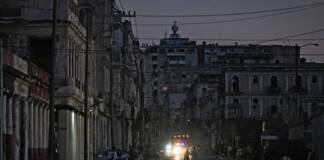
Our tax dollars are funding a slow genocide in Cuba
Cuban Embassy First Secretary Sulia Páez discusses the Cuban government’s response to U.S. policy, including the reported impacts of the blockade and fuel shortages. In an interview with JR Valrey, she addresses health care, sovereignty and U.S.-Cuba relations.

Fidel Castro, the Cuban Revolution, and Africa
In commemoration of the Fidel Castro centenary on August 13, 2026, we present remarks given by Djibo Sobukwe at The Symposium on Fidel Castro and...

The U.S. imposed genocide on Cuba continues
As Cuba faces an eighth month of a U.S.-imposed oil blockade on top of a 67-year economic embargo, Second Secretary of the Cuban Embassy Gabriela Castillo speaks with SF Bay View Editor-in-Chief JR Valrey about the humanitarian impact, Cuba’s sweeping new economic reforms, U.S.-Cuba relations, and why Havana says diplomacy—not sanctions—is the only path toward peace and stability.

Long live Assata! Long live Cuba! Long live the African fighting...
In a moving international tribute, Obi Egbuna Jr. of the Zimbabwe Cuba Friendship Association honors the life and revolutionary legacy of Assata Olugbala Shakur. Framing her as a symbol of African resistance, liberation and international solidarity, the statement calls on future generations to carry forward her commitment to justice, while celebrating the enduring bonds between Africa, Cuba and freedom movements around the world.
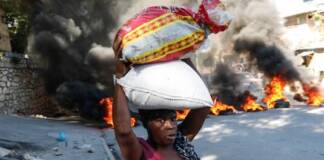
Haiti: Solidarity in a world at war
A woman flees death squad violence in Haiti. For Haitians, this is an all-too-familiar scenario in 2026.

Lies, economic strangulation and genocide: The US vs. Cuba
Cuba has always defended the need for international relations based on sovereign equality, dialogue and cooperation, rather than hegemonic doctrines or threats of force. The peoples of Latin America and the Caribbean have the right to freely determine their own destiny, without external interference.

Belly of the Beast: Reporting from inside the US government-imposed genocidal...
For more than 60 years, the U.S. government has economically targeted Cuba while mainstream corporate media often repeats official narratives without fully examining the human cost of sanctions and blockades on everyday Cuban people. In this conversation, Havana-based journalist Liz Oliva Fernández offers a perspective rarely heard in U.S. media — one rooted not in politics from afar, but in the lived reality of surviving, reporting and resisting from inside Cuba itself.
End the genocidal blockade on Cuba!: an interview with US Hands...
To be against Cuba is to be against humanity. Time and time again Cuba has offered support wherever it is needed most. They have even offered medical aid to the United States because, for them, people and lives come before politics and ideologies.

Unpardonable offenses: US government policy vs. Cuba
The question we should be asking ourselves is not whether socialism has failed, but rather: What country in the world, regardless of its political system, would survive a siege of this magnitude for seven decades?

US to Cuba: Genocide by way of oil blockade
Maria Mirabel's children and niece are some of the innocent bystanders threatened with starvation because of the US government's 65-year blockade as well as Trump and Rubio's complete ban on oil to the island since January. End the US taxpayer sponsored blockade on Cuba!

Turning its back on Cuba: Government of Guyana sells its soul
Cuba has provided Guyana with doctors, scholarships and healthcare for nearly five decades. In return, Guyana's government has turned its back at the moment of Cuba's greatest need.
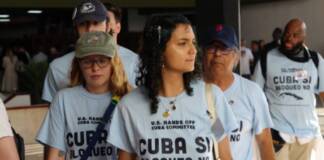
Efforts are underway to aid victims of Hurricane Melissa
Brenda Lopez is cofounder of Cuba Si, Bloqueo No! to end the 65-year-old US blockade that was supposed to strangle Cuba to death. Thanks to grassroots support around the world, Cuba still stands strong.

Fighting to survive: A brief exposé of Cuban life after Hurricane...
Maria cooks for her family in remnants of what was her family's home prior to October's Hurricane Melissa in Guantanamo Bay, Cuba.

From the Blockade to Melissa, Cubans are in the crosshairs
Maria Mirabel is in Old Havana helping the Mumia Freedom organizers teach the youth in the streets about Black Panther political prisoner Mumia Abu Jamal.
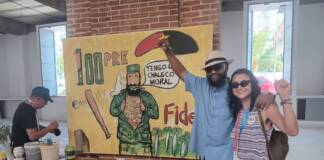
Hands Off Cuba: Los Angeles co-founder Brenda Lopez speaks
For 30 years now we have seen the rest of the world side with Cuba. Most of the world sees the US for what it really is, and it has mostly isolated itself in order to try to continue to be at the top of the world.
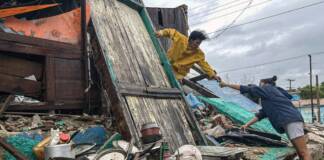
Cuba in the clutches of Hurricane Melissa and US-imposed blockade
Hurricane Melissa has had a devastating impact on eastern Cuba. Cuba has found creative ways to survive and move forward despite enormous obstacles and just got overwhelming support from the UN to end the US blockade.
Cuba addresses US-sponsored terrorism in the Caribbean, in the US mainstream...
For decades, Cuba has treated healthcare as a basic human right. International donations are a key support for this system. They remind us that health is a global good, something that should never be held hostage to geopolitics or sanctions.
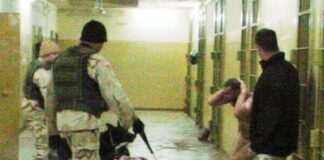
Military torture in Indiana prisons
Among the US soldiers captured in the Abu Ghraib torture photos were Amerikans who worked as prison guards in their civilian lives, linking the culture of abuse that pervades US prisons with the sociopathic mindset of military officials trained to deliberately torture other humans. That interplay is still very much alive today.