


by JR Valrey
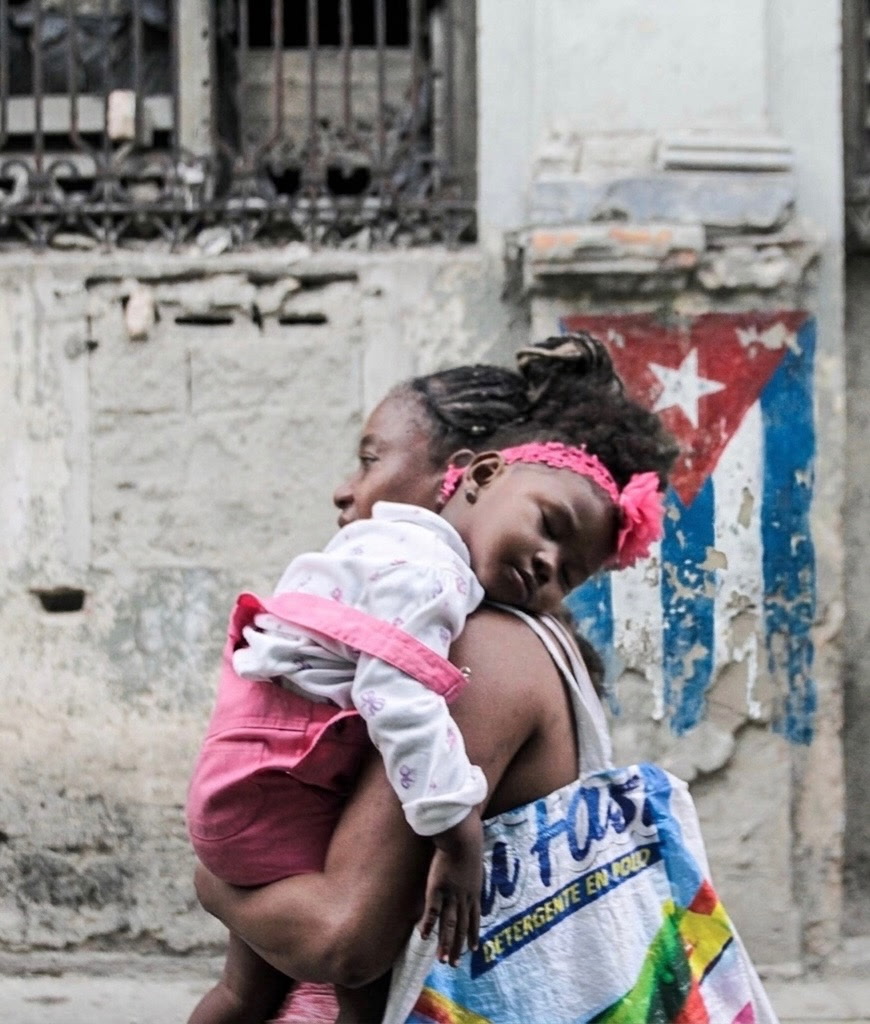
Now approaching the eighth month of the U.S. government-imposed complete oil blockade and the 67th year of the unjust general blockade of Cuba, the U.S. policy to commit genocide is becoming more and more apparent to everybody watching.
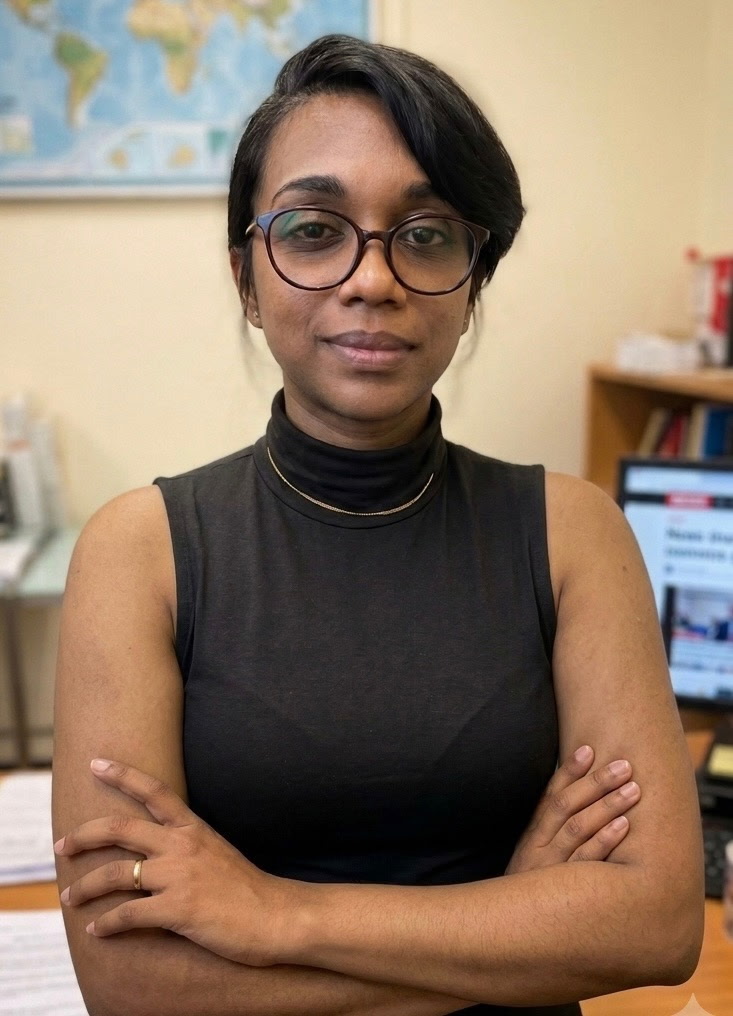
The Second Secretary of the Cuban Embassy, Gabriela Castillo, has been gracious enough once again to sit down and educate our community and readers about the real impact of Trump’s complete oil blockade of the island nation, on top of the 67-year economic blockade that the U.S. government already had in place. The catastrophic consequences on the Cuban people are regularly being covered up with corporate media talking points, buzz words and propaganda.
People on the island are literally starving while U.S. politicians play politics and the military plays crafty spy games to provoke a regime change in a nation that fought a hard and bloody war, the Cuban Revolution, to resist U.S. colonization. Sixty-seven years later the fight continues, and the U.S. government continues to use the politicians you elected to justify their colonial fantasies, as well as U.S. taxpayers’ money, your money, to commit a genocide 90 miles off the coast of Florida in 2026.
JR Valrey: Recently the Cuban government has announced a large number of reforms in regards to business and foreign investment. Can you give us a synopsis explaining some of the biggest ones?
Gabriela Castillo: The first thing to understand is that this is not a single policy change. It is a comprehensive package of economic and social reforms designed to modernize how the Cuban economy operates, make it more efficient, and create better conditions for growth, while preserving the fundamental principles of Cuba’s socialist system.
One of the most significant changes is that state-owned enterprises will be given much greater autonomy. In practical terms, they will have more authority to set prices, manage their own finances, organize their operations, and negotiate wages based on their performance, rather than relying on centralized approval for many day-to-day decisions. The objective is to make these companies more efficient, competitive and financially sustainable.
Another important aspect of the reforms is the transformation of state-owned enterprises into corporate entities. This should not be interpreted as privatization. The State will continue to hold a majority stake in strategic sectors. However, these companies will be able to attract investment and allow participation by other economic actors under clearly defined rules. The goal is to improve access to capital, encourage innovation and strengthen productivity.
The reforms also significantly expand opportunities for the non-state sector. It will become easier to establish private businesses and cooperatives, bureaucratic procedures will be streamlined, several existing restrictions will be removed, and private companies will be allowed to engage directly in foreign trade. The intention is to make better use of the country’s productive capacity and encourage entrepreneurship.
Another major shift involves the system of subsidies. Rather than subsidizing products such as electricity, fuel, transportation or water for everyone, the government plans to focus assistance directly on individuals and families who need it most. In other words, the system is moving from universal product subsidies to targeted social protection, supported by digital tools that will help identify vulnerable households more effectively.
The package also includes important labor and social security reforms. These include updating the minimum wage in line with inflation, making the labor market more flexible, creating incentives to retain highly qualified professionals, and modernizing the pension system to make it more inclusive and financially sustainable.
In addition, the reforms seek to create a more attractive environment for both foreign investment and investment by Cubans living abroad. This includes simplifying administrative procedures, providing greater legal certainty, and expanding opportunities for new forms of economic partnership.
Overall, the objective of these reforms is to build a more dynamic, productive and resilient economy that is better equipped to generate growth and improve living standards, while maintaining the State’s leading role in strategic sectors and ensuring that economic progress is accompanied by strong social protections for those who need them most.
Taken together, these measures represent one of the most significant economic and legal reform efforts undertaken in Cuba in recent decades, requiring extensive updates to the country’s legal framework in order to support their implementation
JR Valrey: Corporate U.S. mainstream media is claiming that these reforms speak to the end of the Cuban Revolution. How does Cuba respond to this?
Gabriela Castillo: We do not share that interpretation.
These measures represent an effort to modernize and update Cuba’s economic model, not a change to its political system or a departure from the principles that have guided the Cuban Revolution for more than six decades.
The reforms are designed to address very real and pressing challenges. First and foremost is the unprecedented tightening of the U.S. economic, commercial and financial blockade against Cuba, which has intensified dramatically throughout 2026. These are not ordinary circumstances. Cuba is facing an extraordinary level of external economic pressure that requires bold decisions to protect the country’s economy, preserve the Revolution’s social achievements, and create new opportunities for sustainable development.
Against that backdrop, these reforms are intended to increase domestic production, improve the efficiency of state-owned enterprises, attract investment, encourage work and innovation, expand the productive capacity of all economic actors, and strengthen the State’s ability to sustain essential public services such as healthcare, education and social protection.
It is true that some of these measures represent significant changes. They expand the role of the private sector, grant greater autonomy to state-owned enterprises, and introduce new financial and corporate mechanisms. However, these reforms take place within a framework in which the State continues to lead the economy, retains majority ownership of strategic sectors, and remains committed to guaranteeing fundamental social rights, including universal access to healthcare, education and social welfare.
History shows that countries with very different economic systems have introduced reforms to adapt to changing domestic and international realities without abandoning their core principles. Cuba is no exception. Updating the country’s economic mechanisms is about making the model more efficient, more sustainable and better equipped to improve the lives of the Cuban people.
Ultimately, the objective of these reforms is not to move away from socialism, but to strengthen it. The goal is to equip the country with more modern, flexible and effective tools to meet the challenges imposed by the blockade, safeguard Cuba’s sovereignty and ensure that economic development continues to go hand in hand with social justice, which remains a defining principle of the Cuban revolutionary project.
JR Valrey: Can you give a brief history lesson on the progress made in the area of U.S. and Cuban relations under President Obama and President Raul Castro?
Gabriela Castillo: The process launched by Presidents Raúl Castro and Barack Obama marked the most significant improvement in U.S.-Cuba relations in more than half a century. It demonstrated that, even after decades of profound differences, both countries could engage in respectful dialogue based on mutual interests and sovereign equality.
During that period, diplomatic relations were restored, embassies reopened in Havana and Washington, and high-level official visits resumed, including President Obama’s historic visit to Cuba in 2016 — the first by a sitting U.S. president in nearly 90 years.
The two governments also established more than 20 bilateral dialogue mechanisms covering issues such as migration, law enforcement cooperation, environmental protection, civil aviation, postal services, public health, maritime security and scientific collaboration. Agreements were reached in a number of areas that benefited both countries and both peoples.
There was also a significant expansion of people-to-people exchanges. Travel increased substantially, commercial flights resumed, cooperation between academic and cultural institutions grew, and new opportunities emerged for U.S. businesses operating within the scope of existing regulations.
From Cuba’s perspective, that period demonstrated that it is possible to build a constructive and respectful relationship despite profound political differences. Cuba never expected the United States to abandon its own political system, nor did it expect that Cuba should change its own as a precondition for dialogue. The guiding principle was mutual respect, non-interference in internal affairs, and recognition of each country’s sovereignty.
Unfortunately, much of that progress was later reversed. Beginning in 2017, hundreds of coercive measures were adopted that significantly tightened the U.S. blockade and restricted travel, remittances, financial transactions and bilateral cooperation. These measures had a profound impact on the Cuban economy and on opportunities for engagement between our societies.
Nevertheless, Cuba has consistently maintained that it is prepared to engage in a serious, respectful and results-oriented dialogue with the United States. Our position has been consistent across different U.S. administrations: We are willing to discuss any issue of mutual interest, including those on which we disagree, provided that the relationship is based on sovereign equality, mutual respect and compliance with international law.
The experience of 2014-2016 showed that dialogue works. It produced tangible benefits for both countries and created a more stable and predictable bilateral relationship. Cuba continues to believe that diplomacy — not confrontation — is the best path forward.
JR Valrey: With the U.S. government imposed blockades in Cuba continuing to kill and handicap millions of people’s lives over the last six decades, recent devastating earthquakes in Venezuela killing thousands with thousands still missing, and U.S. imposed sanctions in the country preventing the heavy machinery needed to save people and rebuild from entering, the lack of drinking water in the U.S. protectorate aka colony of Puerto Rico, and the recent national blackout in Jamaica while the U.S. Navy lurked on its shores, how do you see the U.S. government’s Monroe Doctrine 2.0, the so-called Donroe Doctrine’s effect on the nations of the Caribbean and the Americas?
Gabriela Castillo: From Cuba’s perspective, the Monroe Doctrine is not simply a historical concept. It represents a way of understanding hemispheric relations that has too often been based on unilateralism, intervention and the assumption that Latin America and the Caribbean constitute a sphere of influence rather than a community of sovereign nations.
For more than two centuries, the peoples of our region have consistently defended a different vision — one based on respect for sovereignty, non-interference in internal affairs, equality among states, and the right of every nation to determine its own political, economic, and social system without external pressure.
We have expressed our concern whenever policies of coercion, unilateral sanctions, or economic pressure are used as instruments of foreign policy. Cuba has experienced the effects of the U.S. embargo for more than six decades. We believe it has imposed significant humanitarian and economic costs on the Cuban people and has hindered our country’s development. Similar concerns have been raised by many countries regarding the broader use of unilateral coercive measures around the world.
When natural disasters strike — whether in the Caribbean, Latin America or anywhere else — the priority should always be saving lives, facilitating humanitarian assistance and supporting recovery efforts. Humanitarian action should never become a casualty of political differences. International cooperation is most effective when it is guided by solidarity rather than geopolitical considerations.
The Caribbean and Latin America face enormous common challenges, including climate change, increasingly frequent natural disasters, food security, public health, migration and sustainable development. None of these challenges can be addressed through confrontation or exclusion. They require dialogue, cooperation and mutual respect.
Cuba believes the future of our hemisphere should not be defined by doctrines of domination or spheres of influence. It should be built on the principles enshrined in the Charter of the United Nations and reaffirmed by the Community of Latin American and Caribbean States: sovereign equality, peaceful coexistence, respect for international law and cooperation among nations.
That is the framework within which Cuba seeks to engage with all countries, including the United States. We believe our region is stronger when relationships are based on partnership rather than pressure, dialogue rather than coercion and solidarity rather than confrontation.
JR Valrey: In late June, the U.S. government’s Secretary of War Rubio issued even more sanctions on the Cuban economy. How will these sanctions affect the average Cubans, who are already facing food and water shortages, never-ending blackouts, lack of transportation, and a severe lack of medical care because of the genocidal U.S.-imposed blockades?
Gabriela Castillo: The additional measures announced by the United States at the end of June are not directed against the Cuban government in the abstract; they have real and tangible consequences for the daily lives of ordinary Cubans.
Every new sanction further restricts Cuba’s ability to import food, fuel, medicines, medical equipment, and the raw materials needed to keep our economy functioning. They make international financial transactions more difficult, discourage foreign investment, increase shipping and insurance costs, and create a climate of uncertainty that affects virtually every sector of the economy.
The cumulative impact of these measures is felt most by Cuban families. They contribute to shortages of essential goods, make electricity generation more difficult by limiting access to fuel and spare parts, affect public transportation, and complicate the acquisition of medicines and medical technologies. These are not theoretical consequences — they are realities experienced by millions of Cubans every day.
It is important to understand that these restrictions go far beyond a bilateral disagreement between two governments. Because of their extraterritorial nature, they seek to discourage banks, companies, and even humanitarian suppliers from doing business with Cuba, often out of fear of U.S. penalties. This significantly limits Cuba’s access to international markets, financing and essential supplies.
Despite these challenges, Cuba remains committed to protecting universal access to healthcare, education and social services. We continue to look for ways to strengthen domestic production, diversify our international partnerships, and implement economic reforms that improve efficiency and resilience. But no domestic policy can fully offset the impact of an economic blockade that has been in place for more than six decades and has been significantly tightened in recent years.
The international community has repeatedly expressed its opposition to these measures. Year after year, an overwhelming majority of United Nations member states has voted in favor of ending the blockade because they recognize that it imposes unnecessary hardship on the Cuban people without advancing constructive solutions.
Cuba’s position remains clear. Differences between our two countries should be addressed through respectful dialogue and diplomacy, not through policies of economic pressure that ultimately affect ordinary citizens. We believe that engagement and cooperation serve the interests of both peoples far better than sanctions and isolation ever could.
I appreciate the opportunity to discuss these important issues.
Cuba is a small country, but one with a long history of resilience, dignity and international solidarity. We remain convinced that the challenges facing our region — and indeed the world — cannot be solved through sanctions, confrontation or coercion. They require dialogue, mutual respect and genuine cooperation.
Our hope is that the relationship between Cuba and the United States, like relations among all nations, can one day be based on sovereign equality, respect for international law, and the recognition that differences should be resolved through diplomacy rather than pressure.
Above all, our priority will continue to be the well-being of the Cuban people. Every decision we make, every reform we undertake, and every effort we pursue is guided by that objective.
Thank you for the opportunity to share Cuba’s perspective.
SF Bay View Editor-in-Chief JR Valrey is a veteran journalist who can be heard weekly on Wednesdays on 89.5FM KPOO or KPOO.com from noon to 3 p.m. His work can also be heard on www.blockreportradioworld.com.