



Tags DRC
Tag: DRC
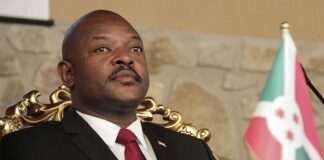
Fare thee well, President Nkurunziza
Burundi happens to be the birthplace of my hero, Prince Louis Rwagasore. Burundians are not drawn to spinning or showcasing their country, so little is known outside of the biases and prejudices of archived material or contemporary writers, largely Anglophones.
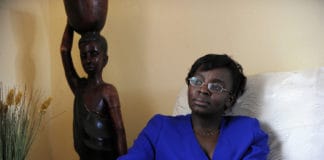
Rwanda: ‘Victoire Ingabire should be arrested at least, killed at best’
There has been another murder. Nine armed men killed Pastor Theoneste Bapfakurera when they mistook him for shopkeeper Theophile Ntirutwa, a member of your opposition party.
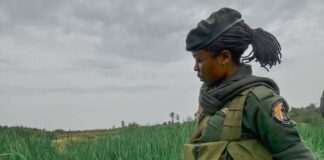
DRC’s Virunga: Park, gorillas and rangers all under attack
The most violent and threatening predators are both foreign and native actors who want to get the rangers, people and wildlife, especially the gorillas, out of the way to ransack the park’s resources.
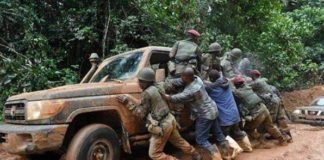
‘Evacuate the coffee’: A white supremacist classic from US diplomats in...
As I write this, on Jan. 8, Congolese are on edge, fearing fraudulent presidential election results and state violence to suppress mass protest. In nearby Gabon, U.S. combat troops are poised to cross borders and invade to protect U.S. citizens and interests as needed. Are they there to make sure that Joseph Kabila, the president they installed and kept in power for 18 years, cedes power to former Exxon-Mobil executive Martin Fayula, their new horse to ride? That’s just my best guess.
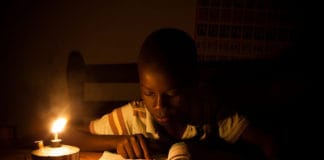
Nuclear power in Africa?
Rosatom – Russia’s state nuclear energy corporation – has recently signed Memorandums of Understanding (MOUs) with a number of African nations to build nuclear power plants within their borders. I spoke to David Himbara, a professor of international development and African energy activist, about the likelihood of Rosatom actually building these nuclear plants. Currently, Sub-Saharan Africa faces an extraordinary level of energy poverty.
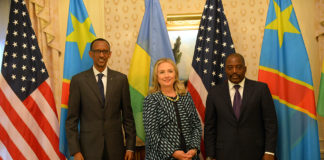
Divide and rule: Balkanizing the Democratic Republic of Congo
Syria has long dominated international headlines while the big powers discuss the possibility of dividing it into smaller, more homogeneous states along ethnic or religious lines. The Democratic Republic of Congo is rarely if ever at the top of the Western headlines, but heads of state and so-called experts have long made similar proposals to carve out new, smaller, more homogeneous nations in Congo’s resource-rich eastern provinces. I spoke with Congolese scholar and activist Boniface Musavuli about the plans.
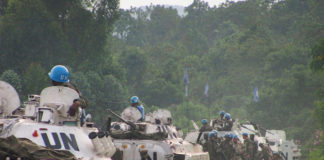
Congo: A neocolonial enterprise managed by the UN Security Council with...
The Democratic Republic of the Congo is the heart of Black Africa. Millions of Congolese have been murdered, massacred, enslaved, robbed of their resources and driven from their homes since the Berlin Conference gave the “Congo Free State” to Belgium’s King Leopold II as his personal property in 1885. I spoke to Jean-Claude Maswana about the latest waves of aggression under current Congolese President Joseph Kabila.

Do Black African lives matter to the NBA? Rwanda’s Kagame in...
Why did the NBA All Star Game Weekend celebrate Rwanda’s president, Paul Kagame, who is known to have launched invasions that cost millions of African lives, and to brutally repress his own people? His appearance inspired indignation and headlines in the Toronto press. Ann Garrison spoke with CIUT-Toronto Taylor Report host Phil Taylor to ask what he thought of this and how it happened.
Kabila’s speech to the nation: A path to president for life...
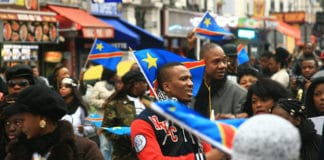
As Joseph Kabila enters the final year of his presidency, the pressure will increase on him to respect the Constitution and step down in December 2016. Congolese are united in the defense of the Constitution and the protection of the nascent democratic advances that have occurred during the post-war period of the country. If elections are in fact held in 2016, it will be due to the vigilance and pressure coming from the sons and daughters of the Congo.

A call for truth and justice in the African Great Lakes...
On Oct. 1, 2014, BBC2 broadcast a documentary, “Rwanda’s Untold Story,” on the tragedies which have devastated the Great Lakes Region of Africa since 1990. The signatories of this appeal wish to congratulate and express their support to the BBC journalists and management who have significantly contributed to establishing the previously ignored historical truth.
Stop killing Congolese people
The First Congo War began in 1996, the second in 1998. The second war drew in all nine countries bordering the DRC, left millions dead, displaced millions more, and ignited conflicts that continue in the country’s mineral rich east, despite the peace treaty signed in 2003. Competition for Congolese resources can’t be stopped, but the massacre of Congolese people can and must, says Dr. Jean Didier Losango.
From Burkina Faso to the Congo: Challenging the quest for president...
The dominant challenge facing Congolese people is the lengths to which President Joseph Kabila will go to maintain a stranglehold on power. This unresolved question represents the greatest threat to peace and stability in the Democratic Republic of Congo. It will continue to dominate the political landscape through 2016, when Kabila is Constitutionally mandated to leave office.
Rwanda and Uganda deploy FDLR excuse, threaten cross-border war in Congo
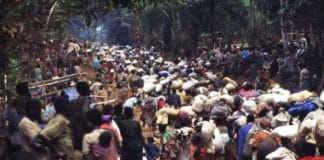
Rwanda and Uganda are threatening to send troops across their borders with the Democratic Republic of the Congo yet again to, they say, eliminate the Hutu refugee militia known as the Democratic Forces for the Liberation of Rwanda, or FDLR. Going after the Hutu refugee militia has been Rwanda and Uganda’s excuse for crossing into Congo for the past 18 years, since the outset of the First Congo War in 1996.
Will US policymakers review ‘Rwanda’s Untold Story’ before sending in the...
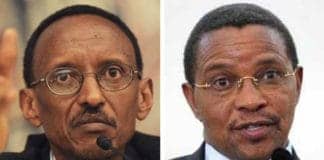
“Rwanda’s Untold Story,” a controversial BBC documentary first aired in the U.K. on Oct. 1, undermines the rationale for military action against the FDLR fighters in the eastern Democratic Republic of the Congo’s North Kivu Provinces. The FDLR has been described as the militia that committed the Rwandan Genocide in 1994, but the documentary suggests that no one was more responsible than Rwanda’s President Paul Kagame himself.
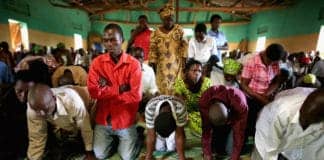
Rwanda: Absolute power at any price
Gen. Paul Kagame ordered the shooting down of the plane in which President Habyarimana and President Cyprien Ntaryamira of Burundi, French citizens, and all others on board were killed on April 6, 1994. This assassination triggered the genocide. Since then President Kagame has imposed a reign of terror to keep himself and the ruling party in absolute power.
Kagame visit should not go without scrutiny
Rwandan President Paul Kagame visited Tufts April 22 to speak on his country’s recovery from genocide, but it’s important to remain aware of the darker parts of Kagame’s tenure. On Friday, April 25, he’s coming to Stanford, and students of Stanford STAND are calling a protest for 11 a.m., prior to Kagame’s speech at the Stanford Graduate School of Business 12-1 p.m. in CEMEX Auditorium. Join them!
The peace that wasn’t: Rwanda 20 years after the genocide
I woke up on the morning of April 7, 1994, from a fretful slumber. I managed to walk to the gate of my house. I had to know if there were any other houses left standing. What were all of those screams I heard throughout the night? What would happen now that the president was dead? I was benumbed with fright, but I made it to the gate. I had to know what was left of our neighborhood.
Peacekeepers depend on the Pentagon, in South Sudan, CAR, DRC, Uganda,...
The Central African Republic, Democratic Republic of the Congo and South Sudan all share borders. Each of these three countries is now engulfed in tribal or religious sectarian violence, and Uganda, a longtime U.S. military partner, has troops in both the Central African Republic and South Sudan. U.S. Special Forces have been on the ground with Ugandan troops in both countries since 2011.
Are U.N. peacekeeping operations causing more instability than they are resolving...
One may reasonably argue that Rwanda, Uganda and any of those poor African countries contributing U.N. peacekeepers have no interest in peace around the continent. Based on the current financing structure of U.N. peacekeeping operations, these poor countries have a lot of financial incentives to create instability within Africa so that they can send in their “peacekeeping” troops and make some much needed cash.
Democratic Republic of the Congo: Resource politics behind the UN Force...
Earlier this week, in the northeasternmost province of the Democratic Republic of the Congo, or DRC, which borders Central African Republic, South Sudan and Uganda, the U.N.’s special combat intervention brigade, which includes South African troops, used South African helicopter gunships to fire on the ADF (Allied Democratic Forces) militia.