
 Store
Store


Tags Death penalty
Tag: death penalty

Manhunt: Freedom fighter Ozone charged with murdering cop
Call to action to support captured freedom fighter Ozone’s civil and human rights while corporate media slanders him publicly pronouncing him guilty without a trial.
LWOP is a death sentence: Give Stanley Bernard Davis a chance...
California still has the death penalty in place, renamed to make the act of State Murder more comfortable for the citizenry.
The savagery of Life Without Parole (LWOP) sentencing
Michael Dorrough describes the path for legislators to create humane prison sentencing, tools for rehabilitation and justice-based administration of incarceration.

A light at the end of the tunnel for Kevin Cooper
With determination, commitment and love, Kevin Cooper continues to fight for exoneration and freedom from oppression for himself and all who suffer the pain of the whip.

Liberate the Caged Voices
This second part of Editor Nube Brown’s interview with Jalil Muntaqim reveals the many ways genocide is utilized by our government and uplifts building the unified movement to end it.

Parenting from prison: Ways to maintain your family ties while incarcerated
As tortuous as the U.S. prison system is to its residents, it is criminally so to the children of incarcerated parents, and their caretakers. Herein lies a wealth of inspiring and uplifting ways to proactively heal the daily wounds of parenting, family unity and staying human while incarcerated.

Residents demand Newsom grant mass releases as COVID-19 deaths surge in...
Obviously conflicted about what to do when to ensure the desired outcome for his political career, Gov. Newsom continues to embrace political gain rather than do the right thing during trauma and death in the grip of the COVID-19 pandemic. By refusing to mass release prisoners from California’s overcrowded prisons, he provides safety and wellbeing for no one, the people, all of the people, he promised to serve.
Colin Kaepernick, Angela Davis, Pam Africa spotlight Mumia’s fight for freedom
The call to act is urgent to free Mumia Abu Jamal, Russel "Maroon" Shoatz, and all political prisoners, with sustained mass movement of collective energy to accept nothing less than unconditional compassionate release for our fellow brothers and sisters held by the U.S.

Release – don’t transfer – 50,000 medically vulnerable people from California...
UCSF White Coats for Black Lives leaves no uncertainty how Gov. Gavin Newsom and his appointee, Kathleen Allison, are playing the shell game, toying with the lives of our elderly and infirmed caged community members, and all Californians. CDCr is exposing all of us to ravaging and likely death by COVID-19. Equally troubling is the mental torture of all prisoners, their families and loved ones.

Death penalty on the verge of extinction
Prisons are an extension of the slave trade, and the death penalty is just a more evolved way of lynching Black folks. With ACA(12), we can vote the death penalty into extinction.

Gov. Newsom’s executive order halts death penalty. Now let’s drop LWOP!
Our hope is that Gov. Newsom will extend the equity and justice informed lens that brought him to stop the death penalty as he moves forward examining other forms of extreme sentencing in California, including Life Without the Possibility of Parole.

Keith Tharpe and the death penalty’s racist roots
Unacceptable racial bias is at the root of capital punishment; it is an ignominious bloody stain running deep, with terribly tragic results, in the frayed fabric of our country.
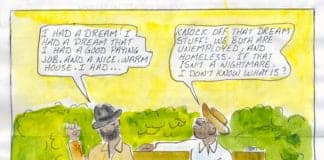
Poor People’s Campaign
The Poor People’s Campaign is all about the oppressed citizens of this nation – making the connection between the working proletariat and the lumpen proletariat. This will close the gap between the working poor and the non-working poor, who share common interests, such as affordable housing, affordable health care, adequate educational institutions, adequate wages that provide a standard of living that’s suitable for a human being. Once we bring the lower class together by successfully campaigning around our shared human rights, then we can bring an end to such exploitations as mass incarceration, the death penalty, homelessness and poverty.

Retaliation against Ohio prison strikers: Poisoning food, cutting off contact with...
I answered the call Aug. 21, 2018, and put together a hunger strike team. My name was released on the local WTOL News as one of the protesters with the Nation of Islam, who showed their support by hitting the parking lot entrance with banners to protest mass incarceration and prison slavery. A plot to kill me and poison my food by an officer was exposed. But I’m hard to kill. Can’t stop, won’t stop.

Cal Shakes’ stunning ‘War of the Roses’ closes Sept. 15
Cal Shakes’ stunning production of “The War of the Roses” by Eric Ting and Philippa Kelly, directed by Eric Ting, continues through Sept. 15. It is an amazing adaptation of William Shakespeare’s Henry VI trilogy and Richard III. I was not intimidated when I learned that the show was about four hours long. However, I did approach my seat cautiously and, at intermission, when I looked at my watch, I could hardly believe two hours had passed. I loved it. The time literally flew by.

Former Black Panther Romaine ‘Chip’ Fitzgerald will remain behind bars
On May 4, former Black Panther Romaine “Chip” Fitzgerald agreed to a five-year denial of parole instead of insisting on a parole hearing, even though he has served more time than any former Black Panther still behind bars: 49 years. Chip is now 67 years old and living with the consequences of a stroke; his friends and family fear he will die in prison. He has been moved from one state prison to another over the years and is currently in the California State Prison-Los Angeles. I spoke to his lawyer, Charles Carbone, whose office is in San Francisco.

Former Black Panther Romaine ‘Chip’ Fitzgerald seeks parole after 49 years...
On April 26, former Black Panther Herman Bell was released from prison in New York State after 45 years. That leaves at least 10 surviving members of the Black Panther Party behind bars, including Romaine “Chip” Fitzgerald, who is currently held at the California State Prison-Los Angeles. His next parole hearing is scheduled for May 4. I spoke to his friend Arthur League, a former Panther who lives in the San Francisco Bay Area.
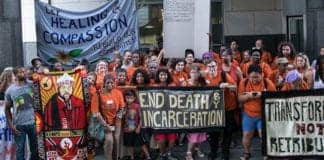
Prisoners United for Human Rights: A new era of sentencing reform...
Most of the dialogue regarding sentencing reform centers on nonviolent offenses. Yet it is not necessary to limit reforms to those convicted of nonviolent or minor offenses. In order to truly address our nation’s prison problem, policymakers should also substantially revise policies affecting those serving long sentences, including life with and without parole. There are important legal, moral, fiscal and public safety reasons to do so.
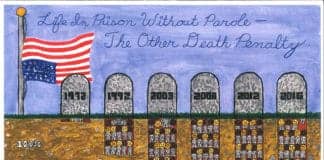
LWOP (Life in Prison Without Parole): Dreams derailed or deferred
Imagine for a moment the faces, emotions and mind-set of teenagers and/or young adults from all walks of life who suddenly find, as I had, that because you are closely associated with someone or provided something to someone who committed murder, you too, under the law, are now just as responsible for capital murder without ever having such intent or a clue that anyone would be seriously injured or killed.

DeWayne Ewing and the abomination of the Antiterrorism and Effective Death...
In 2017, Federal District Court Judge Charles Breyer denied the habeas appeal of DeWayne Ewing, an innocent man, based on the timeliness of his appeal rather than on the facts of the case, because of the Antiterrorism and Effective Death Penalty Act (AEDPA), passed in 1996 – the Senate voted 91-8 – and signed by Bill Clinton. Part of the way Congress tried to make the death penalty “more effective” was to limit the ability of prisoners to appeal, especially to have multiple appeals.