



Tags Harlem
Tag: Harlem
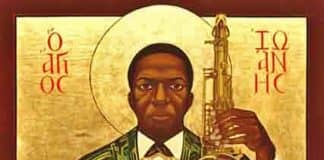
St. John Coltrane Church celebrates 50th anniversary in San Francisco
Since its inception in 1969, the Saint John Coltrane African Orthodox Church (SJCAOC) has been dedicated to the spiritual artistry of its namesake, the great American jazz musician and composer, whose instrument was the saxophone.
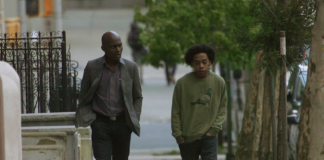
‘Tom Freeman of the North’ short looks at gentrification and identity...
“Tom Freeman of the North” is a comedic short filled with political satire that examines identity, upward mobility and gentrification. Tom Freeman, the main character, is a Black man who is socially invested in the gentrification of his community, while his brother Desean fights the power. “Tom Freeman of the North” is one of many great films screening at this year’s San Francisco Black Film Festival that looks at identity. Check out filmmaker Mohammed Rabbani in his own words.
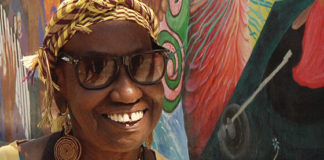
Bay Area muralist honored in ‘A New Color: The Art of...
“My dream was to develop a new color that no one had ever seen in life. It hasn’t come true yet, but that was a dream of mine when I was a little girl,” says Bay Area muralist Edyth Boone in the documentary about her life, called “A New Color: The Art of Being Edythe Boone.” It screens on April 6, 5:15 p.m. at Holy Names University, 3500 Mountain Blvd., Oakland, as a part of the Oakland International Film Festival.

My summer vacation
It had been two years since I had seen my brothers, and this was the year I was going to see them, in New York. So me and my dad getting to New York started off badly. First of all we missed our flight, and we were on standby for a day and a half. For most of our flight, I was asleep. Our flight landed in Philadelphia in the midst of a rainstorm, so our flight was not coming. After we heard that news, me and my dad went to go get something to eat.
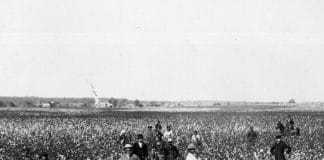
With no more cotton to pick, what will America do with...
Our American economy was built on the backs of Black slaves who were initially brought to America to work in the cotton, tobacco and sugar cane fields. America’s dilemma today is what to do with 40 million Black American descendants of those slaves who were shipped, as commodities, to American shores 400 years ago for their economic value yet whose heirs today are deemed of no value to America’s economic mission.
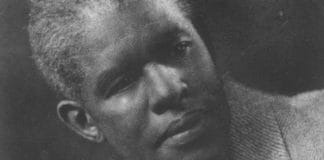
P.H. Polk, one of ‘10 essential African-American photographers’
Prentice Hall Polk (1898-1985) is one of the world’s quintessential photographers because he captured the honesty, pride and nobility of Afrikan people, during a time in history when portraitures of Afrikan people were typically nothing but caricatures indicative of the Jim Crow laws and of white supremacy. Mr. Polk enjoyed his work creating, preserving and documenting an important part of Afrikan history.
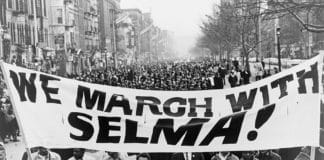
Ten things you should know about Selma before you see the...
This brief introduction to Selma’s bottom up history can help students and others learn valuable lessons for today. As SNCC veteran and filmmaker Judy Richardson said: “If we don’t learn that it was people just like us – our mothers, our uncles, our classmates, our clergy – who made and sustained the modern Civil Rights Movement, then we won’t know we can do it again. And then the other side wins – even before we ever begin the fight.”
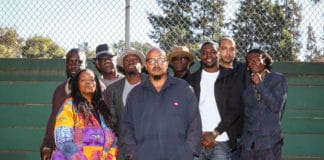
Wanda’s Picks for January 2015
Happy New Year! Happy Birthday to my granddaughter Brianna, niece Wilda and friend Fred T. I am still smiling about America’s new relationship with Cuba and the freed Cuban 5. If you are in New Orleans (NOLA), don’t miss “Prospect 3: Notes for Now,” the biennial there being celebrated throughout the city through Jan. 25.
Wanda’s Picks for October 2014
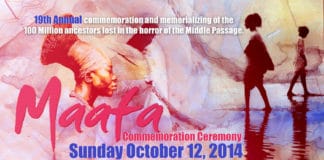
Sunday, Oct. 12, marks our 19th Annual Maafa Commemoration. This is a time when we gather to remember our African ancestors, especially those who endured the transatlantic slave trade or the Middle Passage, the Black Holocaust. It is a time for Pan Africans to gather and celebrate life and recommit ourselves to the work of liberation: spiritual, psychological, economic and political.
Mumia on the meaning of Ferguson
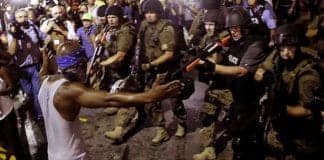
For the youth, excluded from the American economy by inferior, substandard education; targeted by the malevolence of the fake drug war and mass incarceration; stopped and frisked for Walking While Black, were given front-row seats to the national security state at Ferguson after a friend was murdered by police in their streets. Ferguson may prove a wake-up call. A call for youth to build social, radical, revolutionary movements for change.
UNIA at 100
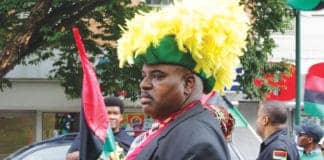
I spent a week in Harlem for the Centennial Celebration of the Hon. Marcus Mosiah Garvey’s Universal Negro Improvement Association-African Communities League (UNIA-ACL), an organization that looked at Africans separated through the institutions of slavery and colonialism, both global systems of exploitation of people, goods and environments.
Wanda’s Picks for September 2014
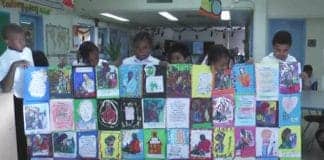
Congratulations to William Rhodes on a successful trip to South Africa, where he took a quilt created by his students at Dr. Charles Drew Elementary School in San Francisco to honor the legacy of an international hero, President Nelson Mandela, and returned with art panels from workshops conducted with youth in various townships and regions from Cape Town to Johannesburg.
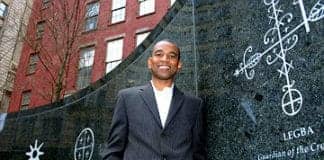
Wanda’s Picks for August 2014
Congratulations to Gerald Lenoir for carrying the torch and blazing the way for so many social justice issues from HIV/AIDS awareness in the Black community to his recent work in just migration for Pan Africans. Much success on your new work! Farewell to Alona Clifton and much success in Atlanta. Congratulations also to Almaz Negash, founder and director of African Diaspora Network in Silicon Valley for her national recognition and award at the Continental African Leaders Summit in Washington, D.C.

Wanda’s Picks for February 2014
I am recovering from a huge blow – my computer was taken along with other personal irreplaceable items. We stopped by Loon Point to visit the shore before driving back to the San Francisco Bay Area Jan. 30. It was early, we’d just finished our first session of the Winter Quarter. We left our luggage in view in our cohort’s car. In Oakland, we’d not have done that, but somehow the seashore, mountains and quiet terrain deceptively seduced us.
Amiri Baraka, the Malcolm X of literature, dies at 79 –...
Amiri Baraka was a giant to those who know him. And now that he is physically gone, his legend will only grow. The FBI once identified him as “the person who will probably emerge as the leader of the pan-African movement in the United States.” Even those who critiqued him considered him to be brilliant, even referring to him as the Malcolm X of literature and spoken word. He often said bluntly and yet humbly that “Malcolm X was my leader.” Amiri Baraka put into practice what Malcolm taught him about cultural revolution.
Remembering Attica
Sept. 9, 2013, marks the 42th anniversary of the prison uprising at the Attica Correctional Facility in upstate New York. Forty-two men, mostly inmates, were killed in the armed retaking of the prison under the orders of Gov. Nelson Rockefeller. I was there, as one of the “observers” specifically requested by the inmates. We tried to negotiate a peaceful, non-violent settlement of the dispute.
Pamoja tutashinda: Together we will win!
Here is the lesson I’m learning from the name, He Who Walks the Earth: A family united walks the earth together. Couples walk the earth together. We come from tribes who used to walk the earth together. Why? Because there is power in numbers. Yes, you know where I am going with this. Walking the earth together and power in numbers ... this is the purpose of Buy Black Wednesdays.
Claudia Jones: African-Caribbean Communist defied racism, sexism and class oppression
“Claudia Jones: Beyond Containment” (2011) is a collection of writings by Jones herself. The book makes a tremendous contribution to the literature on left, feminist and Pan-African struggles during the 20th century. A new generation of activists and organizers will benefit immensely from Jones’ writings on the most pressing and burning issues of the period.
The 2020 vision for Buy Black Wednesdays
The day is Buy Black Wednesday. I am setting foot in the Pan Afrikan Market Place called Little Nubia, modeled after Harlem in its “hey day,” old Timbuktu and Black Wall Street. So there are over 600 Black businesses in a 10-square-block area. Red, black and green is everywhere. Flags from every Afrikan nation flutter in the summer breeze.
‘Panther Baby’
Jamal Joseph’s “Panther Baby: A Life of Rebellion and Reinvention” is a story of love, revolution, rage and redemption. Joseph’s brilliant, honest, insightful narrative of his coming of age in New York City in the late 1960s at the height of the Black Power movement is so riveting that I had a hard time putting it down, even to sleep. And when I did, it invaded my dreams.”