
 Store
Store


Tags Rwandan President Paul Kagame
Tag: Rwandan President Paul Kagame

Voices are raised against the NBA launching its new African league...
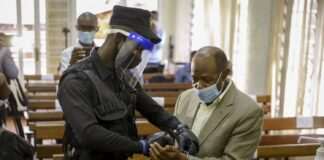
“My family and I urge you, on behalf of our husband and father, as well as countless other victims of the Rwandan regime, to please reconsider your choice to host the BAL games in Rwanda," pleads Taciana Rusesabagina, wife of the hero of "Hotel Rwanda," now imprisoned as a "terrorist."
Rusesabagina on trial and the shooting deaths of a Rwandan dissident...
While this story has all the same characters as the movie “Hotel Rwanda,” it is not about the movie. This is Ann Garrison’s report about the current lived experience of the movie’s real-life hero, Paul Rusesabagina, being detained last year and going to trial last week under the charge of terrorism. Notorious for assassinations, attempted assassinations and other brutal authoritarian acts, Rwanda’s President Kagame is now also accused of violating US deportation and extradition law.
‘The man who heals women’ calls for an International Criminal Tribunal...
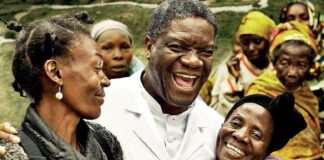
The Democratic Republic of Congo’s Dr. Denis Mukwege is receiving death threats, and not for the first time. Dr. Mukwege has won the Nobel Peace Prize, the Sakharov Prize and a long list of other human rights awards for treating women victims of sexual violence used as a weapon in the resource wars that plague eastern Congo. He founded Panzi Hospital in Congo’s South Kivu Province for surgical and post-surgical treatment of victims.
The shocking death of Rwandan gospel singer and dissident Kizito Mihigo
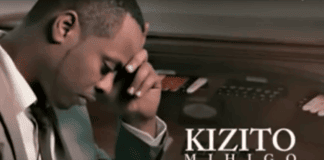
“Kizito Mihigo had been persecuted for advocating compassion for all the victims of the genocide, Hutu, Tutsi and Twa, refusing to blame all Hutu people for the Rwandan Genocide. Kagame has become fiercely vengeful with dissident Tutsis because they are breaking up his constituency.” – Professor Joseph Bukeye
Should UN peacekeepers leave the Democratic Republic of Congo?
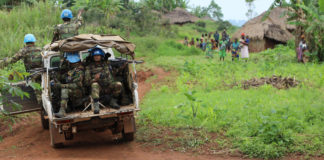
The UN troops in DRC are called “peacekeepers,” but MONUSCO’s real mission is managing the “silent violence” in which perpetrators cannot be readily identified, atrocities go unreported, and resources are smuggled out of DRC through Rwanda and Uganda.
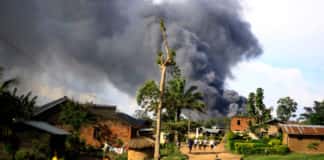
Congo: Millions die while the UN keeps the peace
“There’s been killed 8 million people and you say you’re making fictitious peace and you’re telling us that this is peace when aggressors are not named!” – Congolese Swiss historian Bénédicte Kumbi Njoko
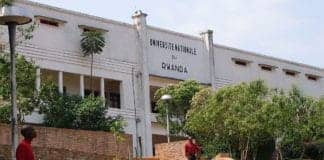
US court struggles with the case of Jean Leonard Teganya 25...
In 1994, Jean Leonard Teganya was a 22-year-old Rwandan medical student in his third year at the Faculty of Medicine at the National University of Rwanda in Butare. Now he is in Boston’s Federal District Court, nearing the end of his trial for immigration fraud and perjury about his role in the 1994 Rwandan Genocide.
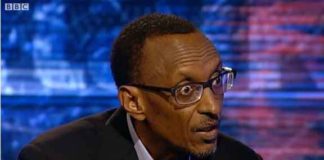
Stratfor: ‘Rwandans are cold ass mofos’
The email excerpted within included an ungrammatical apostrophe in “mofo’s” which I corrected to “mofos.” The mofos that Stratfor’s Bayless Parsley refers to are members of Rwandan President Paul Kagame’s government, military and intelligence services, not ordinary Rwandan citizens suffering under his dictatorship. For those unfamiliar with the events he recounts, I’ve included explanation and elaboration in italics.
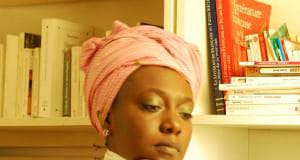
Congo in the abyss
On Feb. 12, 2018, the UN High Commissioner for Refugees reported that there were 4.49 million internally displaced persons (IDPs) in the Democratic Republic of Congo and 630,500 refugees in neighboring countries. The IDP population had nearly doubled in the previous year alone, mainly as a result of clashes and armed attacks. This week I spoke to Swiss Congolese historian and activist Bénédicte Kumbi Ndjoko about recent developments in the Democratic Republic of the Congo.
Nuclear power in Africa?
Rosatom – Russia’s state nuclear energy corporation – has recently signed Memorandums of Understanding (MOUs) with a number of African nations to build nuclear power plants within their borders. I spoke to David Himbara, a professor of international development and African energy activist, about the likelihood of Rosatom actually building these nuclear plants. Currently, Sub-Saharan Africa faces an extraordinary level of energy poverty.
Divide and rule: Balkanizing the Democratic Republic of Congo
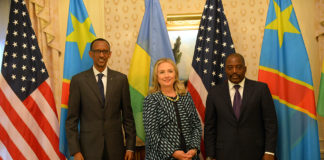
Syria has long dominated international headlines while the big powers discuss the possibility of dividing it into smaller, more homogeneous states along ethnic or religious lines. The Democratic Republic of Congo is rarely if ever at the top of the Western headlines, but heads of state and so-called experts have long made similar proposals to carve out new, smaller, more homogeneous nations in Congo’s resource-rich eastern provinces. I spoke with Congolese scholar and activist Boniface Musavuli about the plans.
Victoire Ingabire Umuhoza Democracy and Peace Prize awarded to Charles Onana...
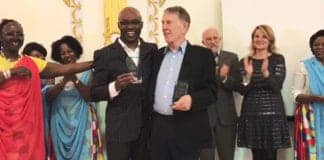
The 2018 Victoire Ingabire Umuhoza Democracy and Peace Prize was awarded on Saturday, March 10, 2018, in Brussels, Belgium. The prize honors Rwandan political prisoner Victoire Ingabire Umuhoza. Despite the African Court of Human and People’s Rights’ 2017 ruling that her imprisonment is unjust and that Rwanda should free her, she remains behind bars. This year’s Victoire Prize went to Cameroonian French journalist Charles Onana and Canadian radio broadcaster Phil Taylor.
Trafficking in desperate Black African migrants, from Israel to Rwanda to...
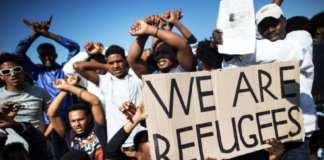
On Nov. 14, CNN shocked the world with its video news report of Black African migrants being sold into slavery in Libya. Eight days later the Rwandan government issued a press release headlined “Rwanda’s door is open for migrants held captive in Libya.” Rwandan President Paul Kagame is grandstanding as Papa Africa on the world stage, but nothing could be further from the truth or more preposterous than his proposal. Here are four reasons why.
Kagame’s new Order of Thieves Without Borders: Neocolonial kleptocrats with Clinton...
On Nov. 18, Rwandan President Paul Kagame inducted seven thieves without borders and one medical doctor into his “National Order of Outstanding Friendship,” presenting them with medals for “exemplary service” to the nation, meaning himself and his ruling party, the Rwandan Patriotic Front (RPF). Kagame is a modern day exemplar of French King Louis XIV’s theory of government: “L’état, c’est moi” (“I am the state”).
Bill Clinton’s favorite African, Paul Kagame, wins re-election by 99 percent,...
How much longer can Bill Clinton, Tony Blair, Benjamin Netanyahu, AIPAC and associated Zionist organizations cover for Rwandan President Paul Kagame? How much longer can they claim that he was Rwanda’s savior, that he stopped a genocide recalling the Holocaust, then helped Rwanda rise from the ashes? This week another woman who dared to challenge him for the presidency says he has taken vengeance on her and her family.
Rwanda, Paul Kagame’s economic mirage: an interview with David Himbara
The 1994 bloodbath in Rwanda also became an argument for the suppression or even criminalization of speech. No one makes these arguments more fiercely and absolutely than Rwandan President Paul Kagame. Kagame claims to have inspired Rwandans to rise from the ashes to build an economic miracle and example for all Africa. In a new book, however, economist David Himbara says that Kagame’s economic miracle is in fact an economic mirage. I spoke to David Himbara.
Six years since Ingabire arrest, 20 since DRC invasion
Oct. 14 marked the sixth anniversary of Rwandan political prisoner Victoire Ingabire’s arrest, and Oct. 24 will mark the 20th anniversary of Rwanda and Uganda’s invasion and occupation of the Democratic Republic of the Congo. KPFA’s Ann Garrison filed this report on these intertwined anniversaries.
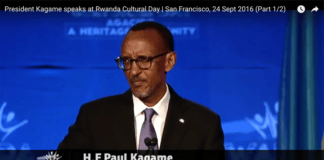
Rwanda Day San Francisco: Bay View journalists get the boot
Rwanda Day-San Francisco was a bad day for identity politics. Rwandan President Paul Kagame stepped to the podium and said that he was happy to be in San Francisco because it’s so diverse, seeming not to understand that his guest speaker, Rev. Rick Warren, champion of the 2008 Prop 8 ballot measure banning same sex marriage, wouldn’t appeal to San Francisco’s diverse population.
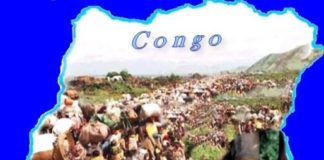
Who is killing indigenous people in Beni, DR Congo?
Beni Territory is a vivid example of the phrase, “Everybody wants a piece of Congo.” Beni Territory is rich in oil, timber, gold, diamonds, wolfram, coltan and cassiterite. Now the people of Beni are being massacred for their land and its riches. KPFA’s Ann Garrison filed this report after speaking to a Congolese human rights defender and author of “Congolese Genocides from Leopold II to Paul Kagame,” Boniface Musavuli.
Rwanda, the Clinton dynasty and the case of Dr. Léopold Munyakazi
I answered some heartbreaking calls from Dr. Léopold Munyakazi phoning from an Alabama jail this week. Dr. Munyakazi is a gentle Rwandan born scholar, with a PhD in linguistics and further advanced degrees in French and African linguistics. He has lost his immigration case in the 4th Circuit Court of Appeals and will all but certainly be deported to Rwanda to face prison or worse.