
 Store
Store


Tags SHU
Tag: SHU

Court rules no punishment for California prison hunger striker
In the early days of the 2013 Prisoner Hunger Strike, Jorge Gomez refused up to 12 consecutive meals. The California Department of Corrections struck back by issuing him a Rules Violation Report. The same fate befell untold numbers of other prisoners who’d starved themselves to peacefully call attention to their torture. In an opinion filed on March 25, 2016, the California Court of Appeals ruled that Gomez was guilty of no rules violation for refusing meals during the strike.
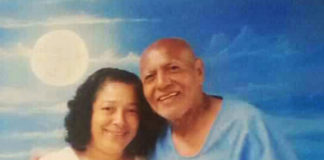
Hugo Pinell’s daughter Allegra invites you to join in honoring her...
On Aug. 12, 2015, within the walls of New Folsom Prison, freedom fighter and political prisoner Hugo “Yogi” Pinell of the San Quentin 6 was assassinated on the prison yard by members of the Aryan Brotherhood, with the assistance of the guards. Seven months later, the community who loves him is coming together to remember his life and contribution to the Black struggle for self-determination and human rights. We will be celebrating his life on Saturday, April 23, 1-5 p.m., at the African American Art and Culture Complex, 762 Fulton St. in San Francisco. Any and everybody from the community is invited.
Young prisoner speaks on Yogi’s assassination and bridging the generation gap
It just gets my blood boiling what the Klansmen did to brother Hugo. I don’t expect anything different from them. When they see they can’t break you, they kill you. From George Jackson to Stanley Tookie Williams and now Hugo “Yogi Bear” Pinell, whenever you’re not asleep, whenever you’re awake and aware to who these people are and what they are out to do and doing, then you’ve got to go.
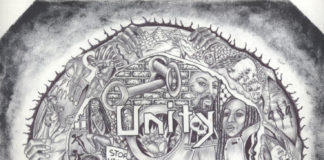
Jabari Scott: Eye-opening reality back on the mainline
It truly is a beautiful thing seeing you all from outside of the real belly of the beast, enjoying the natural rays of the sun, long walks around a sizable track, embracing the many new faces that have been waiting decades for this opportunity. I can see you all as we speak and I smile because I can feel what you feel. With that I truly look forward to the next phase in our struggle, because there’s still a lot of work to do.

Blacks who tried to save Hugo Pinell still being punished for...
Here is a brief update on the continued disrespect that CDCR is showing to brothers involved in the Aug. 12, 2015, attack on Yogi (Hugo Pinell). The same ICC (Inmate Classification Committee) that ignored the threat on Yogi’s life is now harassing the inmates that came to Yogi’s aid – the ICC that prisoners call “The Committee.” There are six inmates in Z Unit Ad Seg. Five of us have been released back to general population, but ICC refuses to send us back to a mainline.

Today, few know how bad it was for Black and Brown...
I have been in the system over 30 years and was in the system when Yogi and George Jackson and the rest were all in the Adjustment Center, and the guards and George were killed in 1971. An entire generation has come and gone since then. Very few in the system today even know who they are. Nor do they know how bad conditions were back in the ‘60s and ‘70s, especially for Black and Brown people both in the system and out in the streets.
Support the loved and loyal Bay View: Keep the voice of...
During these 14 years straight of Security Housing Unit time I’m forced to endure, the Bay View has been – and will hopefully continue to be – my stabilizer, mentally, the komrade, homie as well as the teacher and tutor for myself and many others in these SHU, Ad-Seg etc. prison industrial slave complex isolation units. So I – we – ask those of you who’re able to please subscribe or make a donation to the loved and loyal Bay View National Black Newspaper.
They’re releasing us to GP, where they’d rather see us war...
After a combined total of over 65 years in the SHU, our brothers Zaharibu, Heshima and Kambui, after surviving decades of unprovoked torture, have been released to general population. This is in fact proof that through agitation, small victories can be won. It is not by mere coincidence that the administration all of a sudden decided to release all of us freedom fighters to GP so abruptly after the assassination of our beloved Hugo Pinell on Aug. 12.
Historic settlement to end California’s indefinite solitary confinement finalized in court
On Tuesday, federal Judge Claudia Wilken approved the final agreement to end indefinite solitary confinement in California, calling it humane, innovative and fair. Prisoners celebrated the settlement agreement, whose terms were agreed on last September, claiming it as a victory that bolstered their struggle for human rights. Anne Weills pointed out that “what was missing from the courtroom were all the prisoners who risked their lives in the hunger strikes of 2011 and 2013.”

Jabari Scott in GP! ‘Man, it was beautiful enjoying my first...
I’ve transferred to the general population! After my CCI counselor read off my whole history to the committee, from my felony arrest to every incident I was involved in through my incarceration, Warden Davey began to explain that after nine years and seven months he was releasing me from the SHU and lowering my custody level because I haven’t received any rule violation write-ups for quite some time.
No strife! Our oppressors are watching and waiting
We don’t have time for strife within the tribes. Differences have to be settled if we are going to accomplish our positive objectives of being released from these concrete tombs, as well as obtaining back everything we’ve lost in the past that our oppressors have taken. We’ve issued the statement to end all hostilities amongst all racial groups and hope that quarrels can be settled diplomatically instead of violently.
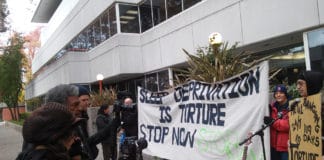
Take action against ongoing sleep deprivation torture – 137 days as...
People in solitary confinement have been loudly awakened by guards every 30 minutes around the clock since the night of Aug. 2, for more than four months! CDCR claims these checks are to improve mental health care and prevent suicides. Instead, this cruel sleep deprivation constitutes cruel and unusual punishment. Prisoners and their attorneys are demanding that these checks be halted. Stop these torture tactics now! Support prisoners’ human rights! Send emails and make calls. Sleep deprivation is torture!
‘May your spirit be with us’: Prisoners recall Comrade Hugo ‘Yogi’...
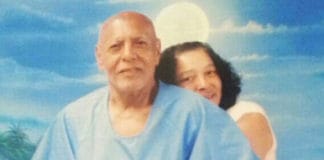
This photo of Hugo “Yogi” Pinell was taken in the New Folsom visiting room in early 2014, when he was first released from the Pelican Bay SHU. Derek Anderson says of this man who was a hero and role model to fellow prisoners, “He made it possible for us to walk with our heads held high in this wilderness.”
Comrades hail hero and martyr Hugo Pinell
Letters continue to pour in to the Bay View from prisoners who remember the great Hugo “Yogi” Pinell as a hero and a martyr and want the world to know and remember him too. His work will not only be memorialized but also carried forth by all he has touched. You and your lessons will be remembered always – and, like you, will forever inspire resistance. Determination. The longing to be free. And the courage to fight for it.

Attica book ban
On Oct. 7, political prisoner Jalil Muntaqim was denied four books which arrived for him at Attica Correctional Facility. Muntaqim is a former member of the Black Panther Party and Black Liberation Army and one of the longest held political prisoners in the world today; he has been incarcerated since 1971, when he was only 19 years old. Muntaqim was initially told he could have the books, but when a guard noticed that one of the titles in question was actually written by Muntaqim himself, he simply said, “No way.” This censorship is simply a more petty example of harassment directed against someone who is hated for what he represents.
Women’s prisons as sites of resistance: An interview with Victoria Law
Too often, organizing work done by incarcerated women goes wholly unrecognized. In her book, “Resistance Behind Bars: The Struggles of Incarcerated Women,” Victoria Law focuses on the many forms of activism happening inside of women’s prisons, most of which never reach the dominant media. In the following interview, Law shares ways in which individual acts of resistance are building toward a transformational new reality.
Gracias for the anti-solitary class action settlement from a named plaintiff
Can you please give me a little space in Bayview, so that I can say gracias – thank you. I’m one of the named plaintiffs in our class action lawsuit, Ashker v. Brown, at Pelican Bay SHU. By now you have all heard that it was settled Sept. 1, 2015. I’m happy for all of us in the SHU. For now we must enjoy this ONE victory of many more to come. It’s just the beginning.
Summary of settlement terms in anti-solitary confinement class action, Ashker v....
When Ashker v. Brown (Governor of California) was filed as a class action in 2012, California held thousands of prisoners in solitary confinement, in Security Housing Units (SHU). In September 2015, the case was settled, and far-reaching reforms were ordered. These reforms are expected to dramatically reduce the number of prisoners currently detained in the SHU and limit the way SHU confinement is used going forward.
Eva Contreraz: San Quentin Adjustment Center from my perspective
I was in the San Quentin Adjustment Center (SHU) for four years in the early to mid-1980s. We called it AC. San Quentin was all holes except one block. AC was the deepest hole in San Quentin. It is a short, three-floor, windowed building with two rows of roomy, single-bed cells on each floor, facing the windows. I was there when the first group of Death Row inmates was moved in as overflow. The AC of today is a far cry from that bygone era.
Good men, not worst of the worst
We are coming up on three years since the End of All Hostilities with all races has been implemented. I’ve been seeing people from all walks of life and groups observing the Agreement to End Hostilities. What CDC could not do in 20-30 years, these brave men in the Short Corridor prison collectives accomplished in just a short period of three years. Yet CDC continues to label them “worst of the worst.” That’s complete bullsh-t!