




Tags Cholera
Tag: cholera
Merten, mercenaries, marionettes and the media blackout on Haiti
“What is wrong with Haiti?” is provocatively offered as a question, along with apologies to the great essayist, G.K. Chesterton. The answer to what is wrong with Haiti is that the hand wringers, meaning those of goodwill who profess undying love for the tiny island nation never seem to ask what is right. Nor do they attempt to discern the source of wrongdoing. For over two centuries, Haiti has balanced on a fulcrum. Heaven and hell hang in the balance and only God knows the outcome.

Resisting the lynching of Haitian liberty!
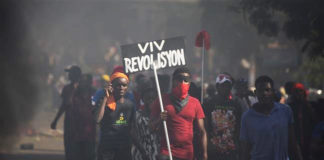
It should be obvious by now that the U.S.-U.N., E.U., OAS and various hired paramilitary police have engineered a second fraudulent election in as many years in Haiti. This latest attempt to kill Haiti’s freedom by aborting her dreams of democracy via the electoral process was designed to prevent landslide victories by Fanmi Lavalas, reminiscent of the presidential victories of Jean Bertrand Aristide. The U.S. and U.N. do not want to see this.
Haiti needs us now! Donating to the Haiti Emergency Relief Fund...
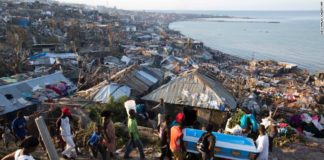
On Oct. 4, Hurricane Matthew slammed into Haiti, killing at least 1,000 people and leaving thousands without shelter or food. The hurricane has devastated the city of Les Cayes and many villages in the Southwestern part of the country. The torrential rains and winds have also hit the capital, Port-au-Prince. With massive flooding comes the increased danger of water-borne diseases, particularly cholera, which has already reached epidemic proportions. We ask that all friends of Haiti donate as much as you can to the Haiti Emergency Relief Fund.
Haiti rises: a time for solidarity
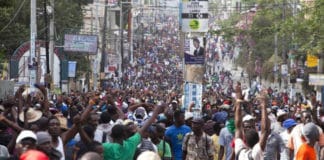
The voice of Haiti’s popular movement at this critical period in the country’s history has never been clearer. For the past several months, since the discredited legislative and presidential elections of last August and October, mass, vibrant protests for the right to a free and fair vote and against foreign intervention have been a relentless force, in the face of heavily-armed and well-financed adversaries and mounting repression.
Et tu, Brute? Haiti’s betrayal by Latin America
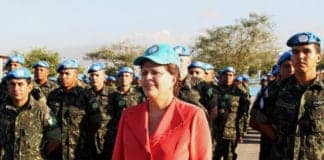
Without Haiti’s help, there would not have been any independent country in Latin America. On January 1, 1816, when Simon Bolivar arrived in Haiti, downtrodden and desperate for help to fight the Spanish, the only two republics in the Western Hemisphere were the United States, where slave ownership was in force, and Haiti, which had fought for and earned its independence in what is still the only successful slave rebellion ever in the world.

Africa’s Ebola virus crisis: African technologists urge more robust technology-based response...
We, the undersigned, representing the Africa Emergency Technology Response Forum (AETRF), an informal network of African technology professionals engaged in the Ebola crisis response on the continent and in the diaspora, herein convey our concern about the current Ebola virus disease outbreak and call for more concerted efforts to bring robust technological responses to the crisis.
Wanda’s Picks for September 2014
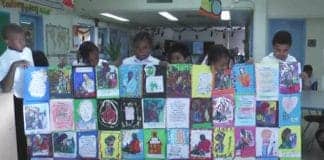
Congratulations to William Rhodes on a successful trip to South Africa, where he took a quilt created by his students at Dr. Charles Drew Elementary School in San Francisco to honor the legacy of an international hero, President Nelson Mandela, and returned with art panels from workshops conducted with youth in various townships and regions from Cape Town to Johannesburg.
Haiti: UN peacekeepers still not screened for cholera despite causing outbreak
It has been four years since an earthquake devastated the small country of Haiti. More than three years have elapsed since a U.N. peacekeeping unit from Nepal introduced cholera to Haiti. Despite telling CNN otherwise, the U.N. is not taking steps to ensure its peacekeepers do not carry cholera from country to country.
Cholera spreads beyond Haiti as Mexico suffers devastating floods
The strain of cholera brought to Haiti by Nepalese U.N. soldiers in 2010 has spread to the Dominican Republic, Cuba and now Mexico. In the past few months, Mexico has reported 176 confirmed cases of the disease, with one death. The Pan American Health Organization reported that the genetic profile of the strain in Mexico presents a greater than 95 percent match with the Haitian strain.
UN capitalizing on cholera, playing both arsonist and fireman
“Haiti may have many problems but until 2010 cholera was not one of them. In fact, the country had no known history of the disease at all,” the Al Jazeera host explains. In October 2010, the first of now 8,000 Haitians died of cholera introduced to Haiti by U.N. peacekeeping troops from Nepal and the U.N.’s negligence in allowing their untreated waste to poison a major river.
The UN’s cholera epidemic in Haiti
More than 70 percent of Haitians responding to a recent poll said they wanted MINUSTAH to leave within a year. The U.N. can use the money currently wasted on this military force to rid the country of cholera. Then, at least, they will have cleaned up one of their biggest crimes in the country.
Congo Genocide: Will Obama’s America collaborate or refuse?
Cholera has broken out in the internally displaced persons camps growing again in eastern Congo, as Congolese people flee the war which, with backing from the Kagame regime in Kigali, Rwanda, resumed in April. The cholera outbreak has sparked fears of an epidemic. Now drenching rain is adding to the refugees’ misery. U.S. Special Forces are in the region, but not to hunt for Joseph Kony. It’s a military operation to secure oil and other African resources and limit Chinese access.
Why it took 11 months instead of three weeks to show...
It took nearly a year since the start of Haiti’s cholera epidemic for scientists to get conclusive proof that the cholera bacteria in Haiti are identical to bacteria in Nepal. The only reason it took so long to discover that Haiti’s cholera came from Nepal is because scientists had until now not bothered to compare the cholera from Haiti to cholera from Nepal.
Bye-bye, MINUSTAH!
As one of his first measures in office, Brazilian Defense Minister Celso Amorim plans to conclude Brazil’s participation in the notorious United Nations Stabilization Mission in Haiti (MINUSTAH). Various sectors of the Brazilian government, including Brazil’s Ministry of Foreign Affairs, agree with Mr. Amorim, who says that the important thing now is to formulate an exit strategy. This story has now been translated into French and Spanish; the translations follow the English version.
Haiti: the next round
On March 18, President Jean-Bertrand Aristide and his family returned home from a seven-year forced exile in South Africa – an exile brought about by the violent U.S.-orchestrated coup in 2004. Up until the last minute, the U.S. government tried to stop the return, with President Obama going so far as to place a last-minute call to President Zuma of South Africa.
Pierre Labossiere on welcoming Aristide home to Haiti
"I was at his (President Aristide's) house, we heard a roar of shouts of joy, and then over the walls people started coming in, pouring into the courtyard of the house when they saw the car. People were accompanying the car as many as three miles from the airport to his house," relates Pierre Labossiere of the jubilant welcome that greeted the Aristides on their return to Haiti ending seven long years of exile for them and brutal repression of the people they had to leave behind. Pierre tells the story of the Haitian people and how their never-say-die spirit continues to inspire the world.
Haiti’s election farce backfires
Haiti held its $30,000,000 fraudulent demonstration election on Nov. 28, but we still don’t know if or when a run-off will take place, or who will be the candidates. These “demonstration elections” are designed to isolate Fanmi Lavalas and PREVENT real grassroots democracy in Haiti.
Learning from shattered Haiti’s year of struggle
A year ago this month, Haiti was flattened by a seismic catastrophe. It was hardly the only tragedy that the tiny nation has faced in its 220-year history as the first republic born of a slave revolt.
Haitians say, ‘Goodbye, UN! Bon voyage’
The U.N. has threatened to pull out of Haiti. Oh, what a blessed seasonal gift that would be. Bon voyage, U.N.! Goodbye. We’ll help you pack. The Haitian people on the streets demonstrating are asking for YOU, for the U.N. to go. Take Clinton, the Interim Haiti Reconstruction Commission (IHRC) and the NGOs with you, please.
Women’s movement building and creating community in Haiti
One of the stories least reported has been the one about Haitians organizing for themselves. This is one woman’s story of how she, her family and the people in the various communities in which she works came together collectively to care for each other’s needs and how that struggle has become the foundation of a new movement of the poor for change in education and the material lives of women and men – a struggle for dignity.