
 Store
Store


Tags John Prendergast
Tag: John Prendergast
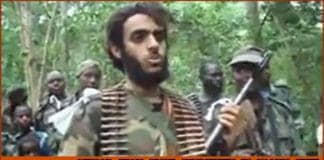
ISIS of Central Africa a new cover for plundering Congo
A video calling for an Islamic State jihad in the Democratic Republic of the Congo appeared online and in a few news reports last week. It was purportedly made in Beni Territory, within Congo’s North Kivu Province, where a phantom so-called Islamist militia, the Allied Democratic Forces, has been blamed for massacres of the indigenous population that began in October 2014. I asked Boniface Musavuli, a native of Beni and author of “The Massacres of Beni: Kabila, Rwanda, and the Fake Islamists” to help contextualize the so-called news.
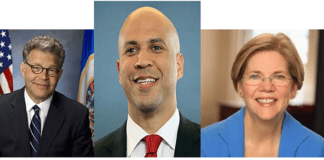
Sens. Cory Booker, Al Franken and Elizabeth Warren propose that the...
How goddamn dumb do Sens. Cory Booker, D-N.J., Al Franken, D-Mich., and Elizabeth Warren, D-Mass., think we are? All three Democratic presidential hopefuls are “initial co-sponsors” of an Orwellian bill to “enhance” our government’s ability to “prevent genocide and mass atrocities” with military force: Senate Bill 1158, the Elie Wiesel Genocide and Atrocities Prevention Act of 2017. Will anyone call to tell these senators that WAR IS NOT PEACE, THE U.S. DOES NOT PREVENT GENOCIDE and there’s no way they could honestly believe the BS in this bill?
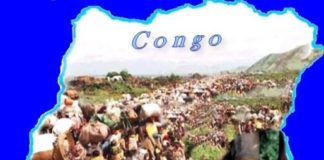
Who is killing indigenous people in Beni, DR Congo?
Beni Territory is a vivid example of the phrase, “Everybody wants a piece of Congo.” Beni Territory is rich in oil, timber, gold, diamonds, wolfram, coltan and cassiterite. Now the people of Beni are being massacred for their land and its riches. KPFA’s Ann Garrison filed this report after speaking to a Congolese human rights defender and author of “Congolese Genocides from Leopold II to Paul Kagame,” Boniface Musavuli.
Give peace a chance in South Sudan: An interview with Dr....
Fighting has continued in South Sudan’s oil rich Upper Nile State despite the peace agreement signed on Aug. 26. Since December 2013, South Sudan’s brutal civil war has cost more thousands of lives than anyone can accurately estimate and displaced 2.25 million people. I spoke to Syracuse University Professor Dr. Horace Campbell about what it would take to demilitarize South Sudan and give peace a chance after so many years of war.
FDLR offer to disarm, demobilize, join political process
The FDLR support the idea of an International Conference of Peace in the Great Lakes Region. The Conference will constitute an ideal forum for debating the lack of democracy and the source of insecurity. The Conference will become a privileged place where regimes in power must start dialogue with their oppositions without distinction or exclusion.

White savior John Prendergast tells the world what’s best for Congo...
This week the Congolese army, backed by the U.N. Force Intervention Brigade, was widely reported to be driving the last of Rwanda’s M23 militia from their positions in the Democratic Republic of the Congo’s most war ravaged province, North Kivu, on eastern Congo’s border with Rwanda. At the same time, Western elites stepped forward to tell the world what’s best for Rwanda and the Democratic Republic of the Congo now.
Allimadi: The U.S. is not interested in going after the LRA
An AP newswire posted to outlets all over the world said that the Democratic Republic of the Congo has sent 500 troops to join a Uganda-led military effort to hunt down Joseph Kony, the fugitive head of the Lord’s Resistance Army, or LRA rebel group, bringing the number of African soldiers deployed against the LRA up to 3,350, assisted by U.S. Special Forces.
Susan Rice’s defense of Kagame in Congo puts Obama State Department...
The Obama administration was on the defensive about the U.S. relationship with Rwanda and its U.N. Ambassador Susan Rice at the Dec. 11, 2012, U.S. House Foreign Affairs Committee hearing on the conflict in the eastern Democratic Republic of Congo. Two days after the hearing, Rice withdrew her name from consideration to become secretary of state. In President Obama’s statement on Susan Rice, issued the same day, he praised her work but did not mention Rwanda, Uganda or Congo.
Congo Genocide: Will Obama’s America collaborate or refuse?
Cholera has broken out in the internally displaced persons camps growing again in eastern Congo, as Congolese people flee the war which, with backing from the Kagame regime in Kigali, Rwanda, resumed in April. The cholera outbreak has sparked fears of an epidemic. Now drenching rain is adding to the refugees’ misery. U.S. Special Forces are in the region, but not to hunt for Joseph Kony. It’s a military operation to secure oil and other African resources and limit Chinese access.
Kabila, Tshisekedi, Congo and the International Criminal Court
If the International Criminal Court and ICC Chief Prosecutor Luis Moreno Ocampo were committed to international justice, they would issue an arrest warrant for sitting Congolese President Joseph Kabila. But the Western powers that control the ICC have been expected to do whatever it takes to keep Kabila in power.
Who benefits from sexual violence in eastern Congo? Cui bono?
Are the so-called rebels furthering the aims of heads of state by shattering communities in eastern Congo, driving people into refugee camps and thus separating them from the vast resources that corporations and the major world powers are so determined to control?
White man’s burden: Affleck and Prendergast in Congress for Congo
On Tuesday the House Foreign Relations Committee held a hearing on the Democratic Republic of Congo, the most lethal conflict in the world since World War II, killing over 6 million. No one from the Congo or anywhere in Africa was called to testify.
Obama’s Congo moment: Genocide, the U.N. report and Senate Bill 2125
The official Oct. 1 release of the U.N. report documenting the Rwandan and Ugandan armies’ massacres of Hutus in the Congo, should be a defining moment for President Barack Obama. The Congo bill he authored as a senator, passed in 2006, forecast much of the explosive information in the report.
John Prendergast’s selective outrage at African crimes
If a person really cared about human suffering – torture, mass rape, pillage, torching of homes with people alive inside, targeted rapes to spread HIV/AIDS, burying people alive, chopping off of limbs – then such a person would condemn these acts wherever they may occur and demand that the perpetrators of the crimes be brought to justice.
‘Help us heal our nation’: Confronting rape and other forms of...
Young Congolese journalist Chouchou Namegabe brought the Senate Foreign Relations Committee to tears when she testified May 13 that the rapes of a half million women and girls in the Congo are "meant to remove the people from their mineral-rich land." Watch the video and read the transcript.
Africom’s covert war in Sudan
I recently received a phone call from an investigator for the prosecutor at the International Criminal Court, and I shared my uncertainty about the ethics of collaborating with an "International Criminal Court" that was only indicting Black Africans.